Is Sephiroth Truly Evil? Unraveling the Complex Villain of Final Fantasy VII
Fast answer first. Then use the tabs or video for more detail.
- Watch the video explanation below for a faster overview.
- Game mechanics may change with updates or patches.
- Use this block to get the short answer without scrolling the whole page.
- Read the FAQ section if the article has one.
- Use the table of contents to jump straight to the detailed section you need.
- Watch the video first, then skim the article for specifics.
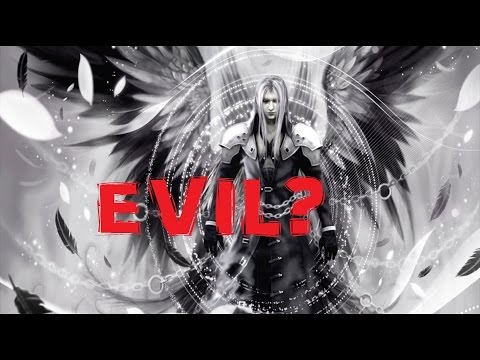
Sephiroth is undeniably a villain in Final Fantasy VII. However, branding him as simply “evil” is a gross oversimplification of a complex and tragic figure. His actions are monstrous, resulting in countless deaths and the near destruction of the planet, but they stem from a deep-seated trauma and a warped sense of purpose. Sephiroth’s motivations, rooted in a fabricated history and fueled by Jenova’s influence, blur the lines between conscious choice and manipulated destiny, making his true nature a subject of endless debate. While responsible for immense suffering, understanding the circumstances that shaped him prevents us from dismissing him as purely, simply evil.
The Anatomy of a Fallen Hero
Sephiroth wasn’t born evil. He began as a war hero, a symbol of Shinra’s power and a celebrated figure. His fall from grace is what makes him such a compelling character. It’s a descent fueled by lies, manipulation, and the crushing weight of a truth he couldn’t bear. The revelation of his origins – that he was the result of Shinra’s horrific experiments involving Jenova cells – shattered his sense of self and ignited a burning hatred.
This hatred, however, wasn’t initially directed at humanity. It was aimed at Shinra, the corporation that had robbed him of his identity. However, through Jenova’s influence and his own interpretation of ancient Cetra texts, he came to believe that humans had betrayed the Cetra and were a plague upon the planet. This twisted logic became the foundation for his plan to reshape the world in his image.
The Role of Jenova
It’s impossible to discuss Sephiroth’s morality without acknowledging the influence of Jenova, the extraterrestrial being whose cells were used in his creation. Jenova is a parasitic lifeform capable of mimicking others and controlling those injected with its cells. Sephiroth’s actions are heavily influenced by Jenova’s will, making him a pawn in a grander, more cosmic scheme. How much of his behavior is his own and how much is driven by Jenova remains one of the most intriguing aspects of his character.
A Question of Agency
The question of Sephiroth’s agency is at the heart of the debate surrounding his morality. Was he truly in control of his actions, or was he merely a puppet of Jenova’s will? The game suggests a complex interplay between the two. Sephiroth’s intellect and charisma are his own, but his goals and methods are undeniably shaped by Jenova’s influence. Even after death, his will persists within the Lifestream, continuing to haunt Cloud and manipulate events. This enduring presence further complicates the question of his responsibility for his actions.
The Existential Threat
Regardless of the motivations behind them, Sephiroth’s actions pose an existential threat to humanity. His plan to summon Meteor, destroy the planet, and absorb its Lifestream to become a god is undeniably evil in its consequences. Even if his intentions were driven by a misguided sense of justice or a desire to avenge the Cetra, the potential destruction he unleashes cannot be excused.
His vision for the future of the planet is equally disturbing. The thought of a world populated by creatures born from his twisted mind is a terrifying prospect. Even if he believed he was acting in the planet’s best interest, his actions demonstrate a profound disregard for human life and the natural order.
The Lasting Impact
Sephiroth’s impact on the Final Fantasy VII universe is undeniable. He is one of the most iconic villains in video game history, and his actions continue to resonate throughout the series. His influence extends beyond the confines of the game, sparking countless discussions about morality, identity, and the nature of good and evil.
His enduring popularity is a testament to the complexity of his character. He’s not simply a one-dimensional villain; he’s a tragic figure who has been corrupted by trauma and manipulated by forces beyond his control. This complexity is what makes him so compelling and why his story continues to captivate audiences.
Frequently Asked Questions (FAQs) About Sephiroth
1. Why does Sephiroth hate humans?
Sephiroth believes the human race betrayed the Cetra (also known as the Ancients) 2,000 years ago, abandoning them to face Jenova alone. He sees humanity as a blight upon the planet and seeks vengeance for his perceived ancestors.
2. Why was Sephiroth so mad?
Sephiroth’s madness stems from discovering the truth about the experiments that created him. He learns he was injected with Jenova cells while still in the womb and views himself as a monster created by Shinra. This realization shatters his sense of identity and fuels his hatred.
3. Why does Sephiroth say “I will never be a memory?”
Sephiroth’s quote, “I will never be a memory,” speaks to his desire to transcend mortality and leave a lasting impact on the world. He wants to be remembered not just as a powerful warrior but as a force of nature, an agent of change. He also uses his will to live within the Lifestream and taunt Cloud.
4. Why does Cloud hate Sephiroth?
Cloud’s hatred for Sephiroth is complex and deeply rooted in his past trauma. He blames Sephiroth for the destruction of his hometown, Nibelheim, and the death of his mother. Furthermore, Sephiroth represents Cloud’s own feelings of inadequacy and failure.
5. Is Sephiroth a villain or a hero?
Sephiroth is definitively a villain in Final Fantasy VII. While he may have started as a celebrated war hero, his actions throughout the game, including mass murder and the attempted destruction of the planet, firmly establish him as the primary antagonist.
6. Is Sephiroth in love with Cloud?
There is no romantic or sexual relationship between Sephiroth and Cloud in the original Final Fantasy VII. Sephiroth views Cloud as a useful pawn, someone he can manipulate to achieve his goals.
7. What is Sephiroth’s weakness?
Sephiroth has no specific elemental or status ailment weakness. He has lesser resistances to Fire, Ice, Lightning, and Wind magic. Fixed Damage attacks have a greater resistance. He is immune to Poison, Silence, Sleep, Slow, Stop, Berserk, and Proportional Damage.
8. Who can beat Sephiroth?
The answer to this question is subjective and depends on the specific interpretation and power scaling. In terms of pure destructive power, some characters from other franchises could potentially defeat him. Within the Final Fantasy VII universe, Cloud, with the help of his allies, ultimately defeats Sephiroth.
9. Could Zack defeat Sephiroth?
Zack fought Sephiroth in the Nibelheim incident and was ultimately defeated. While Zack is a powerful warrior, Sephiroth’s power and Jenova’s influence gave him the upper hand.
10. What did Sephiroth do to Tifa?
During the Nibelheim incident, Sephiroth killed Tifa’s father. When Tifa tried to avenge her father, Sephiroth severely injured her with his Masamune blade, leaving her near death.
11. Why is Sephiroth so loved?
Sephiroth’s popularity stems from his compelling backstory, his striking design, his imposing presence, and his role as a complex and tragic villain. He challenges players to consider the nuances of morality and the potential for even the most heroic figures to fall from grace.
12. Is Sephiroth unkillable?
Sephiroth is technically immortal due to the presence of Jenova cells in his body and his connection to the Lifestream. While he can be defeated, his will persists, and he can manifest again through the Lifestream or Jenova’s influence.
13. Was Aerith in love with Sephiroth?
In early development stages, Aerith was planned to be Sephiroth’s sister or former lover, which is why both their designs resembled each other. However, this idea was eventually scrapped, and Aerith’s affections were directed towards Zack Fair, who she remembered when first meeting Cloud because they were both in SOLDIER.
14. Are there two Sephiroths?
There aren’t literally two separate Sephiroths. Instead, the game presents different manifestations of Sephiroth, including illusions, black-hooded figures, flashbacks, and the “Unknown” entity that the party perceives. These manifestations are all linked to the original Sephiroth and Jenova’s influence.
15. How old is Sephiroth?
Sephiroth is approximately 27-30 years old during the events of Final Fantasy VII.
In conclusion, Sephiroth is not a simple villain. He is a complex and tragic figure whose actions are shaped by trauma, manipulation, and the influence of an alien entity. While his actions are undeniably evil, understanding the circumstances that led him down this path allows us to appreciate the depth and nuance of his character. To further explore the educational aspects of gaming and the intricate narratives they often present, visit the Games Learning Society at GamesLearningSociety.org.