Is the Tarrasque a Dragon? Unraveling the Mystery of D&D’s Apex Predator
Fast answer first. Then use the tabs or video for more detail.
- Watch the video explanation below for a faster overview.
- Game mechanics may change with updates or patches.
- Use this block to get the short answer without scrolling the whole page.
- Read the FAQ section if the article has one.
- Use the table of contents to jump straight to the detailed section you need.
- Watch the video first, then skim the article for specifics.
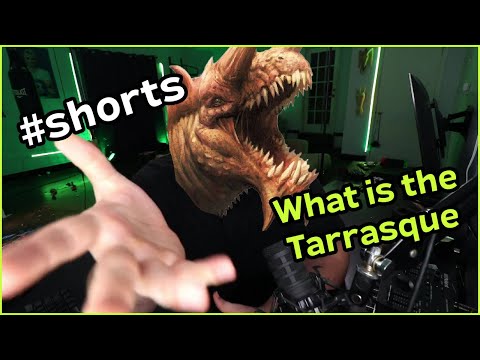
No, the Tarrasque is not a dragon. While both are colossal and fearsome reptilian creatures often found in the realms of fantasy, they are distinct entities with different origins, characteristics, and classifications within the Dungeons & Dragons (D&D) universe and beyond. The Tarrasque is typically categorized as a monstrous beast, a primal force of destruction, while dragons are intelligent, magical beings with complex social structures and often, a strong sense of self-preservation and personal goals.
The confusion might stem from the Tarrasque’s reptilian appearance and monstrous power, which are characteristics often associated with dragons. However, dragons are usually defined by their draconic heritage, their association with elemental magic, and their inherent intelligence. The Tarrasque lacks all of these qualities. It’s a force of nature, driven by instinct, with an insatiable hunger and a penchant for wanton destruction.
The Essence of the Tarrasque: A Beast Unlike Any Other
The original inspiration for the Tarrasque predates D&D and comes from French folklore. The Tarasque of Tarascon was a fearsome creature said to terrorize the region of Provence. Described as a hybrid of various beasts – a lion’s head, a turtle’s shell, bear-like claws, and a serpent’s tail – the Tarasque was ultimately tamed by Saint Martha.
This mythical creature served as the basis for the D&D Tarrasque, but the game version evolved into something far more destructive. In D&D lore, the Tarrasque is often depicted as an unstoppable engine of devastation. It’s a walking apocalypse, capable of leveling cities and consuming entire landscapes. Its thick hide, potent regeneration, and a variety of other powerful abilities make it nearly invulnerable.
Unlike dragons, which often hoard treasure and engage in cunning schemes, the Tarrasque has no interest in such things. Its only motivations are instinctual: to feed, to sleep, and to destroy anything that stands in its way. This distinction is crucial in understanding why the Tarrasque is classified as a beast rather than a dragon.
Dragons vs. Tarrasque: Key Differences
Here’s a quick comparison highlighting the key differences:
- Intelligence: Dragons possess high intelligence, often capable of complex thought, planning, and even spellcasting. The Tarrasque has very low intelligence, driven primarily by instinct.
- Magic: Dragons are inherently magical creatures, often wielding elemental powers. The Tarrasque possesses no innate magical abilities, relying solely on its physical prowess.
- Social Structure: Dragons often have complex social hierarchies, with established territories and family relationships. The Tarrasque is a solitary creature, with no social connections.
- Alignment: Dragons typically have alignments ranging from lawful good to chaotic evil, reflecting their individual personalities and values. The Tarrasque is usually unaligned, representing a force of nature rather than a moral entity.
- Purpose: Dragons often have personal goals, ambitions, and motivations. The Tarrasque’s only purpose is to consume and destroy.
- Origin: While Dragons origins are typically tied to powerful magical entities or elemental planes, the Tarrasque origin in D&D is that some sages argued that the Tarrasque was created by the primordials as a weapon of destruction during the Dawn War.
The Tarrasque’s Place in D&D Lore
The Tarrasque’s role in D&D is that of an apex predator and a doomsday scenario. Its appearance often signals the potential end of a campaign or the beginning of a new era of rebuilding. It’s a threat so immense that it requires the combined efforts of entire nations to confront.
The Games Learning Society could delve into the rich lore surrounding such creatures, exploring how they represent concepts of fear, chaos, and the need for collective action in the face of overwhelming odds. GamesLearningSociety.org examines such themes to help players explore these ideas.
While its simplicity might seem less compelling than the nuanced personalities of dragons, the Tarrasque’s raw power and destructive potential make it a memorable and terrifying foe. It serves as a reminder that not all monsters are created equal, and some are simply forces of nature to be endured.
Frequently Asked Questions (FAQs) About the Tarrasque
Here are some frequently asked questions to further clarify the nature of the Tarrasque:
1. What created the Tarrasque in D&D Lore?
Some sages in the D&D universe believe that the Tarrasque was created by the primordials as a weapon of destruction during the Dawn War, designed to dismantle the order established by the gods.
2. Is a Tarrasque stronger than a dragon?
While an Ancient Dragon can potentially defeat a Tarrasque in combat, the Tarrasque is undeniably one of the most powerful creatures in D&D, capable of withstanding immense amounts of damage and unleashing devastating attacks. The challenge depends on the specific dragon, the environment, and the tactics employed.
3. Can the Tarrasque be permanently killed?
Normally, the Tarrasque can’t be permanently killed unless a Wish or Miracle spell is cast over its remains. This makes it an incredibly resilient foe, capable of regenerating even from near-total destruction.
4. Is the Tarrasque a Kaiju?
Yes, the Tarrasque shares similarities with the Kaiju genre. It’s a colossal monster that emerges from the earth, wreaks havoc on cities, and represents a significant threat to civilization.
5. Who tamed the Tarasque in the original myths?
In the myths surrounding Tarascon, Sainte Marthe is said to have tamed the Tarasque, demonstrating the power of faith and compassion over brute force.
6. What is the myth of the Tarasque?
The myth describes the Tarasque as a monstrous beast with a lion’s head, a turtle-like shell, bear-like claws, and a serpent’s tail, capable of breathing poison. It terrorized the region of Provence until Sainte Marthe subdued it.
7. Is there only one Tarrasque?
In most D&D settings, it is implied that there is only one Tarrasque. This singular nature contributes to its legendary status as a unique and unparalleled threat.
8. What animal is a Tarrasque most like?
The Tarrasque is a composite creature, drawing inspiration from various animals. It has traits of a lion, turtle, bear, and serpent, creating a truly unique and terrifying monster.
9. What is bigger than a Tarrasque?
In terms of sheer height, a Kraken can be larger than a Tarrasque. Certain ancient dragons, and Tiamat in particular, are also comparable in size and arguably far more dangerous due to her intellect and magical might.
10. Can you polymorph into a Tarrasque?
No, a player character cannot use the Polymorph spell to transform into a Tarrasque. The Tarrasque’s Challenge Rating (CR) of 30 exceeds the maximum CR that a player character can assume through Polymorph or similar spells.
11. What is the Tarrasque weakness?
The Tarrasque has few true weaknesses due to its high Armor Class and regeneration. However, a popular, albeit somewhat satirical, strategy involves exploiting its relatively slow movement speed by using ranged attacks from horseback.
12. Is the Tarrasque a Titan?
In some interpretations, the Tarrasque can be considered a Titan, as it is a colossal and incredibly powerful creature that represents a primal force of nature.
13. What is the weakest demon in D&D?
The weakest demons in D&D are typically considered to be the Lemures and Manes, which are the most base and easily defeated forms of demonic creatures.
14. How was the Tarrasque born in D&D lore?
Some stories say that the Tarrasque was made by the gods as punishment for humanities sins.
15. What are Tarasks?
Tarasks are interdimensional beings living in another realm. They are gatekeepers in charge of retrieving fugitives and objects stolen from the realm.