Was a Rapier Sharp? Unveiling the Truth Behind this Elegant Weapon
Fast answer first. Then use the tabs or video for more detail.
- Watch the video explanation below for a faster overview.
- Game mechanics may change with updates or patches.
- Use this block to get the short answer without scrolling the whole page.
- Read the FAQ section if the article has one.
- Use the table of contents to jump straight to the detailed section you need.
- Watch the video first, then skim the article for specifics.
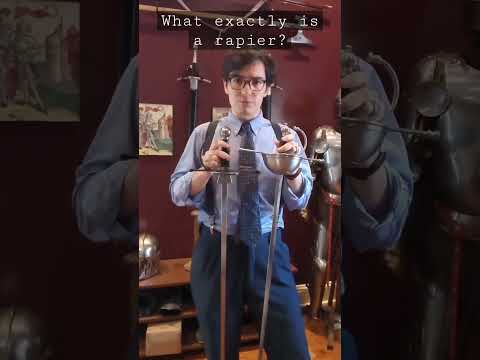
Yes, a rapier could be sharp, but its sharpness was more nuanced than a simple “yes” or “no.” While the primary function of a rapier was thrusting, the edges could range from quite sharp to intentionally blunt, depending on the specific design and the swordsman’s preference. Understanding this variation is crucial to appreciating the rapier’s role in history and its effectiveness as a weapon. The defining characteristic of a rapier was its thrust-centric design, not necessarily its edge. Let’s delve into the details and dispel some common misconceptions.
The Rapier’s Defining Features
Before we get bogged down in the sharpness debate, it’s vital to understand the core features that make a rapier a rapier. The rapier emerged in the 16th century and enjoyed popularity well into the 17th century. This period of history was a time of change for battlefield tactics and armor, and so was a time of change for sword design.
Thrusting as the Primary Function
The rapier is typically a long (usually 30-50 inches), narrow-bladed sword designed primarily for thrusting. This means its shape and balance are optimized for delivering quick, accurate, and lethal thrusts. While capable of cutting in some instances, its effectiveness in this area pales in comparison to swords designed specifically for slashing or chopping.
The Importance of the Hilt
Rapiers often feature elaborate hilts designed to protect the hand. These complex designs, incorporating elements like quillons, rings, and side rings, evolved to provide maximum defense against an opponent’s blade. The hilt acted as a shield, allowing the wielder to parry attacks and control the engagement.
Blade Profile
The blade is usually slender, rigid, and tapers to a fine point. The cross-section can vary, but it’s often diamond-shaped or hexagonal, adding strength for thrusting without significantly increasing weight. This design allowed for quick, precise movements, essential for dueling and self-defense.
Sharpness: A Matter of Degree
Now, back to the key question: was a rapier sharp? Here’s a breakdown:
-
Early Rapiers: Initially, many rapiers did possess sharper edges. These edges were intended to be used for cuts and slashes, augmenting the thrusting capability. This allowed for a more versatile fighting style.
-
Later Developments: As rapier fencing evolved, the emphasis shifted even further towards thrusting. Some rapiers were designed with edges that were either only partially sharpened or left entirely blunt. The reasoning behind this was twofold:
- Increased Thrusting Efficiency: A less-sharp or blunt edge could reduce drag during a thrust, allowing for faster and more accurate attacks.
- Emphasis on Finesse: Rapier fencing became increasingly refined and focused on technique. Precise thrusts were favored over brute force cutting.
-
War Rapiers: As mentioned in the included text, there were rapiers designed for war. These swords tended to have wider blades, and were heavier than dueling rapiers.
FAQs: Dive Deeper into Rapier Lore
Here are 15 frequently asked questions to expand your knowledge of rapiers:
1. What was the ideal length of a rapier?
Rapier length typically ranged from 30 to 50 inches (76 to 127 cm), but the ideal length depended on the wielder’s height and arm length. A longer rapier provided greater reach, but it could also be more cumbersome to maneuver.
2. What are some well-known rapier masters?
Notable rapier masters include Salvator Fabris, Ridolfo Capo Ferro, and Nicoletto Giganti. They codified rapier fencing techniques in their treatises, which are still studied by historical fencing enthusiasts today.
3. Was the rapier a common sidearm?
Yes, the rapier was a popular sidearm among gentlemen and civilians during the Renaissance and early modern periods. It was a symbol of status and a practical tool for self-defense.
4. How did rapier fencing evolve over time?
Early rapier fencing incorporated cuts and thrusts, but as armor diminished, the focus shifted almost entirely to thrusting. Footwork, parrying techniques, and blade control became increasingly sophisticated.
5. Was a rapier more effective against an armored opponent?
No, rapiers were not designed to be used against armor. Thrusting swords such as the estoc were better suited for piercing gaps in plate armor.
6. Can a rapier cut bone?
While not as effective as a dedicated cutting sword, a rapier with a sharp edge could potentially cut down to the bone or sever muscle tissue. However, this was not its primary function.
7. What is the difference between a rapier and a smallsword?
The smallsword is a lighter and shorter weapon that evolved from the rapier. It was primarily a thrusting weapon with a less complex hilt, often favored for civilian self-defense.
8. What is the importance of off-hand weapons used with the rapier?
The off-hand was often used with a parrying dagger, buckler, or cloak to aid in defense and control the opponent’s blade. These tools were integral to rapier fencing techniques.
9. What is a “war rapier?”
A “war rapier” was a heavier rapier with a wider blade, designed for use on the battlefield. These hybrid swords combined the thrusting capability of a rapier with some cutting ability.
10. How flexible was a rapier blade?
Rapier blades needed to have a degree of flexibility to absorb the energy of thrusts and prevent breakage.
11. How was a rapier carried?
Rapiers were typically carried on a hanger, consisting of straps and a buckle, which attached to the belt. This allowed the sword to hang comfortably at the wielder’s side.
12. Did rapier fights usually end in death?
Rapier duels were often fought to first blood or until one fighter conceded. While deaths could occur, the intention was often to wound rather than kill outright.
13. What kind of damage did a rapier inflict?
Rapiers primarily inflicted piercing damage through thrusting. The long, narrow blade could penetrate deep into the body, causing significant internal injuries.
14. How does a rapier compare to a katana?
In single combat, the rapier offers several advantages over the katana, including superior hand protection, greater reach, and faster disengages.
15. How does game design compare to the design of the rapier?
Game design, particularly in educational contexts, requires a careful balance of elements. Like the rapier, which balances thrusting and cutting capabilities, game design must harmonize entertainment with learning objectives. The Games Learning Society at GamesLearningSociety.org explores these synergies, investigating how games can be effectively used to foster deeper understanding and skill development.
Conclusion: The Rapier – A Weapon of Nuance
While the sharpness of a rapier blade could vary, its purpose was overwhelmingly oriented towards thrusting. The evolution of the rapier saw a shift from cut-and-thrust techniques to a refined style that emphasized precision and finesse. The rapier stands as a testament to the artistry and innovation of sword design, a weapon that demanded skill and precision from its wielder. Hopefully, this article has dispelled any misconceptions and provided a comprehensive understanding of this fascinating and elegant weapon.