Unmasking the Power of Nintendo’s Motion Marvel: Was the Wii Less Powerful Than the GameCube?
Fast answer first. Then use the tabs or video for more detail.
- Watch the video explanation below for a faster overview.
- Game mechanics may change with updates or patches.
- Use this block to get the short answer without scrolling the whole page.
- Read the FAQ section if the article has one.
- Use the table of contents to jump straight to the detailed section you need.
- Watch the video first, then skim the article for specifics.
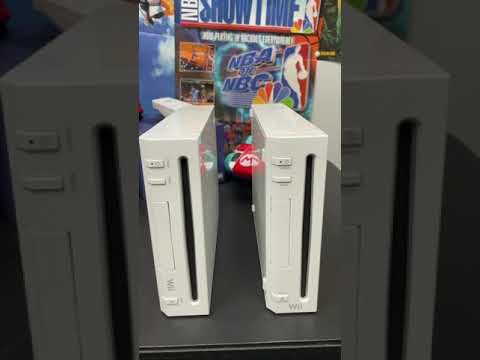
Absolutely not. The Wii was significantly more powerful than the GameCube. While the raw power difference might not have been as dramatic as some generational leaps, the Wii boasted a faster processor, more memory, and a slightly more capable GPU. The Wii’s architecture, though built on the GameCube’s foundation, was overclocked and enhanced, leading to demonstrable improvements in performance, even if not always visually groundbreaking.
Delving into the Wii’s Capabilities: More Than Just Motion Controls
The Wii, launched in 2006, became a global phenomenon due to its innovative motion controls and accessible gameplay. However, beneath the waggle-centric exterior lay a system packing more punch than its predecessor, the GameCube. While both consoles shared similar architectural roots, the Wii’s enhancements allowed for smoother gameplay, slightly improved graphics in optimized titles, and expanded features. The Wii, in essence, was a souped-up GameCube designed for a wider audience.
Architectural Similarities and Differences
Both the Wii and the GameCube were built around IBM PowerPC-based processors and ATI (now AMD) graphics chips. The Wii’s CPU, codenamed “Broadway,” was essentially a faster version of the GameCube’s “Gekko” processor. Similarly, the Wii’s “Hollywood” GPU was an evolution of the GameCube’s graphics processing unit. The crucial difference, however, lay in the increased clock speeds and memory capacity of the Wii’s components. This extra horsepower allowed the Wii to handle more complex calculations and display slightly more detailed visuals.
Visual Fidelity: A Subtle Upgrade
While some argued that the Wii’s graphics weren’t a significant leap over the GameCube, this wasn’t entirely accurate. The Wii was capable of outputting at a slightly higher resolution and displaying more detailed textures. However, the difference was often subtle, especially in games not specifically optimized for the Wii’s hardware. The Wii’s focus was on gameplay innovation rather than pushing the boundaries of graphical fidelity. The true potential of the Wii’s graphics were often masked by the console’s standard definition output (480p). Developers focused on optimizing games to run smoothly with motion controls rather than maximizing graphical detail.
Debunking the Myths: Setting the Record Straight
Several misconceptions surround the Wii’s technical capabilities. One common myth is that the Wii was significantly weaker than its competitors, the Xbox 360 and PlayStation 3. While it was indeed the least powerful of the three, it’s important to remember that the Wii was also significantly cheaper and targeted a different market segment. Another misconception is that the GameCube had superior visual output when playing GameCube games. While some argue that the GameCube’s component cables offered a sharper picture, this difference was minimal and often outweighed by the Wii’s added convenience of being able to play both Wii and GameCube titles.
Frequently Asked Questions (FAQs) about the Wii and GameCube’s Power
-
Is the Wii just an overclocked GameCube? It’s more than just an overclocked GameCube. While it shares the same architecture and the core components are similar, it also has more memory. This makes the Wii more powerful.
-
Did the Wii have better graphics than the GameCube? Yes, but the improvement was subtle. The Wii’s slightly more powerful GPU allowed for slightly more detailed graphics, especially in optimized games.
-
What is the resolution of the Wii compared to the GameCube? Both consoles primarily output at 480p. However, the GameCube was primarily designed for 4:3 aspect ratio, while the Wii supported 16:9, leading to some perceived differences in sharpness.
-
Why use a GameCube over a Wii? The primary reason would be for those seeking what they perceive to be the absolute best picture quality for GameCube games, using the GameCube’s component output.
-
Is the Wii more powerful than the PS2? Yes, the Wii is significantly more powerful than the PlayStation 2. The Wii has a faster CPU, more RAM, and better resolution capabilities.
-
Can the original Wii play all GameCube games? Yes, the original Wii model (RVL-001) is fully compatible with GameCube games and accessories.
-
Can the Wii play every GameCube game? Yes, if you have the correct model (RVL-001). The RVL-101 model, released later, removed GameCube compatibility.
-
How powerful is the Wii? The Wii’s computational power was roughly 1.5 to 2 times as powerful as the GameCube.
-
What GPU did the Wii have? The Wii used a GPU named “Hollywood,” designed by ATI (now AMD).
-
Was the Wii U less powerful than the PS3? The Wii U was a complex case. It was generally considered to be roughly comparable to the Xbox 360 and PlayStation 3 in overall power, with strengths and weaknesses in different areas.
-
Why was the Wii U unpopular? The Wii U suffered from several factors, including a confusing marketing message, a lack of strong third-party support, and the GamePad’s short battery life.
-
Is it hard to emulate Wii games? Yes, emulating Wii games requires a powerful computer due to the complexity of simulating the console’s hardware and software.
-
Was the Wii a failure? Absolutely not. The Wii was a massive commercial success, selling over 100 million units worldwide.
-
Is the Wii outdated? Yes, the Wii was discontinued in 2013, and its online services have been shut down.
-
Did the Wii win the console war? In terms of sales, yes. The Wii outsold both the Xbox 360 and PlayStation 3.
The enduring impact of the Wii goes beyond raw processing power. The motion control capabilities, the innovative game design, and the sheer accessibility of the console brought gaming to a new audience and forever changed the landscape of the industry. The Wii’s success also demonstrates that innovation and a unique gaming experience can be more important than sheer graphical horsepower. For more insights into the educational aspects of gaming and game design, explore the resources available at the Games Learning Society website: https://www.gameslearningsociety.org/. You can also find interesting information about the learning science community by visiting GamesLearningSociety.org.