What are the Ghost States in Pac-Man?
Fast answer first. Then use the tabs or video for more detail.
- Watch the video explanation below for a faster overview.
- Game mechanics may change with updates or patches.
- Use this block to get the short answer without scrolling the whole page.
- Read the FAQ section if the article has one.
- Use the table of contents to jump straight to the detailed section you need.
- Watch the video first, then skim the article for specifics.
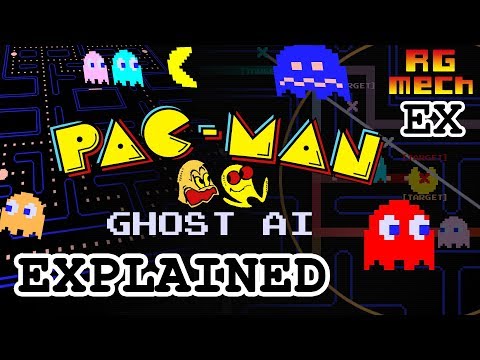
In the classic arcade game Pac-Man, the ghosts aren’t just mindless pursuers. They operate under a sophisticated AI system that dictates their behavior through distinct states. Understanding these ghost states – Scatter, Chase, Frightened (or Vulnerable), and Dead (or Eaten) – is crucial for both comprehending the game’s strategic depth and achieving high scores. Each state influences the ghosts’ movement patterns and interaction with Pac-Man, creating a dynamic and challenging gameplay experience.
Understanding the Core Ghost States
The ghosts’ behavior is determined by their current state, which dynamically switches throughout the game.
1. Scatter Mode
During the Scatter mode, each ghost retreats to its designated corner of the maze. This behavior gives Pac-Man some breathing room at the beginning of the game and provides strategic opportunities for the player. The duration of the scatter phases progressively shortens as the game advances to higher levels, increasing the difficulty. Each ghost has a specific corner:
- Blinky (Red): Top right corner
- Pinky (Pink): Top left corner
- Inky (Cyan): Bottom left corner
- Clyde (Orange): Bottom right corner
The AI uses this “cornering” strategy to establish order at the start, and provides a respite to the player while the game continues.
2. Chase Mode
After the scatter phases, the ghosts enter Chase mode, becoming actively aggressive in their pursuit of Pac-Man. Each ghost’s unique personality dictates its specific chasing strategy:
- Blinky (Red): Also known as “Shadow,” Blinky relentlessly chases Pac-Man directly, using a straight-line approach. His speed and directness make him the most dangerous ghost.
- Pinky (Pink): Known as “Speedy,” Pinky tries to ambush Pac-Man by targeting the tile four spaces ahead of him. This anticipatory behavior makes Pinky unpredictable and challenging to avoid, especially when Pac-Man is moving quickly.
- Inky (Cyan): Inky’s targeting is the most complex. His target is calculated using both Pac-Man’s position and Blinky’s position. He essentially aims for a point that’s a reflection, considering both Pac-Man’s location and Blinky’s pursuit.
- Clyde (Orange): Nicknamed “Pokey,” Clyde is the least predictable ghost. When he is more than eight tiles away from Pac-Man, he chases him like Blinky. However, when he gets within eight tiles, he switches to Scatter mode, retreating back to his corner. This makes Clyde appear timid or random.
The switching between Scatter and Chase modes is predetermined by the game’s internal timer, creating a dynamic and ever-changing threat for the player.
3. Frightened (Vulnerable) Mode
Eating a Power Pellet triggers the Frightened mode, turning the ghosts blue and making them vulnerable to being eaten. In this state, the ghosts move at a significantly reduced speed and their AI is altered. Instead of actively chasing Pac-Man, they move randomly, avoiding collisions with walls.
This state provides the player with a strategic advantage, allowing them to rack up points by eating the ghosts. However, the Frightened mode is temporary. The ghosts will eventually revert back to their normal state after a period of time, or even sooner if the player doesn’t consume the ghosts immediately. The amount of time the ghost remains in the frightened mode becomes shorter as the game advances to higher levels.
4. Dead (Eaten) Mode
When Pac-Man eats a ghost in Frightened mode, the ghost enters the Dead mode. In this state, the ghost’s eyes travel back to the ghost regeneration box (or “ghost house”) in the center of the maze. Inside the ghost house, the ghost regenerates and eventually re-enters the game in its normal color and resumes its normal chasing behavior. The speed of the eyes is much faster than the ghosts’ movement speed. This reset mechanism ensures that the game maintains its challenge throughout.
The Importance of Understanding Ghost States
Understanding the different ghost states is crucial for successful Pac-Man gameplay. By knowing when the ghosts are in Scatter mode, Chase mode, Frightened mode, or Dead mode, the player can make informed decisions about when to pursue points, when to avoid enemies, and when to use Power Pellets strategically. Mastery of the ghost behaviors provides the best chances of achieving higher scores and successfully clearing levels.
Frequently Asked Questions (FAQs) about Ghost States in Pac-Man
1. What triggers the switch between Scatter and Chase modes?
The switch between Scatter and Chase modes is controlled by an internal timer within the game. The exact timings vary depending on the level, but generally, the scatter phases become shorter as the game progresses.
2. How long does the Frightened mode last?
The duration of the Frightened mode also decreases with each level. In earlier levels, it can last for a few seconds, but in later levels, it may only last for a very short amount of time, forcing players to act quickly.
3. Are all ghosts equally vulnerable in Frightened mode?
Yes, all ghosts behave the same in Frightened mode, moving randomly and at a reduced speed, regardless of their individual personalities.
4. Do the ghosts’ speeds change in the different states?
Yes. The ghosts move at their normal speed during Scatter and Chase modes, at a reduced speed during Frightened mode, and much faster as eyes returning to the ghost house during Dead mode.
5. Can ghosts exit the ghost house at any time?
No. There’s an algorithm and timing system that dictates when each ghost leaves the ghost house. The timing of when ghosts leave the ghost house is also dependent on the number of pellets eaten.
6. Does the AI of the ghosts ever change?
Yes. While the basic state behaviors remain constant, the exact timings of mode switches and the ghosts’ speeds can change as the game progresses, making it more challenging.
7. Are there any patterns to the ghosts’ movements in Frightened mode?
The ghosts move randomly during the Frightened mode, but they tend to avoid walls. There’s no predictable pattern that players can exploit beyond knowing they will not actively chase Pac-Man.
8. How many points do you get for eating a ghost in Frightened mode?
The points awarded for eating ghosts in Frightened mode increase with each consecutive ghost eaten after a single Power Pellet is consumed. The scores are typically 200, 400, 800, and 1600 points.
9. Is it possible for ghosts to reverse direction?
Yes, ghosts can reverse direction, especially at intersections. This can happen randomly, but it’s more common when transitioning between Scatter and Chase modes or exiting the ghost house. Ghosts may also reverse direction in Frightened mode.
10. Does the level difficulty affect the ghost states?
Yes, the level difficulty affects the duration of the Scatter and Frightened modes, as well as the overall speed of the ghosts. Higher levels have shorter scatter times and frightened times, and the ghosts move faster.
11. What happens if Pac-Man eats a Power Pellet while a ghost is already in Frightened mode?
If Pac-Man eats another Power Pellet while ghosts are already frightened, the Frightened mode is refreshed, resetting the timer for its duration.
12. Do all the ghosts change states at the same time?
Generally, yes. The timers that control the switches between Scatter and Chase modes apply to all ghosts simultaneously. The timing of leaving the ghost house varies, however.
13. How does the Ghost AI determine the best path to chase Pac-Man?
Blinky directly chases Pac-Man, using the shortest route. Pinky targets a spot a few tiles ahead of Pac-Man. Inky uses both Pac-Man’s and Blinky’s positions to determine his target. Clyde alternates between chasing and scattering depending on his distance from Pac-Man.
14. Can knowing the Ghost states help in speedrunning Pac-Man?
Absolutely. Speedrunners use the precise knowledge of the ghost states and their timings to optimize their routes, control the ghosts’ behavior, and maximize their score in the shortest amount of time. It’s the most crucial element of high-level play.
15. Are the ghost states the same in all versions of Pac-Man?
While the fundamental concept of ghost states remains consistent across different versions of Pac-Man, there might be slight variations in the timings, speeds, and AI behavior of the ghosts depending on the specific platform or port. The arcade version is considered the definitive and most balanced in terms of gameplay.