Mastering the Link: A Comprehensive Guide to Link Summoning in Yu-Gi-Oh!
Fast answer first. Then use the tabs or video for more detail.
- Watch the video explanation below for a faster overview.
- Game mechanics may change with updates or patches.
- Use this block to get the short answer without scrolling the whole page.
- Read the FAQ section if the article has one.
- Use the table of contents to jump straight to the detailed section you need.
- Watch the video first, then skim the article for specifics.
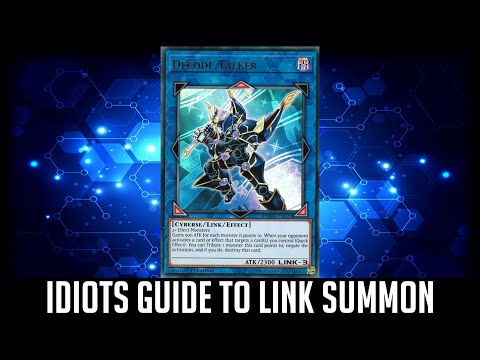
Link Summoning, introduced in the Yu-Gi-Oh! VRAINS era, revolutionized the game, adding a new layer of strategy and complexity. It’s a Special Summon method that involves sending face-up monsters you control to the Graveyard to summon a Link Monster from your Extra Deck. The primary rule is that you must send monsters whose total Link Rating equals the Link Monster’s Link Rating. Each regular monster counts as a Link Material of 1, but Link Monsters can count as either 1 or their Link Rating, depending on the specific card requirements. The materials must meet any specified criteria listed on the Link Monster’s card (e.g., “2+ Effect Monsters”). This article delves into the intricate rules governing Link Summoning, providing a complete understanding for players of all levels.
Understanding the Core Mechanics
The process of Link Summoning might seem daunting at first, but breaking it down into steps makes it much easier to grasp.
- Check for Open Game State: You can only Link Summon during your Main Phase if the game state is open, meaning no card effects are resolving.
- Select Materials: Choose the face-up monsters on your field that you will use as Link Materials. These monsters must fulfill any specific requirements detailed on the Link Monster you intend to summon.
- Calculate Link Rating: The combined Link Rating of the monsters you send must equal the Link Rating of the Link Monster you’re summoning. A standard monster counts as a Link Material of 1. Link Monsters can be used as either 1 Link Material or their Link Rating, unless otherwise specified.
- Send Materials to the Graveyard: Send the selected monsters to the Graveyard. This is a cost for performing the summon.
- Summon the Link Monster: Place the Link Monster from your Extra Deck onto the field, either in your Extra Monster Zone or in a Main Monster Zone that a Link Monster points to.
Key Considerations for Link Summoning
- Extra Monster Zone: Link Monsters are initially summoned to the Extra Monster Zone. The Extra Monster Zone is shared between both players. If your opponent controls a monster in the Extra Monster Zone, you cannot attack directly.
- Linked Zones: Link Monsters have arrows pointing to specific Monster Zones. These are known as Linked Zones. You can Summon monsters to Main Monster Zones that a Link Monster you control points to, and your opponent can summon monsters to Zones that a Link Monster they control points to. This creates strategic advantages in card placement.
- Monster Requirements: Many Link Monsters require specific types of monsters as Link Material (e.g., “2+ Cyberse monsters”). Ensure your chosen materials meet these requirements.
- Cannot Be in Defense Position: Link Monsters cannot be in Defense Position. They have no DEF stat and cannot be flipped face-down.
- Once Per Turn Restrictions: Certain cards may only be Link Summoned once per turn, this restriction applies to all copies of the card.
Link Summoning: Frequently Asked Questions (FAQs)
1. Does Link Summoning Have to Be Exact?
Yes, the exact number of Link Materials required must equal the Link Rating of the Monster, even if the card specifies fewer. For instance, a Link-3 monster needs exactly three Link Material, counting the Link Rating correctly.
2. Can You Only Link Summon Once Per Turn? How Many Link Monsters Can You Summon Per Turn?
While most Link Monsters do not have a restriction, some specify that they can only be Link Summoned once per turn. This restriction applies to the card name, not individual copies. So, while you can summon multiple Link Monsters in a single turn, you can only summon a specific Link Monster once if its text specifies.
3. Can You Use a Link-4 for a Link-4?
Generally, a Link-4 cannot be used as material for another Link-4 by itself. A Link-4 is essentially treated as “1” material for another Link Summon unless otherwise stated. So, to summon another Link-4, you’d need to use the Link-4 as one material and then add other monsters to reach the required Link Rating.
4. Can You Link Summon with a Face-Down Card?
No, a monster used as Link Material for a Link Summon must be face-up in the Monster Zone. Face-down monsters cannot be used as Link Materials.
5. Are Link Monsters Easy to Learn?
Yes, thankfully, Link Summoning is considered easy and very intuitive to learn. It was designed to be a more streamlined Summoning mechanic compared to some of the earlier methods.
6. Can Link Monsters Be Flipped?
No, Link Monsters cannot be flipped. They have no DEF and cannot be changed to Defense Position.
7. Where Do Link Monsters Go?
Link Monsters reside in the Extra Deck. If a Link Monster would be moved to the hand or Main Deck, it is returned to the Extra Deck instead.
8. Can You Link Summon to the Main Monster Zone?
Yes, but only if a Link Monster in the Extra Monster Zone points to that Main Monster Zone. You can also Summon to a Zone an opponent’s Link Monster might point to.
9. Can Link Summons Be Negated?
Yes, Link Summons can be negated. Only Summons that occur outside of a Chain can be negated, and Link Summons fall into this category. Cards like “Solemn Judgment” can negate the summon.
10. Does Link Summoning Count as Special Summoning?
Yes, Link Summoning is a type of Special Summon. Fusion Summons, Ritual Summons, Synchro Summons, Xyz Summons, Pendulum Summons, and Link Summons are all types of Special Summons.
11. Can You Use a Link Monster to XYZ Summon?
Not generally. Monsters that do not have Levels, such as Xyz Monsters and Link Monsters, cannot normally be used as Xyz Materials for an Xyz Summon. However, some Xyz Monsters specifically list Xyz Monsters as materials, in which case they can be used.
12. What Does a Monster Forget When Flipped Face Down?
The general rule is that a monster flipped face-down and face-up again will remember whether it was special or normal summoned, but will forget exactly how (e.g., a fusion summoned monster won’t remember what materials were used).
13. Is a Link Monster “Linked”?
Yes, a monster is “linked” if either:
- A Link Arrow is pointing to this monster.
- This monster is a Link Monster and one of its Link Arrows is pointing to another monster.
14. Can You Summon a Link-4 with Two Monsters?
Possibly, but very unlikely. For example, Accesscode Talker is a Link-4 Link Monster with a listed requirement that it must be summoned using 2+ Effect Monsters. One method of summoning it would be to use 4 effect monsters on the field as material for the summon. It would be possible if one of the monsters used had a Link Rating of 3.
15. Can You Link Summon with Tokens?
Yes, Tokens can be used as Link Materials. This makes Token-generating cards valuable in Link Summoning strategies.
Conclusion
Link Summoning is an integral part of modern Yu-Gi-Oh!, offering a unique and strategic approach to monster deployment. By understanding the rules and nuances discussed above, players can effectively utilize Link Monsters to gain a competitive edge. Remember to always check the specific requirements of each Link Monster and plan your moves carefully to maximize their potential. For more information on games and their impact on learning and society, visit the Games Learning Society at GamesLearningSociety.org.