Decoding Capacitors in Electronic Speed Controllers (ESCs): A Comprehensive Guide
Fast answer first. Then use the tabs or video for more detail.
- Watch the video explanation below for a faster overview.
- Game mechanics may change with updates or patches.
- Use this block to get the short answer without scrolling the whole page.
- Read the FAQ section if the article has one.
- Use the table of contents to jump straight to the detailed section you need.
- Watch the video first, then skim the article for specifics.
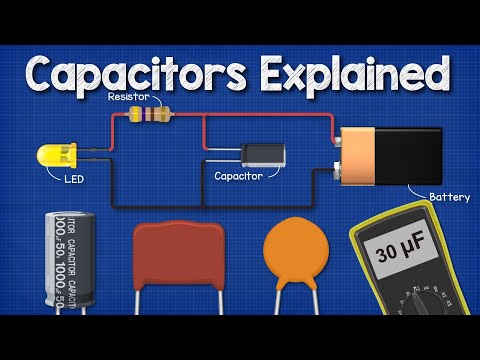
Capacitors in an Electronic Speed Controller (ESC) primarily serve to smooth out voltage fluctuations emanating from the battery. Think of them as a power reservoir that buffers the ESC from the potentially noisy and inconsistent voltage supplied by the battery, ensuring a stable and clean power supply for the sensitive electronics within the ESC and the motor it controls. This is crucial for optimal performance and longevity of the entire system.
The Critical Role of Capacitors in ESCs
ESCs, the unsung heroes of countless applications from drones to RC cars, are responsible for regulating the speed of electric motors. They do this by rapidly switching the power from the battery on and off, creating a pulsed voltage signal that drives the motor. This rapid switching, however, creates voltage spikes and ripple – undesirable fluctuations that can wreak havoc on the ESC’s delicate components.
Here’s where capacitors step in. They act as temporary energy storage devices, absorbing these voltage spikes and filling in the dips, thus providing a much smoother and more consistent voltage to the ESC. Without them, the ESC would be subjected to constant voltage stress, leading to performance degradation, overheating, and ultimately, failure.
Imagine driving a car on a road riddled with potholes versus a smooth, paved highway. The potholes represent the voltage fluctuations, and the smooth road represents the stabilized voltage provided by the capacitors. Which ride would you prefer for your car’s suspension (and your sanity)? The same principle applies to ESCs.
Furthermore, capacitors help to mitigate the effects of back EMF (Electromotive Force) generated by the motor itself. When a motor is spinning, it also acts as a generator, producing voltage that opposes the incoming voltage from the ESC. Capacitors help to absorb this back EMF, preventing it from damaging the ESC.
In summary, capacitors in ESCs perform these vital functions:
- Voltage Smoothing: Reducing voltage spikes and ripple for a stable power supply.
- Energy Storage: Providing a temporary reservoir of energy to buffer against voltage dips.
- Back EMF Suppression: Absorbing back EMF generated by the motor.
- Noise Filtering: Filtering out unwanted electrical noise that can interfere with ESC operation.
Frequently Asked Questions (FAQs) about Capacitors in ESCs
Here are some frequently asked questions about capacitors in ESCs that would prove valuable.
1. What is an RC circuit, and how does it relate to ESCs?
An RC circuit consists of a resistor (R) and a capacitor (C) connected in series with a voltage source. In the context of an ESC, while not a simple series RC circuit, the concept is relevant. The capacitor charges and discharges, smoothing the voltage. The resistance (internal resistance of the battery, wires, and the ESC itself) limits the charging/discharging rate. Understanding the RC time constant (τ = RC) is helpful for selecting appropriate capacitor values.
2. Can I run an ESC without capacitors? What are the risks?
While technically possible in some limited scenarios (e.g., very short battery leads and stable power source), running an ESC without capacitors is highly discouraged. The risks include:
- ESC resets: Voltage spikes can cause the ESC’s microcontroller to reset, leading to loss of control.
- Component damage: High voltage stress can damage the ESC’s MOSFETs and other components.
- Reduced performance: Unstable voltage can lead to erratic motor behavior and reduced efficiency.
- Premature failure: Continuous stress significantly shortens the ESC’s lifespan.
It’s best to think of capacitors as essential components, not optional accessories.
3. What happens if an ESC capacitor fails?
A failed capacitor can manifest in several ways:
- ESC malfunction: The ESC may become unresponsive or operate erratically.
- Motor stuttering: The motor may start and stop intermittently.
- Overheating: The ESC may overheat due to increased stress on other components.
- Complete failure: The ESC may stop working altogether.
- Visible signs: Bulging or leaking capacitor.
Early detection and replacement of faulty capacitors are crucial to prevent further damage.
4. What does ESR mean, and why is it important for ESC capacitors?
ESR stands for Equivalent Series Resistance. It’s a measure of the internal resistance of a capacitor. A lower ESR is desirable because it means the capacitor can charge and discharge faster and more efficiently, minimizing voltage drop and heat generation. For ESC applications, low ESR capacitors are crucial for handling the high-frequency switching currents.
5. What capacitor values are typically used in ESCs?
The appropriate capacitor value depends on factors such as the ESC’s current rating, battery voltage, and motor characteristics. Generally, larger ESCs with higher current ratings require larger capacitor values. Common values range from 220uF to 1000uF or higher. Refer to the ESC manufacturer’s recommendations for specific guidance.
6. Where should I place the capacitors on the ESC?
Ideally, capacitors should be placed as close as possible to the ESC’s power input terminals. This minimizes the inductance of the wiring connecting the capacitors to the ESC, which can negate their effectiveness. Some ESCs have dedicated capacitor pads for easy installation.
7. Can I use multiple smaller capacitors instead of one large capacitor?
Yes, you can. Using multiple smaller capacitors in parallel can often be more effective than using a single large capacitor, especially in high-current applications. This is because it reduces the overall ESR and distributes the current load more evenly.
8. What type of capacitors are best for ESCs?
Electrolytic capacitors are the most common type used in ESCs due to their high capacitance values and relatively low cost. However, it’s crucial to choose low ESR electrolytic capacitors specifically designed for high-frequency switching applications. Aluminum polymer capacitors are another excellent choice, offering even lower ESR and longer lifespan but at a higher cost. Some good series include Panasonic FM/FS and Rubycon ZLJ/ZLH series.
9. Do I need a capacitor pack for my RC car?
A capacitor pack may be beneficial, especially if you are using long battery leads or are experiencing voltage sag under heavy acceleration. They can improve the ESC’s performance and prevent voltage drops. Capacitor Packs are useful when needed to extend wires between the ESC and battery beyond 18″. They are also useful in extreme performance RC car applications like drag racing and speed runs. Remember that a CAP PACK product is intended solely to compensate for minor voltage loss across wires.
10. What is a “cat pack” in RC cars?
While the previous answer explained RC car “Cap Packs”, “cat pack” is a typo. There is no such thing as a “cat pack” in the RC car hobby. But for transporting cats, you DO need a cat carrier in the car.
11. What effect does a larger capacitor have on an ESC?
A larger capacitor provides more energy storage and better voltage smoothing. However, there are diminishing returns. Too large a capacitor can also slow down the ESC’s response time and increase the risk of damage during a short circuit. The characteristic time t = RC tells you that the charging/discharging is slower with a larger resistor or capacitor. It makes sense because a larger resistor impedes the flow of current; thus slowing the charging/discharging, and a larger capacitor holds more charge; thus requiring more time to charge.
12. How do I know if my ESC capacitors are bad?
Look for these signs:
- Visible damage: Bulging, leaking, or corrosion.
- Erratic behavior: Unstable motor performance, ESC resets.
- Overheating: The ESC getting excessively hot.
- Capacitance meter reading: Measuring the capacitance with a multimeter can reveal if the capacitor is significantly out of spec.
13. Can I replace the capacitors on my ESC?
Yes, you can. Soldering skills are required. Ensure you replace the capacitors with ones of the same or higher voltage rating and appropriate capacitance value and ESR rating. Observe the correct polarity when installing the new capacitors.
14. Does the ESC limit engine power?
The ESC controls the power delivered to the motor, so it can indirectly limit engine power. The ESC may let you set a switch-off voltage that will alert you when the battery voltage becomes too low (3.0 – 3.4 V per cell) to avoid damaging the battery. Those systems are called Low Voltage Cut Off (LVC) and they will reduce the maximum power that the ESC can provide.
15. Where can I learn more about electronics and ESCs?
There are many resources available online and in libraries. Educational games and simulations can also be a fun and engaging way to learn about electronics. Check out the Games Learning Society at GamesLearningSociety.org for resources related to learning through games. Consider joining an RC club or online forum to connect with experienced hobbyists and learn from their expertise.