What Do Pac-Man Ghosts Do? Understanding the Chasing Behaviors of Blinky, Pinky, Inky, and Clyde
Fast answer first. Then use the tabs or video for more detail.
- Watch the video explanation below for a faster overview.
- Game mechanics may change with updates or patches.
- Use this block to get the short answer without scrolling the whole page.
- Read the FAQ section if the article has one.
- Use the table of contents to jump straight to the detailed section you need.
- Watch the video first, then skim the article for specifics.
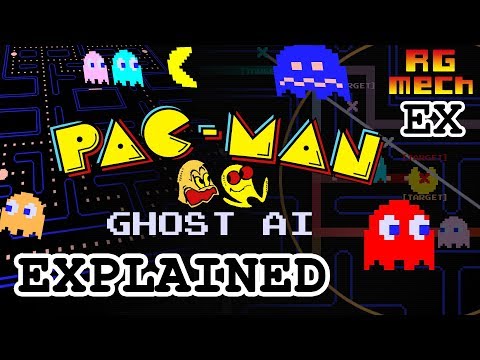
The ghosts in Pac-Man – Blinky, Pinky, Inky, and Clyde – each have distinct and predictable behaviors that dictate how they chase Pac-Man. These behaviors can be broken down into two primary modes: Chase Mode, where they actively try to intercept Pac-Man, and Scatter Mode, where they retreat to their respective corners of the maze. Understanding these modes, and how each ghost uniquely implements them, is key to mastering the game. Beyond these primary modes, the ghosts also have a Frightened Mode after Pac-Man consumes a Power Pellet, where they turn blue and flee, and a Recovery Mode after being eaten, where they return to the central ghost box.
Decoding Ghost Personalities: Chase and Scatter
Blinky (Red): The Relentless Chaser
Blinky, also known as “Shadow”, is the most aggressive ghost. During Chase Mode, Blinky relentlessly pursues Pac-Man directly. He uses a relatively simple targeting algorithm: he always aims to be in the same tile as Pac-Man. His relentless pursuit makes him a constant threat. As the game progresses, Blinky’s speed increases, and he enters “Cruise Elroy” mode, becoming even more aggressive and difficult to evade. This transformation happens in stages, indicated by the sounds he makes and is triggered by the number of pellets remaining in the maze.
Pinky (Pink): The Ambusher
Pinky, or “Speedy,” tries to anticipate Pac-Man’s movements. Instead of directly chasing Pac-Man, Pinky attempts to position himself four tiles ahead of Pac-Man’s current direction. This ambush strategy makes him particularly dangerous in narrow corridors and around corners, where Pac-Man may not see him coming.
Inky (Cyan): The Unpredictable One
Inky, known as “Bashful,” is the most complex of the ghosts. His targeting is calculated using a combination of Pac-Man’s position and Blinky’s position. Imagine a vector from Blinky to two tiles in front of Pac-Man (in Pac-Man’s current direction); Inky’s target is then twice the length of this vector away from Blinky, in the same direction. This calculation makes Inky’s movements seemingly random and unpredictable, adding an element of surprise to the game. Mastering Inky’s behavior is one of the most challenging aspects of Pac-Man.
Clyde (Orange): The Coward
Clyde, nicknamed “Pokey,” has the most peculiar behavior. When he is more than eight tiles away from Pac-Man, he behaves like Blinky and chases Pac-Man directly. However, when he gets within eight tiles of Pac-Man, he retreats to his corner in the bottom-left of the screen (the opposite corner of Blinky’s). This makes Clyde the least threatening ghost, as he often switches between chasing and scattering, creating unpredictable moments of respite for the player.
The Role of Scatter Mode
During Scatter Mode, each ghost retreats to a designated corner of the maze. This mode provides Pac-Man with brief periods of relative safety. The order and duration of the Chase and Scatter modes are predetermined, and the game cycles through these modes a specific number of times. Knowing the sequence can help players anticipate the ghosts’ behavior and plan their movements accordingly.
The Frightened State and Blue Ghosts
When Pac-Man eats a Power Pellet, the ghosts enter Frightened Mode. They turn blue, move more slowly, and reverse direction. In this mode, the ghosts run randomly away from Pac-Man. Pac-Man can now eat the ghosts for bonus points. The duration of the Frightened Mode decreases as the game progresses, making it more challenging to clear the board effectively. It is important to note that the speed of the Frightened ghosts varies based on the level.
The Ghost House and Resurrection
When a ghost is eaten by Pac-Man, it returns to the Ghost House in the center of the maze. Inside, it is regenerated and eventually released back into the maze. The order and timing of their release are governed by a set of rules and, to some extent, random chance, related to the number of pellets Pac-Man has eaten.
Pac-Man Ghosts FAQs
1. What triggers the switch between Chase and Scatter Modes?
The switch between Chase and Scatter modes is triggered by a timer programmed into the game. The game follows a predetermined sequence of Chase and Scatter periods. The duration of each mode changes as the player progresses through the levels.
2. Do the ghosts’ speeds change as the game progresses?
Yes, the ghosts’ speeds increase as the player advances to higher levels. This applies to both their normal chase and scatter speeds, as well as the speed during Frightened Mode. Blinky’s Cruise Elroy speed also increases.
3. What is “Cruise Elroy,” and how does it affect Blinky?
“Cruise Elroy” is a state that Blinky enters when a certain number of pellets remain in the maze. In this mode, Blinky’s speed significantly increases, making him even more aggressive and difficult to avoid. He also stops alternating between Chase and Scatter modes and remains in Chase mode constantly.
4. How do the ghosts decide which direction to turn at intersections?
In Chase Mode, the ghosts generally prioritize turning towards their target location. In Scatter Mode, they prioritize reaching their corner. When in Frightened Mode, ghosts turn randomly. However, there are specific rules governing these turns, such as not being able to immediately reverse direction (unless in Frightened Mode).
5. How do I use the ghosts’ behavior to my advantage?
Understanding the ghosts’ predictable behaviors allows players to strategically plan their movements. Knowing when the ghosts are in Scatter Mode provides an opportunity to clear pellets safely. Luring specific ghosts into predictable patterns allows for strategic power pellet consumption to maximize points.
6. Are there any glitches or exploits related to ghost behavior?
Yes, there are certain exploits related to the ghosts’ behavior, such as manipulating their movement patterns in specific areas of the maze to create safe zones. These exploits often rely on understanding the game’s underlying code and how it governs the ghosts’ actions.
7. What is the purpose of the Ghost House in the center of the maze?
The Ghost House serves as a respawn point for ghosts after they are eaten by Pac-Man. It is also the initial starting point for the ghosts at the beginning of each level.
8. Do all ghosts return to the Ghost House at the same rate?
No, the order in which the ghosts leave the Ghost House after being eaten is determined by a set of rules tied to the number of pellets that Pac-Man has eaten and the number of times the ghosts have been eaten in that level. These rules are complex and difficult to predict exactly but generally prioritize Blinky being released first.
9. Can I predict exactly where the ghosts will go at all times?
While the ghosts’ behavior is predictable, especially in Chase and Scatter modes, the complexity of Inky’s targeting algorithm and the random element during Frightened Mode make it difficult to predict their exact location at all times.
10. What happens when all the ghosts surround Pac-Man?
If all the ghosts are adjacent to Pac-Man, the game ends and Pac-Man loses a life. This usually happens when Pac-Man is trapped in a dead end or a small enclosure.
11. How does the number of dots remaining affect ghost behavior?
The number of dots remaining primarily affects Blinky’s Cruise Elroy mode. As the number of dots decreases, Blinky becomes faster and more aggressive. It can also affect the release rate of ghosts from the Ghost House.
12. Are the ghosts always active?
The ghosts are always active except for very brief periods during level transitions. They continuously move and react to Pac-Man’s presence, creating a dynamic and challenging gameplay experience.
13. Does the game difficulty affect ghost behavior?
While the fundamental behavior patterns remain the same, game difficulty can influence factors like the ghosts’ speeds and the duration of Frightened Mode. Harder difficulty settings generally result in faster ghosts and shorter Frightened Mode durations.
14. How are the ghost names significant?
The ghost names are not inherently significant in terms of gameplay mechanics, but they do reflect their individual behaviors. “Shadow” (Blinky) reflects his relentless pursuit. “Speedy” (Pinky) reflects his ambush tactics. “Bashful” (Inky) reflects his unpredictable movements, and “Pokey” (Clyde) reflects his cowardly nature.
15. Where can I find resources to further understand the ghost behavior?
Numerous online resources are available, including Pac-Man strategy guides, forums, and even disassembled game code analyses. These resources offer in-depth explanations of the ghosts’ algorithms and strategies for mastering the game. Fan communities and dedicated websites offer valuable insights and tips for players of all skill levels.