Decoding the FCS: Your Armored Core Targeting System
Fast answer first. Then use the tabs or video for more detail.
- Watch the video explanation below for a faster overview.
- Game mechanics may change with updates or patches.
- Use this block to get the short answer without scrolling the whole page.
- Read the FAQ section if the article has one.
- Use the table of contents to jump straight to the detailed section you need.
- Watch the video first, then skim the article for specifics.
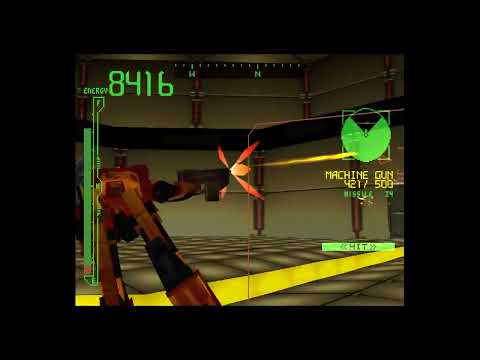
The Fire Control System (FCS) in the Armored Core series is your AC’s targeting computer. It’s responsible for a suite of critical functions, including target acquisition, target tracking, weapon lock-on, and aim assist, ultimately determining your AC’s ability to effectively hit enemies with its weaponry. Without a proper FCS, your perfectly crafted AC build can become hopelessly inaccurate. It’s the brain behind your offensive capabilities, influencing everything from missile tracking to the precision of your ballistic weapons. Choosing the right FCS for your playstyle is as crucial as selecting the right weapons or generator.
The Core Functions of the FCS
Understanding the core functions of the FCS is paramount to maximizing your combat effectiveness in any Armored Core game. Each function plays a significant role in dictating how well you can engage and eliminate your opponents.
Target Acquisition and Tracking
The FCS is the first responder when it comes to identifying and locking onto enemy targets. It scans the surrounding environment, differentiating between allies and enemies, and initiating the lock-on process. Once a target is acquired, the FCS actively tracks its movement, predicting its trajectory to maintain a stable lock-on, even amidst chaotic battlefield conditions. This tracking ability is especially critical when dealing with fast-moving ACs or nimble airborne opponents. Some FCS units excel at long-range tracking, while others are optimized for close-quarters combat.
Lock-On Time and Range
The lock-on time, which is the duration it takes for the FCS to establish a stable lock on a target, is a key performance indicator. A shorter lock-on time means you can quickly engage enemies and unleash your weapons. Conversely, a longer lock-on time can leave you vulnerable, especially against aggressive opponents.
The effective lock-on range determines how far away you can effectively target enemies. This is particularly important for players who prefer long-range sniping or missile bombardment tactics. FCS units with extended lock-on ranges allow you to engage enemies before they even enter your visual range, giving you a significant tactical advantage.
Aim Assist and Bullet Trajectory Prediction
Once a target is locked, the FCS provides aim assist, subtly adjusting your weapon aiming reticule to compensate for enemy movement and environmental factors. This assist is often crucial for landing accurate shots, particularly with fast-firing weapons or weapons with slow projectile speeds.
Advanced FCS units can even predict bullet trajectory, factoring in gravity, weapon recoil, and enemy velocity to further enhance aiming accuracy. This feature is essential for mastering the use of ballistic weapons and ensuring that your shots hit their mark.
Missile Lock-On and Guidance
For players who favor missile-based combat, the FCS plays a crucial role in guiding missile projectiles towards their targets. The FCS dictates how many missiles can be locked onto a single target simultaneously, as well as the speed and accuracy with which the missiles track the target. High-performance FCS units can even guide missiles around obstacles, ensuring that they reach their intended destination. The effectiveness of your missile loadout is directly tied to the capabilities of your FCS.
Choosing the Right FCS for Your Playstyle
Selecting the right FCS is a critical decision that can significantly impact your success in Armored Core. Consider these factors when making your choice:
-
Weapon Loadout: The types of weapons you use should heavily influence your FCS selection. If you primarily use ballistic weapons, prioritize FCS units with excellent aim assist and bullet trajectory prediction. If you rely on missiles, focus on FCS units with fast lock-on times and the ability to lock onto multiple targets simultaneously.
-
Combat Style: Your preferred combat style should also guide your FCS choice. If you favor close-quarters brawls, select an FCS with a short lock-on time and rapid target acquisition. If you prefer long-range engagements, prioritize an FCS with a long lock-on range and precise aiming capabilities.
-
AC Build: Your AC’s overall build, including its speed, maneuverability, and armor, should also be considered. A lightweight, agile AC can benefit from an FCS with a fast lock-on time, while a heavily armored AC might prefer an FCS with a longer lock-on range and enhanced aiming capabilities.
-
Mission Requirements: Different missions may require different FCS characteristics. A mission that involves engaging multiple enemies in a confined space might call for an FCS with rapid target acquisition, while a mission that requires taking down a single, heavily armored target might benefit from an FCS with precise aiming capabilities.
By carefully considering these factors, you can choose an FCS that complements your weapon loadout, combat style, AC build, and mission requirements, maximizing your combat effectiveness and ensuring victory on the battlefield.
FCS Frequently Asked Questions (FAQs)
Here are 15 frequently asked questions about the FCS in Armored Core, providing deeper insights and addressing common player concerns.
1. How does the FCS affect my missile lock-on?
The FCS directly affects your missile lock-on speed, lock-on range, and the number of missiles you can lock onto a single target simultaneously. A better FCS allows for faster and more accurate missile barrages.
2. Does the FCS affect the accuracy of my energy weapons?
While energy weapons generally have good inherent accuracy, the FCS can still enhance it by providing better target tracking and aim assist, especially at longer ranges.
3. What does “Multi-Lock Correction” stat on some FCS parts mean?
Multi-Lock Correction refers to the FCS’s ability to maintain lock-on on multiple targets. A higher correction value usually implies faster lock-on speeds on multiple targets and better stability when tracking them simultaneously.
4. How important is the FCS compared to other AC parts?
The FCS is extremely important, as it directly impacts your ability to hit targets. It’s often considered as crucial as your weapons and generator.
5. Can I change the FCS mid-mission?
In most Armored Core games, you cannot change your FCS mid-mission. Choose wisely before deploying.
6. Does the FCS consume energy?
No, the FCS typically doesn’t consume energy directly. However, it can indirectly affect energy consumption through more efficient weapon usage due to improved accuracy.
7. How does the FCS interact with different types of legs (bipedal, tetrapod, etc.)?
The FCS interacts with leg types primarily through mobility and stability. Leg types influence your AC’s speed and maneuverability, which then impact how effectively the FCS can track targets. More stable leg types can lead to improved accuracy.
8. Is there an “ideal” FCS that works for all situations?
No, there is no universally ideal FCS. The best FCS depends entirely on your playstyle, weapon loadout, and the specific mission requirements.
9. What happens if my FCS is destroyed in combat?
If your FCS is destroyed, your targeting capabilities will be severely impaired or completely disabled, making it extremely difficult to hit enemies.
10. How does the FCS affect the lock-on box size?
Some FCS units may slightly influence the size of the lock-on box, making it easier to initially acquire a target.
11. Can I manually aim without the FCS?
In some Armored Core games, you can manually aim, but it’s significantly harder and less accurate without the FCS’s assistance.
12. Does the FCS level up or improve as I use it?
In most Armored Core games, FCS units do not level up or improve with use. They have fixed stats.
13. What are some common mistakes players make when choosing an FCS?
Common mistakes include choosing an FCS that doesn’t match their weapon loadout, ignoring the lock-on range, and failing to consider the impact on missile performance.
14. How does the FCS handle stealth or ECM (Electronic Countermeasures)?
ECM can disrupt the FCS, making it harder to lock onto targets or breaking existing lock-ons. Some FCS units might be more resistant to ECM than others.
15. Does the FCS impact how quickly I can re-lock onto a target after breaking the lock?
Yes, a better FCS will generally re-acquire a target more quickly after the lock is broken, minimizing your vulnerability.