What Does Stabilized Mean in 5e? Your Comprehensive Guide
Fast answer first. Then use the tabs or video for more detail.
- Watch the video explanation below for a faster overview.
- Game mechanics may change with updates or patches.
- Use this block to get the short answer without scrolling the whole page.
- Read the FAQ section if the article has one.
- Use the table of contents to jump straight to the detailed section you need.
- Watch the video first, then skim the article for specifics.
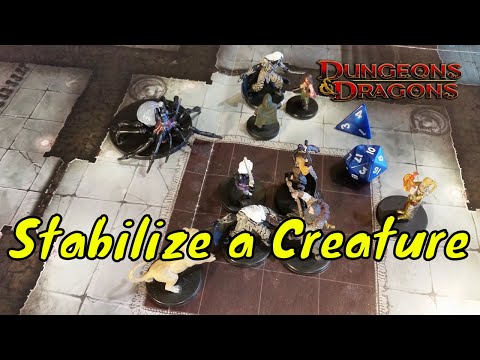
In Dungeons and Dragons 5th Edition (5e), stabilized refers to the state of a dying creature that is no longer at immediate risk of death. It means they are unconscious and no longer making death saving throws. Essentially, they are out of immediate danger, but require further healing to regain consciousness and return to the fight.
Understanding the Dying Condition
Before diving deeper into stabilization, it’s crucial to understand the “dying” condition in 5e. A creature falls unconscious and enters the dying condition when it takes damage that reduces it to 0 hit points. While dying, a creature must make a death saving throw at the start of each of its turns.
Death Saving Throws: A Race Against Time
Death saving throws are d20 rolls with no modifiers added. A roll of 10 or higher is a success, while a roll of 9 or lower is a failure. Accumulating three successes means the creature is stabilized. Accumulating three failures, however, results in death. Rolling a natural 1 counts as two failures, and rolling a natural 20 immediately restores the creature to 1 hit point.
Why Stabilization Matters
Stabilizing a dying character is paramount because it prevents them from accumulating those deadly three failures. It buys time for the party to administer healing, allowing them to rejoin the adventure instead of meeting an untimely end. Essentially, stabilization prevents the immediate threat of death.
How to Stabilize a Creature
There are several ways to stabilize a dying creature in 5e:
The Medicine Skill
The most common method is to use the Medicine skill. A character proficient in Medicine can attempt to stabilize a dying creature as an action. This requires a DC 10 Wisdom (Medicine) check. On a success, the creature is stabilized. On a failure, the character can try again on subsequent turns.
Healing Magic
Any spell or effect that restores hit points automatically stabilizes a dying creature and restores the indicated hit points. This is the most efficient method, as it simultaneously removes the dying condition and provides a buffer of hit points.
Healer’s Kit
A Healer’s Kit provides a way to stabilize a creature without requiring a skill check. By expending one use of the kit and using an action, a character can automatically stabilize a dying creature.
Spells and Abilities
Certain spells and abilities can also stabilize creatures directly. The Spare the Dying cantrip, for instance, allows a cleric to stabilize a dying creature with a touch as an action.
What Happens After Stabilization?
Once a creature is stabilized, it remains unconscious at 0 hit points. It is no longer making death saving throws, and its condition is considered stable. The stabilized creature can then be healed through other means, such as potions, spells, or even natural rest (although regaining hit points through short or long rests requires at least 1 hit point to begin with).
The Importance of Healing
While stabilization is crucial, it’s only a temporary reprieve. The stabilized creature remains vulnerable. If they take any damage while at 0 hit points, they immediately begin making death saving throws again. Therefore, it’s essential to heal the stabilized creature as soon as possible to bring them back into the fight or remove them from danger.
FAQ: Stabilized in 5e
Here are 15 frequently asked questions about the stabilized condition in 5e, designed to provide even greater clarity on the topic:
-
Does being stabilized mean I’m no longer unconscious? No, a stabilized creature remains unconscious at 0 hit points. Stabilization only halts the risk of immediate death.
-
If I’m stabilized, do I still make death saving throws? No, once stabilized, you no longer make death saving throws. The threat of immediately dying is averted.
-
Can I stabilize myself if I’m dying? No, you are unconscious and unable to take actions to stabilize yourself. You rely on the actions of others.
-
If I’m stabilized and then take damage, do I die instantly? No, taking damage while stabilized immediately causes you to begin making death saving throws again. You do not die instantly unless the damage is massive (exceeding your hit point maximum).
-
Does Spare the Dying heal any hit points? No, Spare the Dying only stabilizes a dying creature. It does not restore any hit points.
-
What happens if a stabilized creature is targeted by a coup de grace attack? A coup de grace isn’t explicitly defined in 5e rules. Generally, a creature is subject to the normal rules for being attacked while unconscious. The DM might rule that certain attacks deliver critical damage automatically, speeding the progress towards death saving throw failures.
-
Can I use a Healer’s Kit to stabilize a creature more than once? Yes, as long as the kit has uses remaining. Each use of the Healer’s Kit allows you to stabilize one dying creature.
-
Is stabilization a magical effect? No, stabilizing a creature through the Medicine skill or a Healer’s Kit is not considered a magical effect. However, using a spell like Spare the Dying is obviously magical.
-
If I stabilize a creature, can I move them to safety? Yes, you can move a stabilized creature. Remember, however, that moving them might provoke opportunity attacks if you leave an enemy’s reach.
-
Does the Help action aid in stabilizing a creature? No, the Help action cannot be used to directly assist with a Wisdom (Medicine) check to stabilize a creature. The check requires direct action and expertise.
-
Can a creature be stabilized by natural means without intervention? Yes, a creature can stabilize on its own simply by rolling successful death saving throws. Accumulating three successes stabilizes them. However, intervention speeds up the process.
-
Does being stable prevent resurrection? No, being stable does not affect the ability to resurrect a character. Resurrection spells require the creature’s soul to be willing and able to return, but stability is irrelevant.
-
If I’m a Paladin, can I use Lay on Hands to stabilize someone? Yes! Lay on Hands restores hit points, which automatically stabilizes a dying creature as part of the healing process.
-
Can I administer a potion to a stabilized character? Yes, administering a potion is an action. It’s a great way to bring a stabilized character back into the fight quickly.
-
Does stabilizing a creature remove conditions like poisoned or frightened? No, stabilizing only addresses the dying condition. Other conditions remain in effect until they are specifically removed by other spells or abilities.
Conclusion
Understanding the stabilized condition is crucial for any D&D 5e player. Knowing how to stabilize a dying ally can be the difference between victory and defeat, and between life and death for your companions. Mastering the techniques and nuances of stabilization allows you to play a more effective and compassionate character, ensuring the survival of your party and the success of your adventures. Remember that stabilization is just the first step; prioritizing healing is essential for truly bringing your allies back from the brink.