Unlocking Human Cognition: What Does the CB2 Robot Do?
Fast answer first. Then use the tabs or video for more detail.
- Watch the video explanation below for a faster overview.
- Game mechanics may change with updates or patches.
- Use this block to get the short answer without scrolling the whole page.
- Read the FAQ section if the article has one.
- Use the table of contents to jump straight to the detailed section you need.
- Watch the video first, then skim the article for specifics.
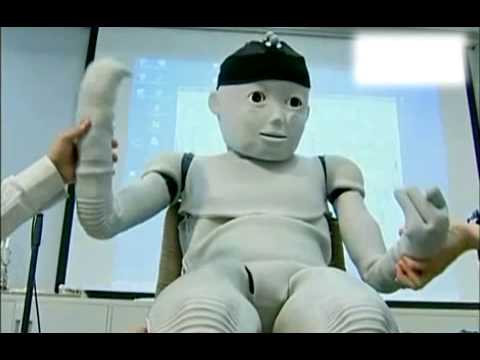
The CB2 robot is a sophisticated humanoid robot designed to mimic the physical and, more importantly, the cognitive capabilities of a 1- to 2-year-old child. Its primary function is to serve as a platform for researchers to study robot learning, cognitive development, and the social interactions that shape early human intelligence. CB2 learns through interaction with human “parents,” mirroring the way a child learns through observation, imitation, and direct instruction. By observing how CB2 develops and adapts, scientists gain valuable insights into the fundamental mechanisms of human cognition and how we learn to navigate the world.
Understanding the CB2 Project
The development of CB2, spearheaded by the JST ERATO Asada Project, was driven by a core question: can we understand the complexities of human intelligence by building a machine that learns in a similar way to a child? Unlike robots programmed with specific tasks in mind, CB2 is designed to learn from experience. It uses its sensors and actuators to interact with its environment and then processes that information using machine learning algorithms to develop its own understanding of the world.
Mimicking a Child’s Development
CB2’s physical design is crucial to its purpose. Standing at approximately 4 feet 3 inches tall and weighing 73 pounds, its size approximates that of a young child. However, the real marvel lies in its internal architecture. CB2 is equipped with:
- Visual sensors (cameras): To perceive its surroundings.
- Auditory sensors (microphones): To process speech and other sounds.
- Tactile sensors: To experience touch and pressure.
- Multiple actuators: To control its limbs, head, and facial expressions.
These sensors and actuators are connected to a powerful computer system that runs complex algorithms designed to simulate the learning processes of a child. The robot’s development is carefully monitored, and its interactions with humans are meticulously documented to track its progress and identify patterns in its learning.
Research Applications and Impact
The data gathered from CB2 is invaluable for several research areas. One significant area is the development of more advanced artificial intelligence. By studying how CB2 learns, researchers can create more sophisticated algorithms that allow machines to learn and adapt in more human-like ways. This has implications for various fields, including robotics, computer science, and cognitive science.
Furthermore, CB2 helps us understand the intricacies of human-robot interaction. As robots become more prevalent in our lives, it is essential to understand how humans interact with them and how to design robots that are more intuitive and user-friendly. CB2 provides a valuable platform for studying these interactions and developing robots that can seamlessly integrate into human society.
The work conducted through projects like CB2 informs the educational space as well. Consider the Games Learning Society, an organization dedicated to exploring the intersection of games and learning. The insights gained from CB2’s learning processes could potentially inform the design of educational games that are more effective at fostering cognitive development. You can explore their work further at GamesLearningSociety.org.
CB2: Frequently Asked Questions (FAQs)
Here are some frequently asked questions to further understand the CB2 robot and its significance.
1. Who created the CB2 robot?
The CB2 robot was developed by the JST ERATO Asada Project.
2. What is the primary goal of the CB2 project?
The primary goal is to study cognitive development, social maturity, behavior, attitude, and other personal stuff by creating a child-like robot that learns through interaction.
3. How tall is the CB2 robot?
CB2 measures about 4 feet, 3 inches tall.
4. How much does CB2 weigh?
CB2 weighs about 73 pounds.
5. What types of sensors does CB2 use?
CB2 uses visual sensors (cameras), auditory sensors (microphones), and tactile sensors.
6. What is the purpose of humanoid robots in general?
Humanoid robots are designed for various purposes, including interacting with human tools and environments, studying bipedal locomotion, and conducting experiments in human-robot interaction.
7. What is machine learning?
Machine learning is a type of artificial intelligence that allows computer systems to learn from data without being explicitly programmed.
8. How does CB2 learn?
CB2 learns through interaction with humans, observation, imitation, and processing sensory information using machine learning algorithms.
9. What is the ERATO project?
ERATO (Exploratory Research for Advanced Technology) is a Japanese government-funded project that supports innovative and high-risk research in science and technology.
10. How can understanding CB2’s learning help develop better AI?
By studying how CB2 learns, researchers can create more sophisticated machine learning algorithms that allow machines to learn and adapt in more human-like ways, improving the capabilities of AI systems.
11. What is the significance of mimicking a child’s development in a robot?
Mimicking a child’s development allows researchers to study the fundamental mechanisms of human cognition and understand how humans learn and develop intelligence.
12. What are some potential applications of CB2 research?
Potential applications include developing more advanced AI systems, improving human-robot interaction, and gaining insights into the cognitive development of children.
13. Are there other child-like robots similar to CB2?
Yes, there are other child-like robots, but CB2 is notable for its focus on mimicking the cognitive and social development of a young child.
14. How does CB2 contribute to the field of robotics?
CB2 contributes by providing a platform for studying robot learning, cognitive development, and human-robot interaction, advancing the field of robotics towards creating more intelligent and adaptable robots.
15. How might insights from CB2 influence education?
The insights gained from CB2’s learning processes could inform the design of educational tools and methods that are more effective at fostering cognitive development, especially in early childhood.