The Truth About Kratos’ Death: Unraveling the God of War’s Demise
Fast answer first. Then use the tabs or video for more detail.
- Watch the video explanation below for a faster overview.
- Game mechanics may change with updates or patches.
- Use this block to get the short answer without scrolling the whole page.
- Read the FAQ section if the article has one.
- Use the table of contents to jump straight to the detailed section you need.
- Watch the video first, then skim the article for specifics.
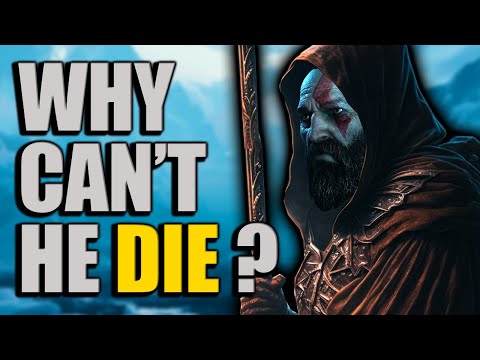
The answer to the question “What god killed Kratos?” is Zeus. However, the circumstances surrounding Kratos’ death and eventual resurrection are far more complex and lie at the heart of the God of War narrative. Zeus’s betrayal and subsequent murder of Kratos set in motion the events that define the Ghost of Sparta’s quest for vengeance and ultimate transformation.
Zeus’s Treachery: The Fall of Kratos
Kratos’s initial rise to power was fueled by his service to the Olympian gods. However, his insatiable thirst for power and unbridled rage put him on a collision course with Zeus, the King of the Gods. The pivotal moment leading to Kratos’s death occurs in God of War II when Kratos, emboldened by his victories, attacks Rhodes.
Zeus, fearing Kratos’s growing strength and potential to usurp him, devises a cunning plan. He weakens Kratos, tricking him into relinquishing his godlike powers into the Blade of Olympus. Once Kratos is vulnerable, Zeus seizes the Blade and uses it to deliver a fatal blow, killing Kratos.
This act of betrayal is not simply a power play; it is rooted in Zeus’s fear of repeating the cycle of patricide. Zeus himself had overthrown his father, Cronos, and he sees Kratos as a similar threat to his own reign. The death of Kratos serves as a catalyst, igniting his burning desire for revenge and setting the stage for his descent into the Underworld and his eventual return.
The Cycle of Vengeance: Kratos’s Resurrections
Kratos’s death is not the end of his story; it is merely a turning point. Driven by his insatiable rage and thirst for vengeance against Zeus, Kratos manages to escape the Underworld with the help of Gaia and the Titans. His primary objective is to kill Zeus and destroy Olympus.
What follows is a brutal campaign of destruction as Kratos systematically hunts down and eliminates the Olympian gods. From Poseidon to Hades, no god is safe from his wrath. This rampage culminates in a final confrontation with Zeus, where Kratos ultimately triumphs.
Beyond Vengeance: Kratos’s Transformation
While the initial God of War trilogy focuses on Kratos’s revenge against the Greek pantheon, the later games, particularly those set in the Norse realm, showcase a significant transformation. In God of War (2018) and God of War Ragnarök, Kratos strives to break free from his past and become a better father to his son, Atreus.
This new chapter sees Kratos facing new challenges and battling Norse gods and monsters, but with a renewed sense of purpose. He learns to control his rage and prioritize the well-being of his son, even if it means making difficult choices.
Frequently Asked Questions (FAQs) about Kratos and His Demise
1. Why did Zeus kill Kratos?
Zeus killed Kratos primarily out of fear and self-preservation. He saw Kratos as a potential usurper to his throne, mirroring his own history of overthrowing his father, Cronos. He also feared Kratos’s immense power and destructive tendencies.
2. Did Kratos stay dead after Zeus killed him?
No, Kratos did not stay dead. Driven by his burning desire for vengeance, he managed to escape the Underworld with the help of Gaia and the Titans, ultimately returning to Olympus to confront Zeus.
3. Who is the strongest god Kratos killed?
Zeus, the King of the Gods and ruler of Olympus, is arguably the strongest god Kratos killed. It took Kratos three games to finally defeat him, demonstrating the extent of Zeus’s power and resilience.
4. Why did Kratos kill all the Greek gods?
Kratos’s rampage against the Greek gods was fueled by a combination of factors, including:
- Betrayal: The gods, particularly Ares and Zeus, manipulated and deceived Kratos, leading to immense suffering and loss.
- Vengeance: Kratos sought revenge for the death of his family and the atrocities he was forced to commit under Ares’s command.
- Destruction of Olympus: Kratos believed that destroying Olympus and the gods was the only way to end the cycle of violence and suffering.
5. Did Kratos kill his own father?
Yes, Kratos killed his own father, Zeus, in God of War III. This act was the culmination of Kratos’s quest for vengeance and marked the end of the Olympian gods.
6. Who can beat Kratos at full power?
The answer to this question is highly debated. Characters with godlike powers, such as those capable of manipulating space and time, creating black holes, or wielding immense destructive energy, are often cited as potential challengers to Kratos.
7. Is Odin stronger than Zeus?
In terms of raw power and demonstrated abilities within their respective mythologies, Odin is generally considered to be more powerful than Zeus. Odin’s Odinforce and strategic mind give him an edge over Zeus’s brute strength and reliance on thunder and lightning.
8. Did Kratos spare any gods in the Greek pantheon?
Yes, Kratos did spare a few lesser Greek gods, including Phobos (god of fear), Circe (goddess of magic), Amphitrite (Queen of the Sea), Triton (god of the waves), and Nike (god of victory). These gods were either not directly involved in Kratos’s suffering or simply managed to avoid his wrath.
9. Did Kratos kill Thor in the Norse saga?
No, Kratos did not kill Thor in God of War Ragnarök. After a fierce battle, Kratos chose to spare Thor’s life, motivated by a desire to break the cycle of violence and protect their children.
10. Is Atreus (Loki) a god?
Atreus, also known as Loki, is a demigod. He is the son of Kratos (a god) and Laufey (a giant). This makes him part god and part giant, with a destiny that intertwines with the events of Ragnarök.
11. What is Kratos’s weakness?
Kratos has several weaknesses, including:
- Illusions: Kratos is vulnerable to illusions and manipulations that exploit his past trauma and guilt.
- Atreus: His son, Atreus, is a significant weakness. Kratos’s enemies can use Atreus to distract him or exploit his emotional connection.
- Rage: While Kratos’s rage grants him immense power, it can also cloud his judgment and make him reckless.
12. Why does Kratos hate the gods?
Kratos’s hatred for the gods stems from their betrayal, manipulation, and indifference to his suffering. He feels used and discarded by the gods, leading to a deep-seated resentment and desire for revenge.
13. Is Kratos a full god or a demigod?
Kratos is initially a demigod, being the son of Zeus and a mortal woman. After killing Ares, he becomes the God of War, ascending to full godhood.
14. What is Kratos’s kill count of gods?
Kratos’s kill count of Greek Gods is about 23. His kill count of non-gods and nobodies is a 15-digit number.
15. Are the God of War games educational?
While primarily action-adventure games, the God of War series offers valuable insights into Greek and Norse mythology. They also explore themes of vengeance, redemption, and the complexities of father-son relationships. To learn more about the educational potential of games, visit the Games Learning Society website at GamesLearningSociety.org.
In conclusion, Kratos’s story is one of tragedy, vengeance, and ultimately, transformation. While he was killed by Zeus, his journey extends far beyond that single act, evolving into a complex narrative exploring themes of power, family, and the possibility of redemption.