Navigating Fate: What Happens When You Choose an Ending in Elden Ring?
Fast answer first. Then use the tabs or video for more detail.
- Watch the video explanation below for a faster overview.
- Game mechanics may change with updates or patches.
- Use this block to get the short answer without scrolling the whole page.
- Read the FAQ section if the article has one.
- Use the table of contents to jump straight to the detailed section you need.
- Watch the video first, then skim the article for specifics.
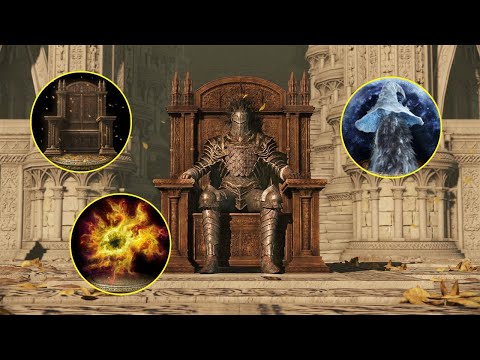
Choosing an ending in Elden Ring is the culmination of your Tarnished’s arduous journey through the Lands Between. It’s the moment where your decisions, alliances, and actions irrevocably shape the future of this shattered world. The game offers six distinct endings, each with unique consequences for the Lands Between, its inhabitants, and your character’s role within it. Selecting an ending isn’t just about seeing a final cutscene; it’s about realizing the impact of your entire playthrough and solidifying your legacy. After you choose, the credits roll, marking the end of your current playthrough. However, the adventure doesn’t necessarily end there! You are given the option to immediately begin New Game Plus, allowing you to experience the game again with your character’s stats and equipment intact, enabling you to pursue different endings or simply relish the challenge once more.
The Six Fates: A Breakdown of Elden Ring’s Endings
Each ending hinges on specific questlines, item acquisitions, and decisions made throughout the game. Here’s a brief overview:
-
Age of Fracture (Default Elden Lord Ending): This is the most straightforward ending, achieved simply by defeating the final boss and choosing to mend the Elden Ring. It restores the Lands Between to a state similar to its pre-Shattering condition, but with you as the new Elden Lord. It’s considered the “canon” ending by some because it requires the least deviation from the main story path.
-
Age of Order (Elden Lord Ending): Obtained by completing Goldmask’s questline. It’s a variant of the Elden Lord ending, but this one promises to bring a more perfect, absolute, and stable order to the Lands Between based on Goldmask’s theological understanding.
-
Age of Duskborn (Elden Lord Ending): This ending requires you to finish Fia’s questline. By giving the Mending Rune of the Death-Prince to the Elden Ring, the player introduces Destined Death back into the Lands Between, leading to a new age where Those Who Live in Death are given a place.
-
Blessing of Despair (Elden Lord Ending): Arguably the most bleak ending, achieved by completing Dung Eater’s questline and using his Mending Rune of Perfect Despair. This ending curses the Lands Between and its inhabitants, ensuring that they will forever be plagued by the Dung Eater’s depravity.
-
Age of the Stars: This ending requires completing Ranni the Witch’s lengthy questline. Summoning Ranni at the end leads to her becoming the new god of the Lands Between, ushering in an age ruled by the moon and its cold, uncaring logic. You become her consort, venturing out into space on a new journey. It’s considered by many as the “best” ending due to its potential for long-term positive change.
-
Lord of Frenzied Flame: Perhaps the most dramatically different ending. This requires embracing the Three Fingers beneath Leyndell and inheriting the Frenzied Flame. The player becomes the Lord of Frenzied Flame, choosing to burn the Erdtree and all life within it, ultimately ushering in an age of chaos and destruction. Melina will return after this ending, vowing to deliver the Tarnished Destined Death.
Shaping the World: Consequences and Implications
Each ending fundamentally alters the future of the Lands Between, dictating the prevailing ideology, the fate of its inhabitants, and the overall tone of the world. Some endings offer hope for a brighter future, while others doom the Lands Between to an eternity of suffering.
Choosing an ending also influences the player’s character arc, defining their legacy as either a savior, a destroyer, or something in between. It reinforces the theme of choice and consequence, encouraging players to carefully consider the ramifications of their actions throughout the game.
Preparing for the End: Important Considerations
Before initiating the final boss fight, it’s crucial to ensure you’ve completed the necessary questlines and acquired the required items for your desired ending. Talk to all relevant NPCs, explore every corner of the map, and delve into the lore to fully understand the implications of each choice.
Once you defeat the Elden Beast, a fractured version of Marika will be presented. Don’t automatically touch Marika’s head if you want a specific ending, as this will likely trigger the default “Age of Fracture” ending. Instead, look for summon signs on the ground, which will appear if you’ve completed the necessary steps for the other endings.
New Game Plus: Reclaiming Your Destiny
After completing the game, you have the option to start New Game Plus (NG+). This allows you to replay the game with your existing character, retaining your level, weapons, spells, and most items. NG+ provides an opportunity to pursue different endings, explore areas you may have missed, and further refine your character build.
Elden Ring Ending FAQs
Here are 15 frequently asked questions about endings in Elden Ring to offer further clarity and details:
1. How many endings are in Elden Ring?
Elden Ring features six different endings, each influenced by the player’s choices and actions throughout the game.
2. Do all Elden Lord endings grant the same achievement/trophy?
Yes, any of the four variations of the Elden Lord ending – Age of Fracture, Age of Order, Age of Duskborn, and Blessing of Despair – unlocks the same “Elden Lord” achievement/trophy.
3. Can I play after choosing an ending in Elden Ring?
Yes, after the credits roll, you’re given the option to immediately start New Game Plus (NG+). You can also choose to stay in your current world and explore anything you missed before initiating NG+.
4. Does the chosen ending affect anything in New Game Plus?
No, the ending you choose only affects the final cutscene and the state of the world at that specific moment. It doesn’t carry over to New Game Plus. Your character’s stats, equipment, and overall progress are what transfer.
5. What is considered the “best” ending in Elden Ring?
The definition of “best” is subjective, but many players consider the Age of the Stars ending to be the most hopeful and forward-thinking, as it frees the Lands Between from the influence of the Greater Will and allows Ranni to guide it towards a new, independent destiny.
6. Is the Lord of Frenzied Flame ending considered a “bad” ending?
Many consider the Lord of Frenzied Flame to be the most negative ending due to its destructive nature and the potential for permanent devastation of the Lands Between.
7. What is the hardest ending to achieve in Elden Ring?
The Lord of Frenzied Flame is arguably the most challenging to unlock because it requires finding a hidden area, completing a specific sequence of actions, and embracing the Frenzied Flame, which many players might avoid due to its negative connotations.
8. Is Ranni a good or evil character?
Ranni is a complex and morally grey character. While her actions lead to significant changes in the Lands Between, they are not necessarily motivated by malice. Whether she is “good” or “evil” is a matter of interpretation. Many see her actions as ultimately leading to a better future for the Lands Between, even if it involves significant upheaval. Understanding nuanced character motivations like these can be enhanced through scholarly game analysis, such as research featured by the Games Learning Society.
9. What ending does Melina want the player to achieve?
Melina guides the player towards the Age of Fracture ending, where the Elden Ring is mended and the Tarnished becomes the new Elden Lord. This is the “default” ending that aligns with her initial goals.
10. What is the easiest ending to achieve in Elden Ring?
The Age of Fracture ending is the easiest to achieve as it doesn’t require completing any specific side quests. Simply following the main story path and defeating the final boss will lead to this ending.
11. Is there a “canon” ending in Elden Ring?
FromSoftware has not explicitly stated which ending is canon. The Age of Fracture is often considered the closest thing to a canon ending because it represents the most straightforward restoration of the Elden Ring without major alterations to the established order.
12. Does Ranni love the Tarnished?
In the Age of the Stars ending, Ranni refers to the Tarnished as her “lord” and “dear consort,” implying a close bond and mutual respect. While the nature of their relationship is open to interpretation, it is clear that she values the Tarnished’s role in her plan.
13. What does the Dung Eater’s ending do to the Lands Between?
The Blessing of Despair ending spreads the Dung Eater’s curse throughout the Lands Between, corrupting future generations and ensuring an eternity of suffering and despair.
14. Should I summon Ranni or touch Marika at the end?
If you wish to achieve the Age of the Stars ending, you should summon Ranni by interacting with the blue summon sign that appears on the ground after defeating the Elden Beast. Touching Marika’s head will trigger the default Age of Fracture ending.
15. What endings do I need to see to get all achievements in Elden Ring?
To unlock all ending-related achievements in Elden Ring, you need to experience one of the Elden Lord endings (Age of Fracture, Age of Order, Age of Duskborn, or Blessing of Despair), the Age of the Stars ending, and the Lord of Frenzied Flame ending.
Understanding the consequences of each ending is vital for making an informed choice in Elden Ring. The game challenges you to consider the long-term implications of your actions and the kind of legacy you want to leave behind in the Lands Between. Further exploration into the narrative complexities of games can be found at GamesLearningSociety.org.