Unlocking the Secrets of the Human Engram: A Journey into Memory’s Physical Realm
Fast answer first. Then use the tabs or video for more detail.
- Watch the video explanation below for a faster overview.
- Game mechanics may change with updates or patches.
- Use this block to get the short answer without scrolling the whole page.
- Read the FAQ section if the article has one.
- Use the table of contents to jump straight to the detailed section you need.
- Watch the video first, then skim the article for specifics.
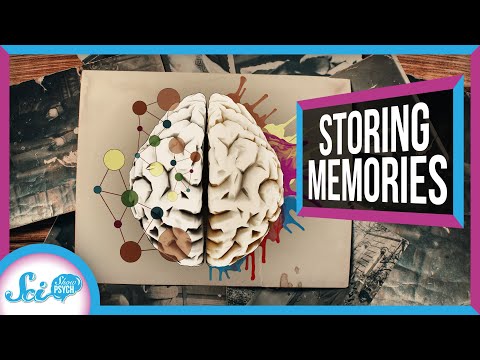
The human engram is the hypothetical physical and/or chemical change in the brain that represents a memory. Think of it as the brain’s unique signature for a specific experience, thought, or piece of knowledge. It’s the “where” and “how” our memories are stored in the complex neural networks of our minds. It’s important to remember that the engram is not a single spot or a single cell, but rather a distributed network of neurons across multiple brain regions that fire together to represent that memory. This intricate web, once activated, allows us to recall and relive past experiences, learn new skills, and form our identities.
Delving Deeper: The Engram in Detail
The concept of the engram, though first formally introduced by Richard Semon in 1904, has roots stretching back even further in the history of philosophy and science. It represents the physical embodiment of learning and memory, moving beyond abstract descriptions to seek the tangible traces of our experiences within the brain’s architecture. Understanding the engram is crucial for gaining insights into how memories are formed, consolidated, stored, and retrieved.
This is not a static, unchanging entity. Instead, the engram is a dynamic and adaptable system, constantly being modified and updated by new experiences. Imagine a sculptor continually refining a statue, adding new details and smoothing out imperfections. Similarly, each time we recall a memory, we are not simply replaying a perfect recording; we are actively reconstructing it, potentially altering it in the process. This process highlights the plasticity of the brain and the fluid nature of memory itself.
Furthermore, the engram is not limited to consciously accessible memories. It encompasses all forms of learning, from implicit skills like riding a bicycle to emotional responses like fear. Research in areas like fear conditioning has been instrumental in identifying specific brain regions, such as the amygdala, that play a critical role in the formation and storage of fear-related engrams.
Ultimately, the study of engrams is about unlocking the fundamental mechanisms of memory, which impacts understanding and addressing neurodegenerative diseases like Alzheimer’s, developing better learning strategies, and even creating more advanced artificial intelligence.
Frequently Asked Questions (FAQs) about Human Engrams
Here are some common questions about the human engram:
1. What is the difference between an engram and a memory?
The memory is the subjective experience of recalling a past event or fact. The engram is the physical representation of that memory within the brain. The engram is the hardware, and the memory is the software.
2. Where in the brain are engrams located?
Engrams are not confined to a single location. They are distributed throughout the brain, with different brain regions contributing to different aspects of the memory. The hippocampus is crucial for forming new episodic memories (memories of events), the amygdala for emotional memories, and the cortex for long-term storage and semantic memories (general knowledge).
3. Are engrams permanent?
While some memories can last a lifetime, engrams are not necessarily permanent. They can be weakened or altered over time due to factors like aging, brain damage, or interference from other memories. Additionally, the process of memory reconsolidation means that each time a memory is recalled, it becomes susceptible to modification.
4. How are engrams formed?
Engrams are formed through a process called synaptic plasticity. When neurons are repeatedly activated together, the connections between them strengthen, making it easier for them to fire together in the future. This strengthening of connections forms the physical basis of the engram. Joint stimulation of neurons induces the growth of associative connections between them, leading to the formation of memory engrams.
5. Can engrams be manipulated?
Yes, research has shown that engrams can be manipulated using techniques like optogenetics and pharmacology. These methods allow scientists to selectively activate or inhibit specific populations of neurons, effectively “turning on” or “turning off” memories.
6. What role do genes play in engram formation?
Genes play a significant role by encoding the proteins that are essential for synaptic plasticity and neuronal function. Certain genes are activated during learning and memory formation, contributing to the structural and functional changes that underlie the engram.
7. How do engrams relate to learning?
Engrams are the physical basis of learning. Every time we learn something new, an engram is formed in the brain, representing the new information or skill. The stronger the engram, the more easily we can recall and apply what we have learned.
8. Can trauma affect engram formation?
Yes, trauma can have a profound impact on engram formation. Traumatic memories are often encoded differently than normal memories, leading to symptoms like flashbacks, nightmares, and emotional dysregulation.
9. Are engrams the same in all individuals?
No. While there are common patterns of brain activity associated with certain types of memories, each individual’s engrams are unique, reflecting their own personal experiences and history.
10. How does sleep affect engrams?
Sleep plays a crucial role in memory consolidation, the process by which newly formed engrams are strengthened and stabilized. During sleep, the brain replays patterns of neural activity that occurred during wakefulness, reinforcing the connections between neurons and solidifying memories.
11. What technologies are used to study engrams?
Researchers use a variety of technologies to study engrams, including:
- Electrophysiology: Measuring electrical activity of neurons.
- Functional magnetic resonance imaging (fMRI): Measuring brain activity by detecting changes in blood flow.
- Optogenetics: Using light to control the activity of specific neurons.
- Chemogenetics: Using drugs to control the activity of specific neurons.
- Microscopy: Examining the structure and function of synapses.
12. Can engrams be erased or weakened?
While completely erasing an engram may be difficult, it is possible to weaken or modify memories through techniques like extinction learning, where a learned association is gradually unlearned through repeated exposure to the stimulus without the associated consequence.
13. How does aging affect engrams?
Aging can lead to a decline in synaptic plasticity and neuronal function, which can impair engram formation and retrieval. This can result in age-related memory decline and an increased risk of neurodegenerative diseases.
14. What is the “search for the engram”?
The “search for the engram” refers to the ongoing scientific effort to identify and understand the physical and chemical changes in the brain that constitute memories. It’s about pinpointing the specific neural circuits and molecular mechanisms involved in encoding, storing, and retrieving information.
15. How can understanding engrams help us improve learning and memory?
By understanding how engrams are formed and consolidated, we can develop strategies to improve learning and memory. This includes techniques like spaced repetition, active recall, and sleep hygiene. Furthermore, this knowledge is crucial in developing interventions for memory disorders like Alzheimer’s disease.
Understanding the intricacies of the engram provides valuable insights into the mechanisms of learning and memory. By continuing to research and explore this field, we can unlock even more secrets about the human brain and pave the way for new treatments for neurological disorders. And, as we learn more about how we learn, we can improve the educational system through better understanding of the science of learning as studied by organizations such as the Games Learning Society whose website can be found at GamesLearningSociety.org.