What is an Illegal Target in Magic: The Gathering?
Fast answer first. Then use the tabs or video for more detail.
- Watch the video explanation below for a faster overview.
- Game mechanics may change with updates or patches.
- Use this block to get the short answer without scrolling the whole page.
- Read the FAQ section if the article has one.
- Use the table of contents to jump straight to the detailed section you need.
- Watch the video first, then skim the article for specifics.
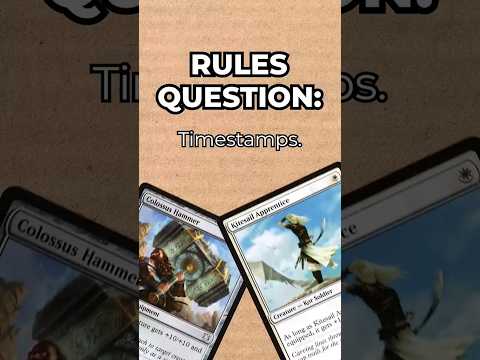
In Magic: The Gathering (MTG), targeting is a fundamental mechanic that dictates which spells and abilities can affect which permanents or players. However, not all targets are created equal. An illegal target is a recipient of a spell or ability that no longer meets the requirements specified by that spell or ability at the time it would resolve. Essentially, if the thing you’re trying to affect with a spell or ability doesn’t qualify as a valid target when that spell or ability would actually take effect, it’s an illegal target. This can lead to various outcomes, often causing the spell or ability to fizzle or resolve with no effect.
The concept of illegal targets stems from the stack, a zone where spells and abilities wait to resolve. Before a spell or ability resolves, the game rechecks if its targets are still legal. If one or more of its targets have become illegal, the spell or ability may behave in ways that may not be expected, and this can cause considerable confusion for new players. This article aims to demystify the concept, providing examples and clarifying common situations that might involve illegal targets.
Understanding Targeting in MTG
Before delving into illegal targets, it’s essential to understand what constitutes targeting in MTG. A spell or ability targets something when it specifically uses the word “target” in its text or rules description. This means that if a card’s text reads “target creature” or “target player”, it is a targeting effect. The word “target” is very important and should jump out at you when you are reading a card, as it indicates that a target must be declared when the spell or ability is placed on the stack. It’s also important to note that some actions or spells do not target at all, such as board wipes.
What Makes a Target Illegal?
Several factors can cause a target to become illegal. These include:
- Changes in Location: If a spell or ability targets a permanent on the battlefield and that permanent is removed from the battlefield before the spell or ability resolves, the target becomes illegal. This includes effects that bounce a card to its owner’s hand, exile it, or put it in another zone such as the graveyard.
- Changes in Characteristics: If a spell or ability targets a creature with a specific characteristic, like a color or a power and toughness, and that creature’s characteristics change before the spell or ability resolves, it could make the target illegal. For example, if a card targets an artifact creature and that creature is no longer an artifact creature before the ability resolves, it is no longer a legal target.
- Loss of Targeting Validity: Some targets are only legal if certain conditions are met. For example, a card may only target a creature that has been untapped since your last turn. If that creature is tapped before the spell resolves, it is no longer a legal target for that effect.
- Changes to Text of Spells or Abilities: If an effect alters the text of a spell or ability after it is cast but before it resolves, and that change makes the target no longer valid, the target becomes illegal. This is less common but still an important consideration.
- Protection: If a spell or ability targets a permanent with Protection from a specific color or card type, and the spell or ability’s color or card type matches that protection, the target is immediately illegal. For instance, a black spell cannot target a creature with Protection from Black.
Outcomes of Targeting an Illegal Target
When a spell or ability has one or more illegal targets at the point of resolution, the result varies based on the type of effect:
- Single Target Spells or Abilities: If a spell or ability targets a single permanent or player, and that target becomes illegal, the entire spell or ability is countered and it has no effect.
- Multi-Target Spells or Abilities: If a spell or ability targets multiple permanents or players, and some of those targets become illegal, the spell or ability will still resolve but will not affect any of the illegal targets. The spell or ability still affects all legal targets.
Frequently Asked Questions (FAQs)
Here are some frequently asked questions about illegal targets in Magic: The Gathering, designed to further clarify and expand on the topic.
1. Can I cast a spell without a legal target?
No, you cannot cast a spell or activate an ability if it has no legal targets. The existence of at least one legal target is a prerequisite for initiating a spell or ability that requires targeting.
2. Does equipment targeting count as targeting the creature with a spell?
Yes, activating the “Equip” ability of an Equipment involves targeting the creature. This is because the reminder text for “Equip” explicitly includes the word “target”. It is also useful to remember that equipment cannot be attached to something that isn’t a creature.
3. Can a spell or ability target itself on the stack?
Generally, no. A spell or ability on the stack is an illegal target for itself. This only means that the ability can’t target itself – the spell or ability is on the stack when you choose its targets. So, when an effect is targeting a spell, and you are still casting that spell, you are free to choose to target your own spell for a copy or other effect.
4. Does Spellskite have to be a legal target when using its ability?
No, Spellskite’s ability can be activated even if Spellskite is not a legal target. This means it can be used to attempt to redirect the target of a spell or ability even if Spellskite is protected, shrouded or hexproof, but if it would be an illegal target for the redirected spell, the target will not change.
5. Can I respond to my own spell or ability on the stack?
Yes, you can respond to your own spells and abilities. This is a key part of advanced gameplay and can enable powerful and surprising plays.
6. What spells do not target in MTG?
Spells like Day of Judgment or Rolling Temblor do not use the word “target”, and therefore they do not target. These spells will affect all creatures, even those with protection, shroud, or hexproof.
7. Can you Equip a Planeswalker?
Yes, with the card Luxior, Giada’s Gift, you can target a planeswalker as though it were a creature with its activated ability, and the static ability will make it a creature so that it remains equipped. Usually, Equipment can only be attached to creatures.
8. Can an Artifact Creature be equipped?
Yes, Artifact Creatures can be equipped with Equipment just like any other creature. It’s important to remember that Equipment can only be attached to creatures.
9. If a spell is copied, is it still targeting?
Yes, copying a spell or ability copies all of its characteristics, including targets. All decisions made for the original spell, including targeting, will be replicated in the copy.
10. Does countering a spell prevent cast triggers?
No, countering a spell does not prevent “when you cast” triggered abilities. These abilities trigger when a spell is played, regardless of whether it successfully resolves.
11. Does Deathtouch cancel Deathtouch?
No, Deathtouch does not cancel deathtouch. Creatures with deathtouch dealing damage to each other will deal lethal damage to each other as both will be destroyed by the effect of deathtouch. There is no interaction where deathtouch cancels another deathtouch.
12. Can you fail to target a spell or ability?
You cannot fail to target a spell or ability if there are legal targets. If a triggered ability is placed on the stack and there are no legal targets, it is immediately removed from the stack.
13. Can I respond to my opponent playing a land?
No, playing a land is a special action that does not use the stack. It goes directly onto the battlefield and cannot be responded to with instants or activated abilities.
14. Can you tap a creature that is on the stack?
Yes, you can tap a creature on the stack if it has an ability that allows it. You can do this in response to another spell or activated ability on the stack.
15. What happens if I respond to my opponent’s single-target removal spell with a protection spell?
If you respond to your opponent’s single-target removal spell with a protection spell (e.g., giving a creature protection from the color of their spell), the original removal spell will have no valid targets upon resolution and will be countered and fizzle without effect.
Conclusion
Understanding illegal targets is crucial for playing Magic: The Gathering effectively. Knowing how spells and abilities target, what makes a target illegal, and how the game handles these situations will significantly improve your strategic gameplay. By carefully analyzing the game state and understanding targeting rules, you can outmaneuver your opponents and gain the edge needed to win. Remember, the more aware you are of these nuances, the better equipped you’ll be to navigate the complexities of MTG.