Decoding the Dichotomy: What is Black White Called in MTG?
Fast answer first. Then use the tabs or video for more detail.
- Watch the video explanation below for a faster overview.
- Game mechanics may change with updates or patches.
- Use this block to get the short answer without scrolling the whole page.
- Read the FAQ section if the article has one.
- Use the table of contents to jump straight to the detailed section you need.
- Watch the video first, then skim the article for specifics.
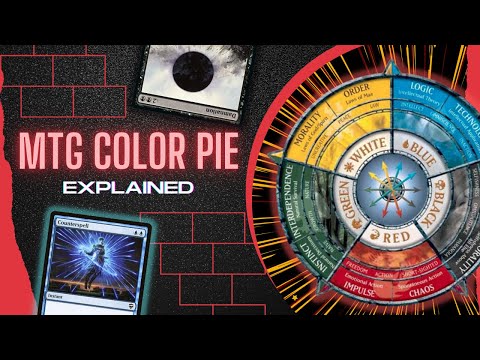
In the vast and intricate world of Magic: The Gathering (MTG), color combinations are the bedrock upon which countless strategies and deck archetypes are built. The pairing of Black and White mana is particularly intriguing, representing a blend of order and ambition, life and death. In Magic, the Black and White color combination is primarily known as Orzhov. The name “Orzhov” is derived from the Orzhov Syndicate, one of the ten guilds from the Ravnica setting in MTG. This guild embodies a blend of religious hierarchy, financial institution, and organized crime family.
Delving Deeper: The Philosophy of Orzhov
The Orzhov color combination (Black/White) represents a fascinating duality. White provides structure, order, and a sense of community, while Black embodies ambition, self-interest, and the pursuit of power. This creates a faction that values both hierarchy and individual gain. Orzhov decks often focus on controlling the board, draining opponents of resources, and ultimately securing victory through a slow, grinding advantage. They are masters of extortion, both literally and figuratively, often using life payments and resource denial to wear down their opponents. They believe in power and control over all, and will do anything to get it.
Key Characteristics of Orzhov Decks
-
Attrition Warfare: Orzhov decks excel at slowly draining the opponent’s resources, using cards that cause gradual life loss, force sacrifice, or disrupt their mana base.
-
Lifegain and Drain: A common theme in Orzhov is the interplay between gaining life and draining it from opponents. This allows for resilient strategies that can withstand aggressive assaults.
-
Creature Recursion: Black’s access to graveyard manipulation allows Orzhov decks to repeatedly bring back creatures from the dead, creating a relentless stream of threats.
-
Token Generation: White’s ability to create tokens, combined with Black’s sacrifice outlets, can generate value and fuel powerful effects.
-
Control Elements: Both White and Black offer access to removal spells, counterspells (to a lesser extent in Black), and other control elements that allow Orzhov decks to dictate the pace of the game.
Beyond Orzhov: Other Considerations
While “Orzhov” is the most common and widely accepted name for the Black/White color combination, it’s important to remember that it’s tied to the Ravnica setting. Outside of this context, players might simply refer to decks as “Black/White” or “BW.” The name “Ghost Council” from the card Ghost Council of Orzhova may sometimes arise too. But since the card is linked to the Orzhov Syndicate, “Orzhov” is still the first name to come to mind.
Frequently Asked Questions (FAQs)
1. What are the other two-color combinations in MTG?
The other two-color combinations in MTG, each with its own associated guild from Ravnica, are:
- Azorius (White/Blue): Law and order, control.
- Dimir (Blue/Black): Secrets, manipulation, control.
- Rakdos (Black/Red): Chaos, destruction, aggression.
- Golgari (Black/Green): Life and death, growth and decay, resilience.
- Selesnya (White/Green): Community, harmony, tokens.
- Izzet (Blue/Red): Innovation, experimentation, spellslinging.
- Gruul (Red/Green): Nature, savagery, aggression.
- Boros (Red/White): Justice, swiftness, aggression.
- Simic (Blue/Green): Evolution, adaptation, ramp.
2. What are the three-color combinations called in MTG?
Three-color combinations are often referred to as “shards” or “wedges,” depending on the set.
-
Shards (from Alara): Bant (White/Blue/Green), Esper (White/Blue/Black), Grixis (Blue/Black/Red), Jund (Black/Red/Green), Naya (White/Red/Green).
-
Wedges (from Tarkir): Abzan (White/Black/Green), Jeskai (White/Blue/Red), Sultai (Blue/Black/Green), Mardu (White/Black/Red), Temur (Blue/Red/Green).
3. What is Green White Black called in MTG?
Green, White, and Black is called Abzan. Colloquially, it’s sometimes referred to as “Junk.”
4. What does Naya mean in MTG?
Naya is a shard from the Alara block, representing a combination of White, Red, and Green. It focuses on large creatures and overwhelming aggression. It represents raw, primal strength and the power of nature.
5. What does Mardu mean in MTG?
Mardu is a wedge from the Tarkir block, representing a combination of White, Black, and Red. It emphasizes speed, aggression, and ruthless tactics.
6. What is the philosophy of Black in MTG?
Black’s philosophy centers around self-interest, ambition, and the pursuit of power at any cost. It embraces pragmatism, using any means necessary to achieve its goals, even if it means sacrificing others.
7. What is the philosophy of White in MTG?
White’s philosophy is based on order, structure, and the common good. It values community, justice, and morality, seeking to create a harmonious and equitable society.
8. What is the strongest color combination in Magic?
The “strongest” color combination is subjective and depends on the meta. Generally, Blue and Black are considered powerful due to their control and card advantage capabilities. Red and Green is often considered the most aggressive.
9. What are aggressive colors in MTG?
Red and Green are generally considered the most aggressive colors, focusing on fast creatures and direct damage. White can also be aggressive, relying on efficient creatures and combat tricks.
10. What is the “color pie” in MTG?
The color pie is a fundamental concept in MTG design that defines the strengths, weaknesses, and overall philosophy of each of the five colors. It ensures that each color has unique characteristics and contributes to the game in a distinct way.
11. Is colorless a color in MTG?
Colorless is not a color, although it functions as one in many ways. It represents a lack of color affiliation and is often associated with artifacts and Eldrazi creatures.
12. What are mana sinks in MTG?
Mana sinks are cards that can repeatedly use up excess mana, often to generate value or create a game-winning effect. They are particularly valuable in control decks like Orzhov, which tend to accumulate mana over time.
13. Is black evil in MTG?
Black is not inherently evil, but it often utilizes ethically questionable tactics to achieve its goals. It prioritizes self-interest and is willing to make sacrifices, which can be seen as morally ambiguous. No color in Magic is purely good or evil.
14. What is MTG shadow?
Shadow is an ability that restricts which creatures can block or be blocked. Creatures with shadow can only block or be blocked by other creatures with shadow.
15. Where can I learn more about the game design of Magic: The Gathering?
You can explore various resources online, including articles, videos, and community forums dedicated to MTG strategy and design. The Games Learning Society offers resources for understanding game design principles more broadly. Visit GamesLearningSociety.org to learn more.
By understanding the nuances of the Black/White color combination, you can better appreciate the strategic depth and creative possibilities within MTG. Whether you’re a seasoned player or a newcomer to the game, exploring the philosophy and mechanics of Orzhov can significantly enhance your understanding and enjoyment of Magic: The Gathering.