Warzone 2.0: A Fresh Warzone Experience
Fast answer first. Then use the tabs or video for more detail.
- Watch the video explanation below for a faster overview.
- Game mechanics may change with updates or patches.
- Use this block to get the short answer without scrolling the whole page.
- Read the FAQ section if the article has one.
- Use the table of contents to jump straight to the detailed section you need.
- Watch the video first, then skim the article for specifics.
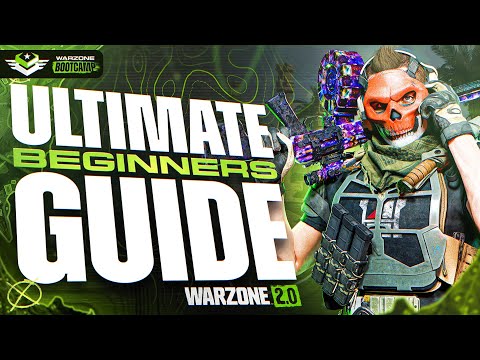
Warzone 2.0, now simply known as Warzone, represented a significant departure from the original Warzone, offering a redesigned experience with new mechanics, maps, and modes. While maintaining the core battle royale formula, Warzone introduced a variety of features to enhance the gameplay loop, strategic depth, and overall player engagement. The differences range from the evolution of the circle mechanic to new AI elements to a much larger variety of game modes to pick from.
Key Differences in Warzone 2.0
Here’s a breakdown of the core changes and what made Warzone a different beast:
-
New Map: Al Mazrah. The original Warzone was set in Verdansk and later Caldera. Warzone launched with Al Mazrah, a sprawling map inspired by Middle Eastern landscapes, featuring diverse terrains, urban environments, and points of interest that encouraged varied playstyles. A new map meant new tactics and strategies to learn all over again.
-
Circle Collapse. The original’s singular shrinking circle was replaced, at least initially, by Circle Collapse, a dynamic system where multiple circles spawned within the map, closing independently before converging into a single safe zone. This forced players to adapt to unpredictable scenarios, engaging in smaller skirmishes before the final showdown.
-
AI Combatants and Strongholds. Warzone introduced AI combatants scattered throughout the map, particularly within Strongholds. Clearing these Strongholds provided valuable loot and tactical advantages, adding a PvE element to the PvP-focused battle royale.
-
DMZ Mode. This extraction-based mode allowed players to enter the map, complete missions, loot resources, and exfil before being eliminated. DMZ offered a unique gameplay loop with persistent progression and a higher emphasis on risk management.
-
Proximity Chat. A staple of many online games, proximity chat added a new layer of communication and tension to Warzone. Players could hear nearby enemies, leading to tense standoffs, unexpected alliances, or strategic deceptions.
-
Overhaul of Movement and Combat. Warzone brought with it all the changes from Modern Warfare II, now Modern Warfare III, with improved swimming mechanics, mantling, and combat sliding. These changes impacted how players navigated the map and engaged in firefights.
-
Revamped Gulag. The Gulag, the second-chance arena, received an overhaul. It now included AI jailers to fight as well as other enemy players and added a focus on 2v2 combat.
-
Looting and Inventory System. The inventory system was streamlined, with a focus on easier loot acquisition and management.
-
Vehicles and Fuel. Vehicles now required fuel, adding a strategic element to their use. Players needed to manage fuel consumption and find refueling stations to keep their vehicles operational.
The Evolving Nature of Warzone
It’s important to note that Warzone is a constantly evolving game. Activision continues to update the game with new seasons, content, and gameplay tweaks. Some of the initial changes were very controversial. As a result, several of these initial differences have been rolled back or tweaked significantly based on player feedback, like the circle collapse mechanic.
Is This Still Call of Duty?
These changes, while significant, ultimately serve the purpose of evolving the Call of Duty formula and keeping the battle royale genre fresh. The goal is to give players new and innovative ways to engage with the game and to keep it from growing stale.
Want to learn more about the relationship between games, learning, and culture? Visit the Games Learning Society at https://www.gameslearningsociety.org/.
Frequently Asked Questions (FAQs)
Here are some frequently asked questions about Warzone.
H3 1. Is Warzone 2.0 now just called Warzone?
Yes, Warzone 2.0 was rebranded and is now simply referred to as Warzone. When Modern Warfare III came out, all the content from Modern Warfare III got integrated into Warzone.
H3 2. Is Warzone free to play?
Yes, Warzone is free to play. This accessibility allows a wide range of players to jump in and experience the battle royale action.
H3 3. Do I need to own Modern Warfare III to play Warzone?
No, you do not need to own Modern Warfare III to play Warzone. Warzone is a standalone free-to-play game.
H3 4. Does progress from the original Warzone carry over to Warzone?
No, progression from the original Warzone does not transfer to the current version of Warzone. It is a completely fresh start for all players.
H3 5. What game modes are available in Warzone?
Warzone features a variety of game modes, including:
- Battle Royale: The classic last-team-standing mode.
- Resurgence: A faster-paced mode with quicker redeployments.
- Plunder: A mode focused on collecting cash and completing contracts.
- DMZ: An extraction-based mode with PvE and PvP elements.
H3 6. What is DMZ mode in Warzone?
DMZ is an extraction-based mode where players enter the map, complete missions, loot resources, and attempt to exfil before being eliminated. It’s a mix of PvE and PvP, with a focus on risk management and persistent progression.
H3 7. What is Circle Collapse in Warzone?
Circle Collapse was a dynamic system where multiple circles spawned within the map, closing independently before converging into a single safe zone. However, this has now been changed back to a traditional shrinking circle, more like the original Warzone.
H3 8. Are there AI enemies in Warzone?
Yes, there are AI combatants in Warzone, primarily found in Strongholds and other designated areas. Clearing these areas can provide valuable loot and tactical advantages.
H3 9. Does Warzone have proximity chat?
Yes, Warzone features proximity chat, allowing players to hear nearby enemies and teammates. This adds a new layer of communication and strategy to the game.
H3 10. Are the movement mechanics different in Warzone?
The movement mechanics are constantly being updated. But, generally speaking, Warzone inherits movement changes from the current Call of Duty title.
H3 11. How does the Gulag work in Warzone?
The Gulag is the second-chance arena where eliminated players can fight for a chance to redeploy. The Gulag format is constantly changing with each new season and game iteration.
H3 12. What are Strongholds in Warzone?
Strongholds are locations on the map that are heavily guarded by AI combatants. Clearing these Strongholds provides players with valuable loot, such as weapons, equipment, and cash.
H3 13. How do vehicles work in Warzone?
Vehicles in Warzone require fuel to operate. Players need to manage fuel consumption and find refueling stations to keep their vehicles running.
H3 14. Is cross-play supported in Warzone?
Yes, Warzone supports cross-play, allowing players on PC, PlayStation, and Xbox to play together.
H3 15. What is the file size of Warzone?
The file size of Warzone can vary depending on the platform and updates. It’s recommended to check the specific file size on your platform’s store.