Unveiling the Retro Charm: What is Pokémon FireRed a Remake Of?
Fast answer first. Then use the tabs or video for more detail.
- Watch the video explanation below for a faster overview.
- Game mechanics may change with updates or patches.
- Use this block to get the short answer without scrolling the whole page.
- Read the FAQ section if the article has one.
- Use the table of contents to jump straight to the detailed section you need.
- Watch the video first, then skim the article for specifics.
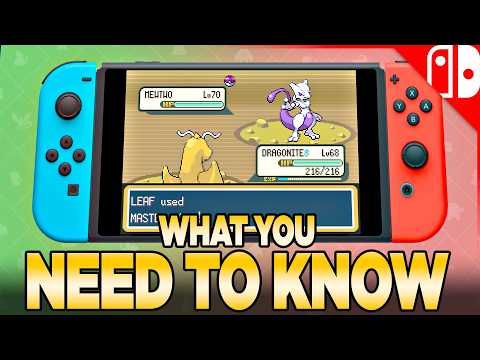
Pokémon FireRed Version and Pokémon LeafGreen Version are 2004 remakes of the original 1996 Pokémon Red and Blue versions. Developed by Game Freak and published by The Pokémon Company and Nintendo, these titles revitalized the classic Kanto region for a new generation of gamers on the Game Boy Advance. They brought the nostalgia of the first generation into the modern era, complete with enhanced graphics, improved gameplay mechanics, and new features that expanded upon the original experience.
Diving Deeper: The Essence of FireRed and LeafGreen
FireRed and LeafGreen weren’t just simple ports. They were full-fledged remakes, meticulously rebuilding the world, characters, and story of the initial Pokémon games with the technological capabilities of the Game Boy Advance. While remaining faithful to the core narrative, they introduced elements from the more recent Pokémon games at the time (namely, Ruby and Sapphire), such as abilities, natures, and a streamlined interface.
These additions breathed new life into the familiar landscapes, making it a delight for both longtime fans and newcomers to the Pokémon franchise. Think of it as a love letter to the original games, written with the advancements that came with new technology.
A Visual and Gameplay Overhaul
One of the most striking differences was the visual upgrade. The blocky, pixelated graphics of the original Game Boy games were replaced with vibrant, detailed sprites and environments that truly brought the Kanto region to life. The interface was also completely overhauled, making it easier for players to navigate menus, manage their Pokémon, and interact with the world around them.
Gameplay enhancements were equally significant. The addition of abilities, which granted Pokémon unique passive effects in battle, added a new layer of strategy to combat. The introduction of natures, which influenced a Pokémon’s stat growth, further individualized each creature and encouraged players to think more carefully about teambuilding.
Expanding the Experience: The Sevii Islands
Beyond the graphical and mechanical improvements, FireRed and LeafGreen also expanded upon the original game’s content with the addition of the Sevii Islands. This archipelago offered a new area to explore, new Pokémon to catch (including some from the Johto region), and new challenges to overcome. The Sevii Islands served as a post-game area, providing players with additional content to enjoy after defeating the Elite Four and becoming the Champion.
The Games Learning Society understands the profound impact video games can have on a player’s learning experience. Through engaging narratives and strategic gameplay, the Pokémon franchise offers valuable lessons in problem-solving, resource management, and teamwork. Visit GamesLearningSociety.org to find more information.
Frequently Asked Questions (FAQs)
1. Are FireRed and LeafGreen the same game?
While they share the same story, region, and core gameplay, FireRed and LeafGreen are not identical. The primary difference lies in the version-exclusive Pokémon. Each version features a set of Pokémon that cannot be found in the other, encouraging players to trade with each other to complete their Pokédex. There are also very slight differences in some NPC dialogues and available in-game items.
2. Was FireRed released before or after Emerald?
FireRed and LeafGreen were released before Pokémon Emerald. FireRed and LeafGreen were released in Japan in January 2004 and in North America in September 2004, while Emerald was released later that same year.
3. What new features did FireRed and LeafGreen add to the original games?
Besides the graphical and gameplay enhancements (abilities, natures), FireRed and LeafGreen introduced several new features, including:
- The Sevii Islands: A new post-game area with new Pokémon and challenges.
- The VS Seeker: An item that allows players to rebattle trainers in the game.
- The Fame Checker: An item that provides information about various characters in the game.
- Contextual Help: Pressing the select button in the game world now gave access to contextual tutorial tips.
- Wireless Adapter Compatibility: Allowing for direct trading and battling with other GBA players nearby without link cables.
4. Which Pokémon are exclusive to FireRed?
Some of the Pokémon exclusive to FireRed include:
- Ekans and Arbok
- Growlithe and Arcanine
- Scyther and Scizor
5. What Pokémon are specific to LeafGreen?
Some of the Pokémon exclusive to LeafGreen include:
- Oddish, Gloom, and Vileplume (and Bellossom)
- Shellder and Cloyster
- Elekid and Electabuzz
6. Is FireRed a complete remake of Pokémon Red?
Yes, FireRed and LeafGreen are full remakes of Pokémon Red and Blue. They are not simply ports or enhanced versions; they were rebuilt from the ground up with new graphics, gameplay mechanics, and features.
7. Can you travel to the Johto region in FireRed?
No, you cannot travel to the Johto region in FireRed. The game is set entirely in the Kanto region, the same as the original Red and Blue games. However, some Pokémon from the Johto region can be caught in the Sevii Islands after completing certain objectives.
8. How do you obtain Lapras in FireRed?
You can get a Lapras on the 7th floor of Silph Co. in Saffron City. After saving the president of Silph Co. from Team Rocket, a Silph employee will reward you with a Level 15 Lapras.
9. Is FireRed considered a Generation 1 or Generation 3 game?
FireRed and LeafGreen are officially part of the third generation of Pokémon games. While they are remakes of Generation 1 games, they incorporate mechanics and features introduced in Generation 3.
10. Should I play Emerald or FireRed first?
This depends on your experience with the Pokémon series. If you’ve already played the original Red or Blue, Emerald might offer a fresher experience. If you’re new to the series or want to relive the original Kanto adventure with updated graphics and gameplay, FireRed or LeafGreen would be a great choice.
11. What can you do after beating the Pokémon League in FireRed?
After defeating the Pokémon League, you can:
- Explore the Sevii Islands: Uncover new areas, catch new Pokémon, and complete new quests.
- Obtain the National Pokédex: Catch or trade for 60 different Pokémon to receive the National Pokédex from Professor Oak.
- Search for roaming legendary Pokémon: One of the Legendary beasts from Johto will begin to roam the Kanto region.
- Explore Cerulean Cave: Gain access to the Cerulean Cave, home to powerful Pokémon, including Mewtwo.
12. Is LeafGreen a remake of Pokémon Blue?
Yes, LeafGreen is a remake of Pokémon Blue. FireRed and LeafGreen are paired together as remakes of the original Red and Blue games, respectively.
13. What is considered the best starter Pokémon in FireRed?
Many players consider Bulbasaur to be the best starter Pokémon in FireRed and LeafGreen. Its Grass/Poison typing gives it a significant advantage against the first two Gym Leaders (Brock and Misty), and it is also effective against other early-game opponents.
14. Can you catch Snorlax in FireRed?
Yes, you can catch two Snorlax in FireRed. One is located on Route 12, and the other is on Route 16. You’ll need the Poké Flute to wake them up before you can battle and catch them.
15. Where can I find Lugia in FireRed?
Lugia is not naturally obtainable in FireRed without the use of special event items. It was only accessible by obtaining a special item (MysticTicket) which allowed travel to Navel Rock where Lugia and Ho-oh could be battled and captured. These tickets were available only through special Nintendo events, and are no longer obtainable through legitimate means. Therefore, the only other legitimate way is to trade with someone who already has the Pokemon from an event.