Surviving the Blast: A Deep Dive into Explosion-Proof Blocks in Minecraft
Fast answer first. Then use the tabs or video for more detail.
- Watch the video explanation below for a faster overview.
- Game mechanics may change with updates or patches.
- Use this block to get the short answer without scrolling the whole page.
- Read the FAQ section if the article has one.
- Use the table of contents to jump straight to the detailed section you need.
- Watch the video first, then skim the article for specifics.
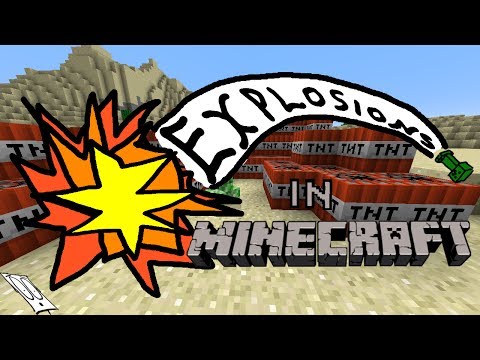
Minecraft, the block-building behemoth, offers a world of creativity and adventure. But danger lurks around every corner, often in the form of explosive surprises. Understanding what can withstand these blasts is crucial for both survival and advanced construction. So, what’s immune to explosions in Minecraft? The definitive answer is relatively short and sweet: Bedrock, water, and lava (stationary source blocks) are your untouchable trio. However, the world of blast resistance goes much deeper than just these three, which is why we need to dive into the details!
Understanding Blast Resistance: More Than Just Immunity
While Bedrock, water, and source lava are truly impervious, several other blocks exhibit impressive blast resistance, offering significant protection against TNT, Creepers, and Wither attacks. Thinking in terms of “immunity” alone limits our understanding. Instead, it’s more useful to consider the spectrum of resistance.
The Untouchable Trio: Absolute Immunity
- Bedrock: Found at the bottom of the Overworld and the top/bottom of the Nether, bedrock is the undisputed king of blast resistance. With a rating of 18,000,000, it’s fundamentally indestructible through conventional means within the game. Think of it as the ultimate security measure, but one you can’t move or place yourself (without creative mode or cheats).
- Water (Source Blocks): Water is unique. It doesn’t possess a blast resistance value in the same way as solid blocks. Instead, it negates the effects of explosions within its vicinity. A TNT explosion detonated underwater will have significantly reduced range and destructive power. This makes water an invaluable tool for mitigating blast damage.
- Lava (Source Blocks): Similar to water, stationary (source) lava acts as a buffer. It doesn’t have a specific blast resistance value, but it will not be destroyed by explosions. Importantly, flowing lava can be destroyed by explosions.
The Near-Immortals: Exceptionally High Resistance
Beyond the truly immune, several blocks boast exceedingly high blast resistance, making them incredibly difficult to destroy:
- Command Blocks: Used for advanced in-game functions, command blocks share Bedrock’s blast resistance rating of 18,000,000. This prevents accidental destruction when experimenting with commands.
- End Portal Frames: These vital components of the End portal, also possess a blast resistance of 18,000,000, ensuring the gateway to the dragon remains intact.
The Blast-Resistant Heavyweights
Next we have blocks offering a more practical level of blast resistance; high enough to withstand most common explosions, making them ideal for creating sturdy structures.
- Obsidian: A cornerstone of blast-resistant construction, Obsidian boasts a blast resistance of 6,000. It can withstand all explosions in the game, except for direct hits from Wither skulls and extremely large TNT detonations.
- Anvil: While not as visually appealing as Obsidian for large-scale construction, anvils also have a blast resistance of 6,000. This makes them a surprisingly durable option, especially in areas where you also need a functional anvil!
- Enchantment Table: Another block with a blast resistance of 6,000, meaning your enchanting setup is quite secure.
- Ender Chest: The last of this group, Ender Chests have a blast resistance of 3,000.
Blocks That Can Survive TNT
While Obsidian, Anvils, and others stand out in terms of high blast resistance, other blocks provide acceptable protection against standard TNT explosions. These are worth considering for cost-effective defense or when aesthetic considerations are paramount:
- Ancient Debris: A rare Nether block used to craft Netherite, Ancient Debris has high blast resistance of 1,200.
- Crying Obsidian: Used to create respawn anchors in the Nether, Crying Obsidian has the same blast resistance as Ancient Debris: 1,200.
- Cobblestone: Cobblestone is blast resistant and very easy to obtain.
The Role of Water in Mitigating Explosions
It’s worth reiterating the power of water. Even blocks with moderate blast resistance become significantly more durable when submerged or surrounded by water. Water dramatically reduces the explosion radius and force, preventing damage to nearby structures.
Practical Applications: Building for Blast Resistance
Understanding blast resistance is essential for several in-game scenarios:
- Protecting Your Base: Constructing walls and shelters from Obsidian or other blast-resistant blocks can safeguard your valuables from Creepers, TNT traps, and even Wither attacks.
- TNT Cannons: Paradoxically, understanding blast resistance is vital for building effective TNT cannons. You need to contain the explosions in specific areas to launch projectiles effectively.
- Wither Fighting: When facing the Wither, blast-resistant structures provide crucial cover, allowing you to strategize and heal safely.
- Mining: Using TNT for efficient mining is a common practice. Knowing which blocks will survive the blast helps you control the explosion and prevent unwanted collateral damage.
Blast Protection Enchantment
The Blast Protection enchantment is an excellent way to reduce damage taken from explosions. Combining high blast resistance blocks with enchanted armor can drastically improve your chances of survival in hostile environments. It is worth noting that this enchantment reduces damage taken from TNT, Creepers, and Wither self-explosion but doesn’t affect block destruction.
Games Learning Society
Understanding mechanics like blast resistance is a key element of game literacy. It allows players to engage with Minecraft on a deeper, more strategic level. Organizations like the Games Learning Society (GamesLearningSociety.org) explore how games can foster learning and problem-solving skills.
Frequently Asked Questions (FAQs)
1. What happens if I surround Obsidian with TNT?
While Obsidian is highly blast-resistant, it’s not completely immune to overwhelming force. Surrounding it with a massive amount of TNT (562 blocks or more directly adjacent) can destroy it. However, this is an extreme scenario rarely encountered in normal gameplay.
2. Does Blast Protection armor make me immune to explosions?
No, Blast Protection reduces the damage you take from explosions, but it doesn’t make you invulnerable. The level of protection depends on the enchantment level and the distance from the blast.
3. Can Creepers destroy Obsidian walls?
No, Creepers cannot destroy Obsidian walls. Obsidian’s high blast resistance renders it immune to Creeper explosions.
4. Is there a difference between Obsidian and Crying Obsidian in terms of blast resistance?
No, both Obsidian and Crying Obsidian have a blast resistance of 6,000, making them equally effective against explosions.
5. Can the Wither destroy Bedrock?
No, the Wither cannot destroy Bedrock. Bedrock’s blast resistance of 18,000,000 makes it impervious to all Wither attacks.
6. Does the location of TNT affect the blast damage?
Yes, the location of TNT significantly affects the blast damage. TNT detonated underwater has a much smaller blast radius and does less damage. Similarly, TNT placed closer to a target will inflict more damage than TNT placed further away.
7. Can I use ender pearls to escape explosions?
Using ender pearls can sometimes help you escape the immediate area of an explosion, potentially reducing the damage you take. However, it’s not a guaranteed escape, especially from large explosions or when surrounded by blocks.
8. Is there a way to make TNT explosions stronger?
Yes, by placing TNT in specific configurations, such as TNT cannons or stacked formations, you can amplify the force of the explosion. This is often used for mining or offensive purposes.
9. Do different types of stone have different blast resistances?
No, all types of stone (stone, granite, diorite, and andesite) have the same blast resistance. Cobblestone has a higher blast resistance than stone, but the different types of stone are all equal.
10. Does the “Protection” enchantment work against explosions?
Yes, the generic “Protection” enchantment provides a small amount of protection against all damage types, including explosions. However, “Blast Protection” is specifically designed to reduce explosion damage and is therefore more effective in those situations.
11. Can Endermen teleport away from explosions?
Yes, Endermen will often teleport away when damaged, including from explosions. However, they might still take some damage before teleporting.
12. Are there any mods that change block blast resistance?
Yes, many mods can alter block blast resistance values, adding new blast-resistant blocks or changing the properties of existing ones.
13. Can ghast fireballs destroy Obsidian?
No, Ghast fireballs cannot destroy Obsidian. Obsidian’s blast resistance is too high for Ghast fireballs to penetrate.
14. Is Netherite blast resistant?
Netherite has the same blast resistance as Obsidian, a blast resistance of 6,000, making them equally effective against explosions.
15. Can lava flow destroy blocks with low blast resistance?
No, lava flow cannot destroy blocks directly. It can set flammable blocks on fire, which can then lead to explosions if TNT is involved.
By mastering the principles of blast resistance in Minecraft, you can build safer, more resilient structures, and enhance your overall survival skills. Whether you’re constructing a fortress, designing a TNT cannon, or preparing for a Wither battle, understanding these mechanics is essential for success. Good luck, and stay safe out there!