Decoding the Targeting Rules in Football: What You Need to Know
Fast answer first. Then use the tabs or video for more detail.
- Watch the video explanation below for a faster overview.
- Game mechanics may change with updates or patches.
- Use this block to get the short answer without scrolling the whole page.
- Read the FAQ section if the article has one.
- Use the table of contents to jump straight to the detailed section you need.
- Watch the video first, then skim the article for specifics.
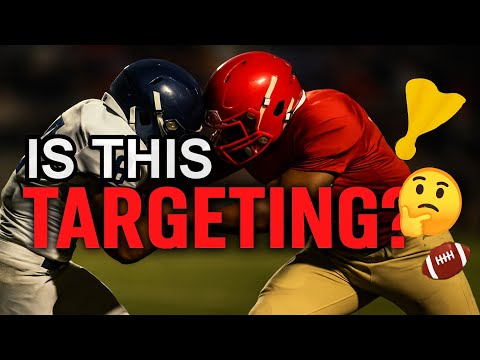
At its core, targeting in football refers to a specific type of foul focused on player safety, primarily aimed at preventing head and neck injuries. It’s not simply about making contact; it’s about how and where that contact is made. The rules across various levels of football, from high school to the NFL, have evolved significantly to address this dangerous aspect of the game. Broadly speaking, targeting involves a player initiating forceful contact against an opponent above the shoulders, often with the helmet, forearm, hand, fist, elbow, or shoulder. The nuances of these rules differ slightly at each level, leading to some confusion among players and fans alike. This article will delve into the specifics of targeting, its variations across different leagues, and common questions surrounding this crucial rule.
Understanding the Core Concept of Targeting
The fundamental premise behind targeting rules is to discourage players from using their heads and upper bodies as weapons. It’s a matter of changing playing styles, emphasizing safer techniques, and promoting a culture of respect for player well-being. At its simplest, targeting penalizes players for aiming at an opponent’s head or neck area with force.
Variations Across Different Leagues
It’s important to note that while the principle is consistent, the implementation of targeting rules varies. For instance, the NFL defines targeting as a player lowering his head to initiate and make contact with his helmet against an opponent. In contrast, high school rules define targeting as “an act of taking aim and initiating contact to an opponent above the shoulders with the helmet, forearm, hand, fist, elbow or shoulders.” College football rules align more closely with high school standards but also include a system for review and ejection.
Why the Emphasis on Safety?
The need for strict targeting rules stems from the significant risk of head and neck injuries in football, including concussions. These injuries can have both short-term and long-term effects, and in some cases, they can be life-altering. By penalizing specific types of contact, these rules aim to force players to be more aware and responsible in their actions.
Breaking Down the Mechanics of a Targeting Foul
A targeting foul generally involves three main components:
- Aiming: The player must be seen to be taking aim at an opponent’s head or neck area.
- Initiating Contact: The player initiates contact above the shoulders. This implies that the player is actively making a choice that will cause this kind of contact, not simply being involved in an accidental collision.
- Forcible Contact: The contact must be forceful. A glancing blow, or incidental contact, is not usually considered targeting.
It’s the combination of these three elements that results in a targeting penalty, though these interpretations vary by playing level.
The Consequences of Targeting Fouls
Penalties for targeting fouls vary across football leagues:
- NFL: A targeting foul results in a 15-yard penalty. Additionally, if the foul is deemed flagrant upon review, the player is ejected from the game and suspended for the next half (or the remainder of the current game, if it occurs in the second half).
- College Football: In addition to a 15-yard penalty, targeting results in the ejection of the player from the game. Reviews of these plays are done via instant replay.
- High School Football: A 15-yard penalty is enforced, but unlike the college and NFL, an automatic ejection is not always a consequence. Officials have the discretion to eject a player if the act is deemed flagrant.
FAQs on Targeting Rules
Here are some frequently asked questions regarding targeting in football to further clarify this often-debated topic:
1. What exactly constitutes “forcible contact” in the context of targeting?
Forcible contact is generally understood as contact that is not incidental or glancing but is delivered with significant force, enough to potentially cause harm. This often means the player is driving their body weight into the opponent.
2. Can a player be penalized for targeting even if they didn’t lead with the crown of their helmet?
Yes, targeting can occur even if the player did not initiate contact with the crown of their helmet. Any forceful contact above the shoulders with the helmet, forearm, hand, fist, elbow, or shoulder can be considered targeting, especially if it involves taking aim at the head or neck area.
3. Is there a difference between targeting a defenseless player and targeting a player who is running the ball?
Yes. If a player is considered defenseless (such as a receiver in the act of catching a pass or a player just after throwing a pass), the standard for targeting is significantly lower. Any forceful contact above the shoulders to a defenseless player can be seen as targeting.
4. Can a player decline a targeting penalty?
Yes, like any penalty in football, the offended team has the option to decline the yardage penalty.
5. What is the penalty if the targeting is called in high school football? Is it automatic ejection?
A 15-yard penalty is enforced. An ejection is not automatic in high school football; officials make the decision to eject a player based on whether the action is deemed flagrant.
6. How are targeting penalties reviewed in college football?
Targeting calls are reviewed through instant replay to ensure that the correct call is made, and players are ejected or not, accordingly.
7. Does targeting mean a player automatically has intent to hurt someone?
Not necessarily. While targeting is about making forcible contact to the head or neck area, this isn’t the same as intent to hurt. Players can receive this penalty even if they intended to make a legal play but did so in a manner deemed illegal. It’s about the action, not the intent.
8. Why are players ejected for targeting in the NFL and college football?
Ejections are a method to immediately penalize dangerous and flagrant behavior and attempt to reduce the risk of repeat offenses. By removing the offending player from the game, the rules aim to enforce the seriousness of these infractions.
9. What are the key differences between the targeting rules in the NFL, college, and high school football?
In the NFL, a player lowers his head to initiate contact with his helmet on an opponent. College and high school rules include various body parts such as helmet, forearm, shoulder, etc. in initiating contact above the shoulders. The main difference is how an ejection is handled, as only flagrant fouls are ejected in high school.
10. If the contact is deemed legal, can the targeting penalty be removed?
Yes, if upon review, the contact is deemed not to fit the criteria of a targeting penalty, the flag is removed, and there is no penalty or ejection. This is more common in college football than other levels.
11. What constitutes leading with the crown of the helmet?
Leading with the crown of the helmet refers to initiating contact with the top of the helmet, often a dangerous and forceful technique targeted for removal from the game.
12. How has the targeting rule changed the game of football?
The targeting rule has significantly altered player behavior and made the game safer. Players are more aware of where they make contact, which impacts tackles and blocks.
13. What is the purpose of the new NFL kickoff rule regarding fair catches inside the 25-yard line?
The new rule incentivizes fair catches on kickoffs inside the 25-yard line by placing the ball at the 25-yard line. This is a safety precaution to limit high-speed, violent collisions on kickoffs.
14. Can you explain the concept of a “defenseless player” in the context of targeting?
A defenseless player includes those who are in the act of catching or throwing a pass, a player who’s already down, and others in compromised positions who are vulnerable to high-impact collisions.
15. Are all types of helmet-to-helmet contact automatically considered targeting?
No. Not all helmet-to-helmet contact is targeting. It must also involve forceful contact initiated to the head or neck area with the appropriate body part and in some cases, intent to make that contact.
Conclusion
Targeting rules, while at times contentious, are a crucial element in modern football’s push for increased player safety. Understanding these rules, and the intent behind them, is essential for both players and fans. These safety-oriented rules continue to evolve, and staying updated on the latest changes is paramount. The ultimate goal is to balance the exciting and physical nature of football with the health and long-term well-being of its athletes.