Unlocking the Mystery: What is the Tetris Secret Grade?
Fast answer first. Then use the tabs or video for more detail.
- Watch the video explanation below for a faster overview.
- Game mechanics may change with updates or patches.
- Use this block to get the short answer without scrolling the whole page.
- Read the FAQ section if the article has one.
- Use the table of contents to jump straight to the detailed section you need.
- Watch the video first, then skim the article for specifics.
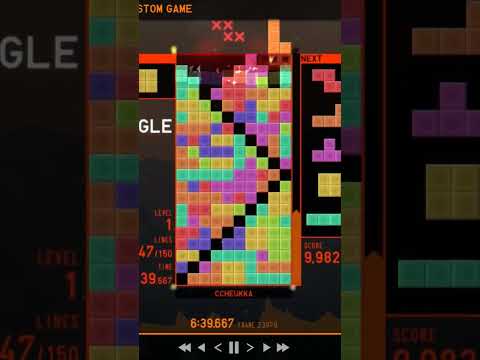
The “Secret Grade” in Tetris, particularly within the realm of the TGM (Tetris: The Grand Master) series, is a hidden grading mechanism that rewards players for intentionally creating a specific kind of stack. This unique system departs from the usual objective of achieving perfectly flat and efficient clears. Instead, it encourages you to leave intentional holes in your playing field, shaping your stack into a distinctive “>” (greater than) or zigzag pattern. At the end of the game, the game evaluates how much of this specific pattern is present, and awards a “secret grade” based on the degree of completion. It’s a testament to Tetris’s depth, pushing players to think outside the box and develop unorthodox strategies. This system isn’t about just clearing lines; it’s about shaping your playing field into something deliberate and specific.
The Significance of Secret Grade
The secret grade mechanic isn’t simply a hidden feature; it’s a way for the TGM series (and emulators or fan-made variants that borrow from it) to push the boundaries of Tetris gameplay. Instead of the usual focus on minimizing holes and maximizing efficient line clears, it introduces a paradoxical objective – to build a stack that deliberately includes empty spaces in a particular pattern. This adds a layer of complexity and a new kind of challenge for players who have mastered the more traditional approaches to Tetris. It also provides an extra layer of replayability and creates a goal for players beyond just achieving a high score. Successfully executing the Secret Grade requires planning, patience, and a willingness to go against the grain of conventional Tetris strategy. It’s a hidden reward for those who explore the game’s mechanics in-depth. While it is not a feature that directly affects how you will play a normal Tetris game, understanding and working on the Secret Grade concept will greatly improve you at Tetris in general.
Building the Pattern
The core of achieving a Secret Grade is about building that signature “>” or zigzag pattern with your blocks, purposely leaving gaps to create the required shape. This requires you to think steps ahead, knowing how each piece will contribute to the overall pattern. You cannot play purely reaction-based Tetris, but rather plan a set build over the course of your whole game. This requires great concentration and dedication. Most notably you will need to sacrifice efficiency in line clearing in order to achieve this. While it might seem counter-intuitive, making intentional mistakes, such as not immediately clearing lines, becomes a crucial part of this strategy. You need to allow your lines to fill up to a height that lets you easily build the shape, and avoid playing flat. A major piece of this is understanding Tetris rotations in order to manipulate the pieces into the optimal location for this build. You will also need to understand piece prediction and queue management to optimize your piece placement for the secret grade build.
Different Levels of Secret Grade
The game evaluates the completion of the zigzag pattern at the end of a game over, and rewards the player according to how much of the pattern has been achieved. Not every Secret Grade is the same. There are multiple levels of Secret Grade, from a small completion to the perfect completion. The higher the grade achieved, the more unique the end result will be. Players can focus on just trying to get a single grade, but aiming for the perfect grade is the ultimate goal. This adds even another level of challenge, as it requires you to build the pattern perfectly. Getting a lower grade may require a different strategy. Most of all it requires dedication, practice and patience.
Secret Grade in Other Tetris Games
While the Secret Grade is most associated with the TGM series, the concept has influenced other Tetris variants and fan-made games. Some emulators of the TGM series incorporate the Secret Grade, and many fan games have been created around its concept. The core idea of the secret grade has been incorporated to further enhance the challenging and unique aspects of Tetris. Fan communities often create their own versions of the Secret Grade for various versions of the game, extending the lifespan and difficulty of each of these games. This shows how appealing this mode is to dedicated Tetris players.
Frequently Asked Questions (FAQs)
1. Can the Secret Grade be achieved in all Tetris games?
No, the Secret Grade mechanism is most prominently featured in the TGM (Tetris: The Grand Master) series. However, some fan-made games and emulators of TGM have added this mechanic. Most common Tetris games such as Tetris Effect, Tetris 99, and Tetr.io, do not have this mode.
2. Is there a specific rotation system required for building the Secret Grade pattern?
The rotation system doesn’t dictate whether you can achieve a Secret Grade, however, a deeper understanding of rotation systems like SRS (used in Tetris guidelines and variants like Tetr.io) will assist you in your building of the Secret Grade. Each rotation system has its unique quirks which help you move pieces in certain situations.
3. Does playing faster help achieve Secret Grade?
Playing faster may not directly help you in achieving Secret Grade, however, having more practice and playing at faster speeds can help make your decision-making more efficient and effective. This will benefit you in building the shape faster.
4. Can T-spins contribute to the Secret Grade?
T-spins are a powerful technique in Tetris to clear lines, however, they do not contribute in any way to achieving Secret Grade. The key is to create the “>” or zigzag pattern through deliberate placement and not line clear efficiency.
5. What is “playing flat” and how does it relate to Secret Grade?
“Playing flat” refers to clearing lines as efficiently as possible, minimizing holes in your stack. This is the most optimal way to play regular Tetris, but is the opposite of what you need to do to achieve Secret Grade. Secret grade requires you to leave holes intentionally, and not play flat at all.
6. Does the “hold” feature help in Secret Grade building?
The hold feature can be helpful for managing your pieces to build the specific patterns required. It gives you more control and reduces randomness, allowing you to optimize your placements. Good usage of the hold feature is essential for any high-level Tetris play.
7. Can you see the secret grade during gameplay?
No, you can’t see your secret grade during gameplay. The game evaluates the pattern only at game over. The feedback is only given at the end of the game.
8. How does the game evaluate the secret grade pattern?
The game evaluates the stack on game over and looks for the completed “>” or zigzag pattern from left to right. The more that the pattern is filled out, the higher the grade will be. This calculation is hidden, and most players would not know the exact way this grading happens.
9. Is the Secret Grade harder than normal Tetris gameplay?
Yes, achieving a high Secret Grade is generally considered much harder than normal Tetris gameplay. It requires going against the natural urge to clear lines efficiently and forcing yourself to create holes, and it requires planning and dedication.
10. Does Secret Grade help you clear lines?
No, Secret Grade is separate from the main scoring and line clearing aspect of the game. It is a completely separate mechanic in the game that gives the player a separate grade at the end of the game, and does not aid in your normal gameplay.
11. Does having a higher score help with Secret Grade?
Your score is completely separate from your secret grade. No matter how good or bad your score is, it will not affect the Secret Grade system at all.
12. Is the Secret Grade relevant for multiplayer Tetris?
Typically no, Secret Grade is most relevant to single-player modes of specific games in the TGM series. Most online Tetris games that have multiplayer functions do not have the Secret Grade mechanic.
13. Can you lose because you are focusing on Secret Grade?
Yes, if you focus on building Secret Grade while ignoring your general stacking in Tetris, you are likely to lose. You will be more vulnerable to topped out or being blocked out, as you are no longer clearing lines with the most efficiency.
14. Are there any visual cues to help achieve Secret Grade?
There are no visual cues that are specific to the Secret Grade. However, understanding the shapes of pieces and planning the overall structure of the zigzag pattern is a major visual part of the game.
15. Is Secret Grade worth learning?
While Secret Grade may not be directly useful in every Tetris mode, learning the techniques involved will greatly improve your understanding of Tetris. As a hidden challenge, it represents the complexity and depth of Tetris, and provides new challenges for dedicated players. This additional layer of challenge is also very appealing to many players.