Unlocking Spellcasting Accuracy: The 5E Spell Attack Bonus Explained
Fast answer first. Then use the tabs or video for more detail.
- Watch the video explanation below for a faster overview.
- Game mechanics may change with updates or patches.
- Use this block to get the short answer without scrolling the whole page.
- Read the FAQ section if the article has one.
- Use the table of contents to jump straight to the detailed section you need.
- Watch the video first, then skim the article for specifics.
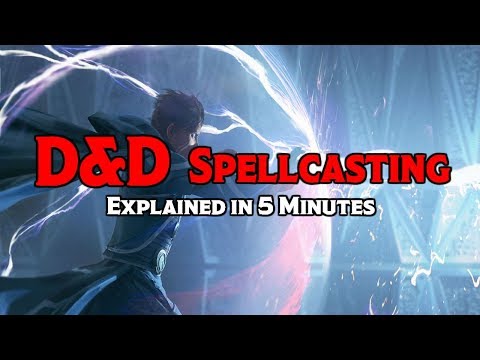
The attack bonus for spells in 5th Edition Dungeons & Dragons (5E) is the number you add to your d20 roll when casting a spell that requires an attack roll. This bonus is crucial for determining whether your spell successfully hits its target. It’s calculated by adding your spellcasting ability modifier (Intelligence for Wizards, Wisdom for Clerics, Charisma for Sorcerers, etc.) and your proficiency bonus, which increases as you level up. This ensures that spellcasters become more accurate as they gain experience and power.
Understanding the Components of Your Spell Attack Bonus
Let’s break down each component:
- Spellcasting Ability Modifier: This is derived from the ability score that fuels your spellcasting. Wizards use Intelligence, Clerics and Druids use Wisdom, and Sorcerers, Bards, and Warlocks use Charisma. To calculate your ability modifier, subtract 10 from your ability score and divide the result by 2 (rounding down). For example, an Intelligence score of 16 yields a +3 modifier.
- Proficiency Bonus: This bonus is tied to your character level and reflects your growing mastery of your skills. At level 1, the proficiency bonus is +2. It increases to +3 at level 5, +4 at level 9, +5 at level 13, and +6 at level 17.
Example: A level 5 Wizard with an Intelligence score of 18 (+4 modifier) would have a spell attack bonus of +7 (+4 Intelligence modifier + +3 proficiency bonus). This +7 is added to their d20 roll when casting a spell requiring an attack roll.
When Do You Use a Spell Attack Roll?
Not all spells require attack rolls. Some spells force the target to make a saving throw against your spell save DC. However, spells like Fire Bolt, Ray of Frost, and Scorching Ray require you to make an attack roll against the target’s Armor Class (AC). The spell description will clearly indicate whether an attack roll is necessary.
The Importance of Strategic Spell Selection
Understanding when to use spells requiring attack rolls versus spells requiring saving throws is a crucial part of tactical spellcasting. A spell attack is more effective against enemies with low AC but potentially high saving throws, while a spell requiring a saving throw is more effective against enemies with high AC but weak saving throws.
FAQs: Spell Attack Bonus in 5E
1. How do I calculate my Spell Save DC?
Your Spell Save DC is calculated as 8 + your proficiency bonus + your spellcasting ability modifier. This is the number the target must meet or exceed on their saving throw to avoid the effects of your spell.
2. Does my spell attack bonus affect damage rolls?
No, your spell attack bonus only affects the attack roll to determine if the spell hits. Once you successfully hit, you roll the damage dice as indicated in the spell description. Your spellcasting ability modifier is never added to damage rolls unless a specific feature or feat allows it.
3. Can I increase my spell attack bonus beyond my ability score and proficiency bonus?
Yes, there are several ways to increase your spell attack bonus. Magic items, such as a Rod of the Pact Keeper (for Warlocks) or a Staff of Power, can provide bonuses to attack rolls and spell save DCs. Certain feats, like Spell Sniper, can also grant advantages on spell attacks.
4. Does the Lucky feat help with spell attack rolls?
Yes, the Lucky feat allows you to reroll an attack roll, ability check, or saving throw. This includes spell attack rolls, giving you a second chance to hit if your initial roll is low.
5. How does advantage or disadvantage affect spell attack rolls?
Advantage allows you to roll two d20s and take the higher result, significantly increasing your chances of hitting. Disadvantage forces you to roll two d20s and take the lower result, making it harder to hit.
6. Can I use inspiration on a spell attack roll?
Yes, you can expend a point of inspiration after you roll a spell attack roll, but before the DM declares whether you hit or miss. This gives you advantage on the roll.
7. Does extra attack apply to spells?
No, the extra attack feature, typically granted to martial classes, only applies to the Attack action. Casting a spell, even if it involves an attack roll, is the Cast a Spell action, not the Attack action.
8. What’s the difference between a spell attack roll and a spell save?
A spell attack roll is made by the spellcaster to hit a target’s AC. A spell save is made by the target to resist the effects of the spell, using their own saving throw bonus.
9. Do cantrips benefit from my spell attack modifier?
Yes, cantrips that require an attack roll, such as Fire Bolt, benefit from your spell attack modifier. This is crucial, as cantrips are often a spellcaster’s primary source of damage at low levels.
10. How do I choose between spells that require attack rolls and spells that require saves?
Consider the enemy’s strengths and weaknesses. Enemies with high AC but low saving throws are vulnerable to spells that force saves. Enemies with low AC but high saving throws are more susceptible to spells that require attack rolls. Also, consider the specific effects of the spell and whether those effects are more likely to be effective against certain types of creatures.
11. Is there a base attack bonus in 5E?
No, unlike some earlier editions of D&D, 5E does not have a “base attack bonus.” The attack bonus is directly calculated from your ability modifier and proficiency bonus.
12. Does STAB apply in D&D 5E?
No, the concept of STAB (Same-Type Attack Bonus), which is prevalent in video games like Pokémon, does not exist in D&D 5E. Spell damage is solely determined by the spell description and any applicable modifiers from feats or features.
13. How do bonus actions interact with spell attacks?
Some spells can be cast as a bonus action, such as Healing Word or Misty Step. However, if you cast a spell as a bonus action, you can only cast a cantrip with a casting time of 1 action on the same turn. This limits your ability to cast two leveled spells in the same turn.
14. What are some feats that enhance spell attack accuracy?
- Spell Sniper: This feat allows you to ignore half cover and three-quarters cover when making a spell attack and doubles the range of spells that require an attack roll.
- War Caster: While not directly increasing your attack bonus, War Caster grants you advantage on Constitution saving throws to maintain concentration on a spell when you take damage and allows you to cast a spell as a reaction when a creature provokes an opportunity attack from you.
15. Can magic items improve my spell attack rolls?
Yes! Several magic items specifically enhance spellcasting abilities. For example, a Rod of the Pact Keeper grants a bonus to spell attack rolls and spell save DC for Warlocks, while a Staff of Power offers bonuses to both attack rolls and damage, as well as other benefits.
Maximizing Your Spell Attack Potential
Mastering the spell attack bonus in 5E is essential for any spellcasting character. By understanding the underlying mechanics, utilizing available feats and magic items, and strategically selecting spells, you can significantly enhance your effectiveness on the battlefield. Remember to always consider your target’s strengths and weaknesses when deciding whether to use a spell attack or a spell save. And, most importantly, have fun experimenting with different builds and strategies!
For more insights into gaming and learning, explore the resources available at the Games Learning Society and discover how games can revolutionize education and engagement: GamesLearningSociety.org.