The Ultimate Guide to Two-Striker Formations: Finding the Best for Your Game
Fast answer first. Then use the tabs or video for more detail.
- Watch the video explanation below for a faster overview.
- Game mechanics may change with updates or patches.
- Use this block to get the short answer without scrolling the whole page.
- Read the FAQ section if the article has one.
- Use the table of contents to jump straight to the detailed section you need.
- Watch the video first, then skim the article for specifics.
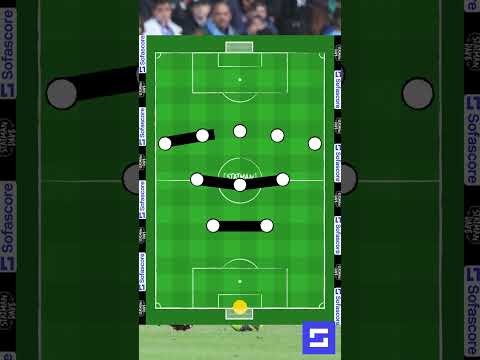
What is the best two-striker formation? There isn’t a single, definitive answer. The “best” formation hinges on a multitude of factors: your players’ strengths, your tactical philosophy, and, crucially, your opponent’s weaknesses. However, if I had to pick the most versatile and consistently effective option, I’d lean towards the 4-1-2-1-2 (Narrow), also sometimes referred to as the 4-4-2 Diamond. When implemented with the right tactical instructions and player roles, this formation offers a fantastic blend of attacking prowess and defensive solidity, making it a strong contender for the title of “best” in many scenarios.
Decoding the Two-Striker Landscape
Playing with two strikers, or “two up front” as it’s often called, is a bold statement of attacking intent. It’s a classic approach, demanding that your forwards work in tandem, creating chances and constantly threatening the opposition’s backline. However, deploying two strikers effectively requires careful consideration of your overall tactical setup. It isn’t enough to simply throw two forwards on the pitch and hope for the best.
Popular Two-Striker Formations: A Deep Dive
Let’s explore some popular options, highlighting their strengths and weaknesses:
-
4-4-2 (Flat): This is the archetypal two-striker formation. It’s balanced and relatively simple to understand, making it a good starting point. However, its simplicity can also be a drawback. It can be easily overrun in midfield, especially against teams employing a three-man midfield. The 4-4-2 relies heavily on the wide midfielders for creativity and providing service to the strikers.
-
4-4-1-1: This is a variation of the 4-4-2, where one striker plays slightly behind the other as a “second striker” or shadow striker. This player acts as a link between midfield and attack, offering creativity and playmaking ability. This formation can be very effective if you have a forward who excels at dropping deep and creating opportunities.
-
4-2-2-2: A highly versatile formation that emphasizes pressing and counter-attacking. The two “2s” are typically attacking midfielders or wide playmakers who operate in the half-spaces. This provides a solid base in midfield and a direct attacking threat. The success of this formation depends on the work rate and tactical discipline of the midfield four.
-
4-1-2-1-2 (Narrow/Diamond): This formation utilizes a defensive midfielder (CDM) to shield the back four, two central midfielders (CMs), an attacking midfielder (CAM), and two strikers. The narrow shape encourages central play and allows for quick combinations and through balls. It offers good defensive cover with the CDM, while the CAM provides a crucial creative outlet. This is the formation I mentioned as being potentially the “best” due to its balance.
-
3-5-2: A more adventurous option that sacrifices a defender for an extra midfielder. This formation offers great width with the wing-backs, allowing for plenty of crosses into the box. However, it can be vulnerable defensively, particularly against teams with fast wingers.
Tactical Instructions and Player Roles: The Key to Success
Choosing the formation is just the first step. Equally important are the tactical instructions you give to your players and the roles you assign them. For example, in a 4-1-2-1-2 (Narrow):
-
Strikers: One striker could be a target man, focusing on holding up the ball and bringing others into play, while the other could be a poacher, specializing in making runs in behind the defense and finishing chances.
-
CAM: This player should be your most creative and technically gifted midfielder, capable of unlocking defenses with through balls and dribbling. Think of a classic number 10.
-
CMs: One CM could be a box-to-box midfielder, contributing both defensively and offensively, while the other could be a deep-lying playmaker, dictating the tempo of the game and providing accurate passes.
-
CDM: This player is the anchor of your midfield, providing defensive cover and breaking up opposition attacks. They need to be strong, disciplined, and good at tackling.
Adapting to Your Opponent
A key aspect of successful tactical implementation is the ability to adapt to your opponent. If you are facing a team that plays with a narrow formation, you might consider using a formation with more width, like the 4-4-2, to exploit the flanks. Conversely, if you are playing against a team with strong wingers, a narrower formation like the 4-1-2-1-2 might be more suitable to prevent them from getting into dangerous positions.
Frequently Asked Questions (FAQs)
1. Is the 4-4-2 outdated?
While it’s true that the 4-4-2 isn’t as ubiquitous as it once was, it’s far from dead. Many teams still use it effectively, particularly those who prioritize defensive solidity and direct attacking play. Leicester City’s Premier League title win in 2016 is a prime example of the 4-4-2’s enduring relevance.
2. What are the weaknesses of a 4-4-2?
The main weakness is its vulnerability in central midfield, particularly against teams with a three-man midfield. It can also lack creativity and attacking variety if the wide midfielders are not effective.
3. What is a “second striker” and which formation best utilizes them?
A second striker plays slightly behind the main striker, acting as a link between midfield and attack. The 4-4-1-1 formation is specifically designed to accommodate a second striker.
4. How do you counter a 4-4-2?
A formation like the 4-3-3 or a narrow diamond like the 4-1-2-1-2 can be effective against a 4-4-2, as they overload the central midfield. Exploiting the flanks can also be a successful strategy.
5. What makes the 4-1-2-1-2 (Narrow) so effective?
Its balance. The defensive midfielder provides excellent cover, the CAM offers creativity, and the two strikers provide a constant threat in the box. The narrow shape encourages quick passing and combination play.
6. Which formation is best for pressing high up the pitch with two strikers?
The 4-2-2-2 is excellent for pressing, as the four midfielders can aggressively close down space and win the ball back quickly.
7. What are the ideal player instructions for a 4-1-2-1-2 (Narrow)?
Keep your fullbacks on “Stay Back While Attacking,” your CDM on “Cut Passing Lanes” and “Stay Back While Attacking,” and your CAM on “Stay Forward.” Experiment with your striker instructions to find what works best for your players.
8. How important is player work rate in two-striker formations?
Extremely important. Both strikers need to work hard off the ball, pressing defenders and tracking back to help the midfield. A lack of work rate can leave your team exposed defensively.
9. What type of players are best suited to a 4-4-2?
A 4-4-2 benefits from strong, physical strikers who can hold up the ball, wide midfielders with good crossing ability, and disciplined central midfielders who can win tackles and distribute the ball effectively.
10. Is it better to have two similar or two different strikers in a two-striker formation?
Ideally, you want strikers with complementary skillsets. A “big man/little man” combination, where one striker is strong and good in the air and the other is fast and agile, can be very effective.
11. How do I adjust my tactics if my two strikers are getting isolated?
Try bringing your wingers inside to support the attack or instructing your central midfielders to make forward runs. You might also consider switching to a formation with a CAM to provide a more direct link to the strikers.
12. What defensive style works best with two strikers?
This depends on your overall tactical philosophy. A balanced defensive style can be effective, but some coaches prefer to use a more aggressive pressing style to win the ball back quickly.
13. Why don’t more teams play with two strikers in modern football?
Modern football often prioritizes control of possession and defensive solidity. Playing with two strikers can sometimes leave you outnumbered in midfield, making it difficult to win the ball back and build attacks effectively. The rise of tactical systems emphasizing wing play have also contributed to its decline. However, as noted previously, it is far from dead.
14. How does the Games Learning Society website connect to football strategy?
While the Games Learning Society website, found at GamesLearningSociety.org, focuses on the broader application of game-based learning, the principles of strategy, adaptation, and decision-making that are central to effective gameplay are directly applicable to football tactics. Understanding the underlying mechanics and strategic considerations in games can translate to a deeper understanding of football formations and tactical approaches. The Games Learning Society explores how games enhance cognitive skills that enhance the art of decision-making in any type of competitive environment.
15. Can any formation work with two strikers if the right tactics and players are implemented?
Yes, absolutely. While some formations are inherently better suited to two strikers than others, the key is to understand the strengths and weaknesses of your chosen formation and to tailor your tactics and player roles accordingly. Don’t be afraid to experiment and find what works best for your team!