The Ultimate Guide to Building the Perfect Dolphin Emulator System
Fast answer first. Then use the tabs or video for more detail.
- Watch the video explanation below for a faster overview.
- Game mechanics may change with updates or patches.
- Use this block to get the short answer without scrolling the whole page.
- Read the FAQ section if the article has one.
- Use the table of contents to jump straight to the detailed section you need.
- Watch the video first, then skim the article for specifics.
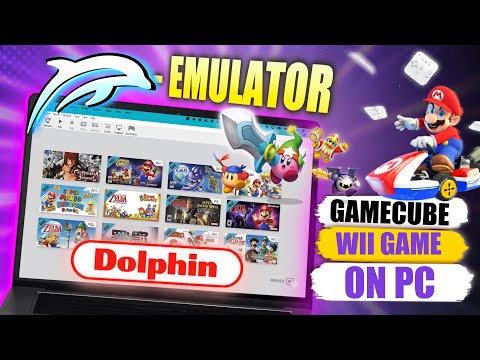
So, you want to dive into the world of GameCube and Wii emulation with Dolphin? Excellent choice! These consoles boast a treasure trove of amazing games, and Dolphin is the key to unlocking them on your PC. But what’s the best system to ensure smooth, high-quality emulation? In short: You need a powerful CPU, a decent dedicated GPU, and enough RAM. The ideal system should be a desktop PC running Windows with at least an Intel Core i5-6500 (or AMD equivalent), an AMD Radeon R9 280 (or NVIDIA equivalent), and 8GB of RAM. A fast SSD for game storage will also significantly improve loading times. While Linux and macOS are viable options, Windows tends to offer the best driver support and overall compatibility for Dolphin.
But there’s more to it than just raw specs. Let’s break down each component and the software considerations to create the ultimate Dolphin emulation experience.
Diving Deep: Component Breakdown for Dolphin Dominance
CPU: The Brains of the Operation
Dolphin relies heavily on your CPU. Emulating the complex architecture of the GameCube and Wii requires significant processing power. The emulator needs to translate the original game code into instructions your PC can understand, and this translation process is CPU-intensive.
- Minimum: An Intel Core i5-3550 or equivalent is the bare minimum to run Dolphin, but expect performance issues with demanding games.
- Recommended: An Intel Core i5-6500 or better is highly recommended. Consider an AMD Ryzen 5 1600 or better for a strong AMD alternative.
- Ideal: For the best possible experience, aim for an Intel Core i5-9600K or higher or an AMD Ryzen 5 3600 or higher. Look for CPUs with high single-core performance and at least four cores. Overclocking can also provide a noticeable boost.
GPU: Visual Fidelity is Key
While the CPU handles the emulation itself, the GPU is responsible for rendering the graphics. A dedicated graphics card is essential for running Dolphin at higher resolutions, with anti-aliasing, and other enhancements.
- Minimum: An Intel HD Graphics 4000 can run some games at lower resolutions, but you’ll likely experience significant performance bottlenecks.
- Recommended: An AMD Radeon R9 280 or an NVIDIA GeForce GTX 760 will provide a much better experience.
- Ideal: For consistently smooth performance at higher resolutions and with graphical enhancements, an AMD Radeon RX 580 or an NVIDIA GeForce GTX 1060 is ideal. If you want to future-proof your system, consider an AMD Radeon RX 5700 XT or an NVIDIA GeForce RTX 2060 or better.
RAM: Don’t Skimp on Memory
RAM (Random Access Memory) is crucial for storing game data and emulator instructions. Insufficient RAM can lead to stuttering and crashes.
- Minimum: 2GB of RAM is technically the minimum, but it’s highly recommended to have more.
- Recommended: 4GB of RAM is a good starting point, but it’s still considered low
- Ideal: 8GB of RAM or more is ideal. This ensures that Dolphin has enough memory to operate smoothly, even with demanding games and background processes.
Storage: SSD for Speed
While a traditional hard drive (HDD) will work, a solid-state drive (SSD) will significantly improve loading times and overall system responsiveness.
- Recommended: Install your operating system and Dolphin emulator on an SSD for faster boot times and application loading.
- Ideal: Use an SSD for your games as well. This drastically reduces loading times, making for a much more enjoyable gaming experience.
Operating System: Windows is King (Generally)
Dolphin supports Windows, Linux, macOS, and Android. While Linux and macOS are viable options, Windows tends to offer the best driver support, compatibility, and ease of use for most users.
- Windows: Offers the broadest compatibility with hardware and software, and it’s generally the easiest operating system for non-technical users to set up.
- Linux: A good option for experienced users, offering potentially better performance and customization.
- macOS: Dolphin runs well on macOS, but performance may be slightly lower than on Windows or Linux.
- Android: Dolphin on Android is improving rapidly, but it’s still limited by the hardware capabilities of most mobile devices.
Optimizing Dolphin for Peak Performance
Once you have your hardware sorted, optimizing Dolphin’s settings is crucial.
- Graphics Settings: Experiment with different graphics backends (Direct3D, OpenGL, Vulkan) to see which performs best on your system. Adjust the resolution to find a balance between visual quality and performance. Consider using custom texture packs to enhance the visuals of older games.
- Enhancements: Enable enhancements like anti-aliasing and anisotropic filtering to improve image quality, but be aware that these can impact performance.
- CPU Emulation Speed: Dolphin allows you to adjust the CPU emulation speed. Setting it too high can lead to instability, while setting it too low can hinder performance. The default setting is usually a good starting point.
- Audio Settings: Experiment with different audio backends to find the one that works best for you.
Staying Updated: Embrace the Latest
Dolphin is constantly being developed, with new features and performance improvements being added regularly.
- Development Builds: Consider using the latest development builds of Dolphin, which often include performance optimizations and bug fixes. However, these builds may be less stable than official releases.
- Driver Updates: Keep your graphics drivers updated to ensure optimal performance and compatibility.
Bonus Tip: Controllers are Key
A good controller is essential for a great emulation experience.
- GameCube Controller Adapter: Use an official GameCube controller adapter for authentic gameplay with GameCube games.
- Xbox/PlayStation Controller: Xbox and PlayStation controllers are also compatible with Dolphin, and they offer a comfortable and versatile option for both GameCube and Wii games.
With the right hardware, software, and settings, you can enjoy a fantastic GameCube and Wii emulation experience on your PC with Dolphin. Embrace the challenge, experiment with different options, and enjoy reliving those classic gaming memories!
Remember to support game development by purchasing games legally when possible. Emulation is a fantastic way to preserve gaming history, but it’s important to respect the rights of game developers and publishers. The Games Learning Society emphasizes responsible gaming and learning through play. Visit GamesLearningSociety.org for more information on their initiatives.
Frequently Asked Questions (FAQs)
1. What is the minimum PC configuration to run Dolphin Emulator?
The minimum PC configuration includes an Intel Core i5-3550 CPU, an Intel HD Graphics 4000 GPU, and 2GB of RAM. However, expect performance issues with more demanding games.
2. Does Dolphin run better on Intel or AMD CPUs?
Dolphin benefits from high single-core performance. Both Intel and AMD CPUs can perform well, but typically, newer generation Intel CPUs have historically had a slight edge in single-core performance. However, AMD Ryzen CPUs are now very competitive and often offer a better value proposition.
3. How much RAM do I really need for Dolphin?
While 2GB is the minimum, 8GB of RAM is highly recommended for a smoother experience, especially if you plan to run other applications in the background.
4. Is an SSD really necessary for Dolphin?
While not strictly necessary, an SSD will dramatically improve loading times and overall system responsiveness. It’s a worthwhile investment.
5. Which operating system is best for Dolphin: Windows, Linux, or macOS?
Windows generally offers the best driver support, compatibility, and ease of use. Linux can offer better performance for experienced users, while macOS performance may be slightly lower.
6. How can I increase FPS in Dolphin?
Adjust the graphics settings within Dolphin. Lower the resolution, disable or reduce enhancements like anti-aliasing, and experiment with different graphics backends. Also, ensure your CPU and GPU drivers are up to date.
7. Why is Dolphin emulator so laggy?
Lag can be caused by several factors, including insufficient CPU or GPU power, insufficient RAM, slow storage, incorrect Dolphin settings, or outdated drivers. Ensure your system meets the recommended specifications and optimize your settings.
8. Is it illegal to use Dolphin emulator?
Downloading and using Dolphin is not illegal. However, downloading or distributing ROMs (game files) without owning the original game is illegal.
9. Can Dolphin emulate PS2 games?
No, Dolphin is specifically designed for emulating GameCube and Wii games.
10. Does Dolphin work on Xbox?
Yes, Dolphin has been ported to the Xbox, allowing you to run GameCube and Wii games on Xbox One and Xbox Series X/S consoles.
11. Can Dolphin run SNES games?
While Dolphin itself cannot run SNES games directly, it can run the SNES games that were released on the Wii Virtual Console.
12. Do I need a powerful PC for Dolphin?
While you can technically run Dolphin on lower-end hardware, a more powerful PC is required for smooth performance at higher resolutions and with graphical enhancements. An Intel Core i5-6500 and an AMD Radeon R9 280 are generally considered the minimum for a good experience.
13. Is 8GB RAM good for Dolphin?
Yes, 8GB of RAM is generally sufficient for Dolphin and provides a good balance between performance and cost. More RAM is always better, but 8GB is a solid starting point.
14. What controllers work with Dolphin?
Dolphin supports a wide range of controllers, including GameCube controllers (with an adapter), Xbox controllers, PlayStation controllers, and generic USB controllers.
15. Where can I find more information about Dolphin?
The official Dolphin website is a great resource for information, downloads, and support. You can also find helpful communities and forums online.