What is the Blue Pac-Man Ghost?
Fast answer first. Then use the tabs or video for more detail.
- Watch the video explanation below for a faster overview.
- Game mechanics may change with updates or patches.
- Use this block to get the short answer without scrolling the whole page.
- Read the FAQ section if the article has one.
- Use the table of contents to jump straight to the detailed section you need.
- Watch the video first, then skim the article for specifics.
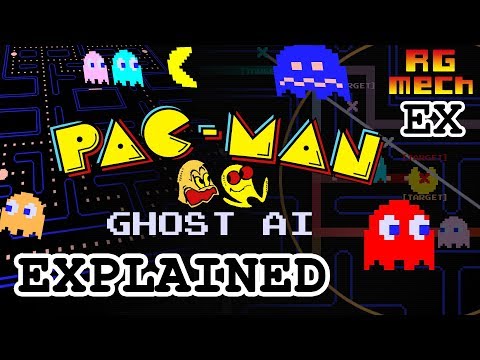
The Blue Pac-Man ghost, more formally known as Inky, is one of the four antagonists in the iconic arcade game Pac-Man. Inky’s defining characteristic is his unpredictable behavior, making him the most challenging ghost to understand and anticipate. Unlike Blinky (Red – “Shadow”) who directly chases Pac-Man, Pinky (Pink – “Speedy”) who tries to ambush him, and Clyde (Orange – “Pokey”) who wanders randomly, Inky’s movement is a complex calculation based on the positions of both Pac-Man and Blinky. This unique programming makes Inky a wild card, capable of unexpected and often dangerous maneuvers within the maze.
Delving Deeper into Inky’s Personality and Mechanics
Inky’s role goes beyond simply being a colorful obstacle. He embodies a more nuanced type of threat. His unpredictability stems from a targeting algorithm that uses Blinky’s location as a reference point. In simple terms, the game calculates a vector from Blinky to a point a couple of spaces ahead of Pac-Man, then doubles that vector, making Inky’s target location a point often far removed from Pac-Man’s immediate vicinity. This can lead to Inky seemingly ignoring Pac-Man entirely at times, only to suddenly veer in his direction.
The Complex Targeting Algorithm
The specific formula used to determine Inky’s target square is relatively complex and involves vector calculations, relative positions, and sometimes even glitches within the original code. Understanding it fully requires a deep dive into the game’s assembly language, but the essential takeaway is that Inky’s movement is not random, but rather a calculated, albeit erratic, response to both Pac-Man and Blinky. This clever programming is what makes him a fascinating subject for game developers and enthusiasts alike.
The Impact on Gameplay
Inky’s behavior significantly impacts how players approach Pac-Man. Players can’t reliably predict his movements and need to be far more cautious when encountering him. Knowing that Inky’s trajectory is influenced by Blinky’s position encourages strategic maneuvering and spatial awareness. A skilled Pac-Man player anticipates how Blinky’s movement will indirectly affect Inky and uses this knowledge to their advantage. He adds a layer of complexity to the game that the other ghosts simply don’t possess.
Inky’s Role in Scaring Pac-Man
While all the ghosts aim to eliminate Pac-Man, their approaches differ. Blinky uses relentless pursuit, Pinky employs ambush tactics, Clyde blunders around randomly (and sometimes right into Pac-Man), but Inky destabilizes the player with his sheer unpredictability. Players must stay on their toes, constantly evaluating the positions of both Pac-Man, Blinky, and anticipating where Inky might dart next. This creates a constant sense of tension and adds a significant challenge to the game.
Frequently Asked Questions About Inky (The Blue Ghost)
Here are some frequently asked questions to expand your knowledge about Inky.
1. What does Inky’s name mean?
Inky’s name likely refers to his unpredictable and “blotchy” movement pattern, similar to how ink spreads unexpectedly on paper. There isn’t a definitively stated meaning from the creators, but this interpretation aligns with his in-game behavior.
2. Is Inky harder to avoid than the other ghosts?
Yes, Inky is generally considered the most difficult ghost to avoid because his targeting algorithm makes his movements unpredictable. Blinky is relentless but predictable, Pinky’s ambush tactics can be countered, and Clyde’s randomness often works against him. Inky’s calculated unpredictability makes him much harder to anticipate.
3. Does Inky ever become predictable?
While Inky’s behavior is generally unpredictable, experienced players can learn to recognize patterns and tendencies based on the layout of the maze and the positions of Pac-Man and Blinky. However, he will never be as predictable as the other ghosts.
4. Can Inky’s behavior be exploited?
Yes, skilled players can exploit Inky’s targeting algorithm to some extent. By understanding how Blinky’s position influences Inky’s movements, players can sometimes manipulate him into moving in a direction that is advantageous.
5. How does the “frightened” mode affect Inky?
When Pac-Man eats a power pellet, all the ghosts, including Inky, enter “frightened” mode, turning blue and moving more slowly. In this mode, Inky’s targeting algorithm is overridden, and he moves randomly. This gives Pac-Man a chance to eat him for points.
6. Is Inky different in different versions of Pac-Man?
While the core targeting algorithm remains the same across most versions of Pac-Man, minor variations may exist in different ports or adaptations. Some versions might have slightly tweaked parameters or even incorporate bugs that affect Inky’s behavior.
7. Does Inky have a specific starting position in the ghost house?
Yes, Inky starts in the middle of the ghost house, on the left side. He is released after Pinky.
8. Does the level number affect Inky’s behavior?
Yes, as the level number increases, the speed of all the ghosts, including Inky, increases, making them more challenging to avoid.
9. Why is Inky blue?
The colors of the ghosts were chosen primarily for visual distinction and to represent different personality traits. Blue was likely selected for Inky to suggest his elusive and unpredictable nature.
10. Does Inky ever chase Pac-Man directly?
While Inky’s primary targeting method is indirect, relying on Blinky’s position, his movement can occasionally appear as if he is chasing Pac-Man directly, especially when the calculated target point happens to be in Pac-Man’s vicinity.
11. What are Inky’s weaknesses?
Inky’s primary weakness is the “frightened” mode, which makes him vulnerable to being eaten. Additionally, understanding and exploiting his complex targeting algorithm is another way to mitigate his threat.
12. Is Inky male or female?
The ghosts in Pac-Man are generally considered to be male, although this isn’t explicitly stated in the original game. The Japanese names translate more closely to nicknames than gendered names.
13. What happens if Inky catches Pac-Man?
If Inky catches Pac-Man, Pac-Man loses a life. After losing all lives, the game is over.
14. Are there any glitches associated with Inky?
Yes, the complex targeting algorithm of Inky in the original arcade version contains a glitch that can cause him to target a location outside of the maze boundaries under specific circumstances. This glitch is sometimes referred to as the “cornering bug.”
15. What strategies can I use to avoid Inky?
Focus on spatial awareness, paying attention to the positions of both Pac-Man and Blinky. Predict Blinky’s movements to anticipate how Inky might react. Utilize power pellets strategically to turn the tables and eat Inky. Practice is key to mastering the art of avoiding Inky’s unpredictable attacks.
In conclusion, Inky, the blue Pac-Man ghost, is much more than just a simple opponent. His uniquely complex targeting algorithm and unpredictable behavior makes him a fascinating study in game design and a formidable challenge for even the most skilled Pac-Man players. Understanding his mechanics is key to mastering the game and surviving the treacherous maze.