Unlocking the Rogue’s Edge: Mastering Bonus Action Advantage in 5e
Fast answer first. Then use the tabs or video for more detail.
- Watch the video explanation below for a faster overview.
- Game mechanics may change with updates or patches.
- Use this block to get the short answer without scrolling the whole page.
- Read the FAQ section if the article has one.
- Use the table of contents to jump straight to the detailed section you need.
- Watch the video first, then skim the article for specifics.
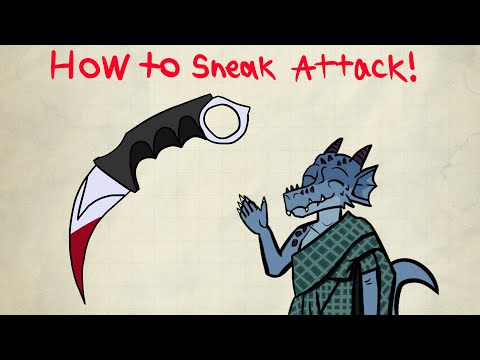
The concept of bonus actions is fundamental to the dynamic gameplay of Dungeons & Dragons 5th Edition (5e), and for Rogues, it’s the key to unlocking their full potential. The answer to the question, “What is the bonus action advantage in 5e Rogue?” is multifaceted, but essentially, it revolves around using a bonus action to gain advantage on attack rolls, making the Rogue’s deadly sneak attacks more reliable and frequent. While not every Rogue bonus action directly grants advantage, many allow the Rogue to create situations where advantage becomes a guarantee. Specifically, the Rogue’s Cunning Action feature is crucial to this strategy.
The Core of Cunning Action
At second level, Rogues gain Cunning Action, a class feature that is central to their mobility and combat prowess. This allows a Rogue to take one of three actions as a bonus action on each of their turns: Dash, Disengage, or Hide. It’s the Hide action that is most directly linked to gaining advantage.
How Hiding Leads to Advantage
When a Rogue successfully hides from a creature (which depends on their Stealth roll versus the target’s Perception check), they become unseen and unheard. If the Rogue then attacks that hidden target, the Rogue gets advantage on the attack roll. This is a critical mechanic that allows a Rogue to unleash powerful sneak attacks, which are only triggered if the Rogue has advantage on the attack or if an ally is within 5 feet of the target.
The Flow of Combat Advantage
The typical scenario for a Rogue aiming for advantage is to first hide using their bonus action, move into position (if needed), and then attack with advantage, triggering a sneak attack. However, this is not the only way rogues gain advantage. Certain other conditions, such as the target being Blinded, Paralyzed, Restrained, Petrified, Stunned, or Unconscious grant the Rogue advantage as well.
Bonus Action: More Than Just Hiding
While Hiding is the most prominent bonus action for securing advantage, other bonus action usage is important for the rogue. Using the Dash action can allow a rogue to quickly gain position for an attack while the Disengage action provides the security needed to avoid opportunity attacks to be able to hide again.
Frequently Asked Questions (FAQs) About Rogue Bonus Action Advantage
1. Do Rogues always have advantage?
No, Rogues do not always have advantage. They must create or capitalize on situations that grant them advantage. The most common method is to hide using Cunning Action and then attack a creature from which they are hidden. Alternatively, they can gain advantage when an ally is within 5 feet of the target if that ally is not incapacitated and if they do not have disadvantage.
2. Can a Rogue hide after attacking?
Yes, a Rogue can hide after attacking, but there is some nuance. Generally, hiding is an action, not a reaction and this applies to the Rogue as well. However, the rogue can use Cunning Action to Hide as a bonus action, this may allow them to hide again before it is their turn once more. It should also be kept in mind that if you attack from being hidden you give away your location and you are no longer hidden by most GM rules. Therefore, you must re-hide.
3. Do Rogues get a second bonus action?
No, Rogues do not get a second bonus action. You can only take one bonus action on your turn, regardless of how many abilities or features would allow you to take one. You must choose which bonus action to use if you have multiple options.
4. Can Rogues dash with both action and bonus action?
Yes, Rogues can dash with both their action and a bonus action, thanks to Cunning Action. This allows them to move at triple their normal speed in a single turn (move normally, action to dash and bonus action to dash).
5. Do Rogues get sneak attack on a bonus action attack?
Yes, Rogues get sneak attack damage once per turn on an attack that meets the criteria for sneak attack. This can be from their action, bonus action, or reaction (such as an opportunity attack). The only requirement is that it is the first instance of sneak attack damage in that turn.
6. What other conditions grant a Rogue advantage on attack rolls?
Apart from hiding, Rogues gain advantage on attack rolls against targets that are Blinded, Paralyzed, Restrained, Petrified, Stunned, or Unconscious.
7. Do Rogues get advantage when flanking?
Flanking is a variant rule, not a baseline rule in 5e. If you are using it, then Rogues will gain advantage when they are flanking, which in turn will trigger their sneak attack.
8. Can a Rogue hold a bonus action attack?
No, you cannot hold a bonus action. The Ready action allows a character to prepare a specific action, not a bonus action.
9. What is the most important stat for a Rogue?
Dexterity is the most important stat for a Rogue. It affects their attack rolls with finesse weapons, their Armor Class, their initiative, and their skills such as Stealth. Intelligence is key for Arcane Tricksters, and Charisma and Wisdom can be helpful depending on what skills a Rogue focuses on.
10. What are the most important skills for a Rogue?
Two skills that are almost essential for Rogues are Stealth and Perception. Stealth is essential for hiding and gaining advantage, and Perception is important for spotting hidden enemies and traps. Other important skills are Acrobatics, Investigation, and Persuasion.
11. Can a Rogue triple dash?
A Rogue can move at triple their movement speed in one turn using both their action and bonus action to dash. Although, a triple dash may refer to something different. A rogue could move once normally, then dash with their action, then dash with their bonus action, then if that was not enough, use a Ready action to prepare to move again, and trigger that movement with their reaction.
12. What is the best race for a Rogue?
There are many suitable races for Rogues, but a popular choice is Halfling. They typically gain a bonus to Dexterity and either Charisma or Constitution.
13. Are there any Rogue subclasses that offer alternative bonus action options?
Yes, some Rogue subclasses have extra bonus action options. For instance, Soulknives can use their bonus action to summon their psionic blades, or make a psychic leap. Thieves can use their bonus action to use an object, and the Swashbuckler subclass can use their bonus action to take a free disengage.
14. Do Rogues get Action Surge?
No, Rogues do not get Action Surge. This is a feature specific to the Fighter class. Rogues instead rely on cunning action to gain advantages in combat.
15. What is the best strategy for consistently getting advantage as a Rogue?
The best strategy is to use your bonus action to Hide when possible. Positioning yourself to utilize cover and shadows will allow you to easily attempt to hide, giving you the best chance to gain advantage. This combined with being able to have your ally within 5 feet of your opponent, will set you up to inflict heavy sneak attack damage.
Conclusion
In conclusion, bonus action advantage is a cornerstone of a Rogue’s combat strategy in 5e. By mastering the use of Cunning Action, particularly the Hide action, Rogues can consistently gain advantage on their attack rolls, triggering deadly sneak attacks. Furthermore, understanding how different mechanics interact to generate advantage is vital for playing an effective Rogue. By utilizing these techniques, Rogues can maximize their damage output, becoming elusive and dangerous adversaries on the battlefield.