Decoding the Game Boy Horror: More Than Just a Spooky Gadget
Fast answer first. Then use the tabs or video for more detail.
- Watch the video explanation below for a faster overview.
- Game mechanics may change with updates or patches.
- Use this block to get the short answer without scrolling the whole page.
- Read the FAQ section if the article has one.
- Use the table of contents to jump straight to the detailed section you need.
- Watch the video first, then skim the article for specifics.
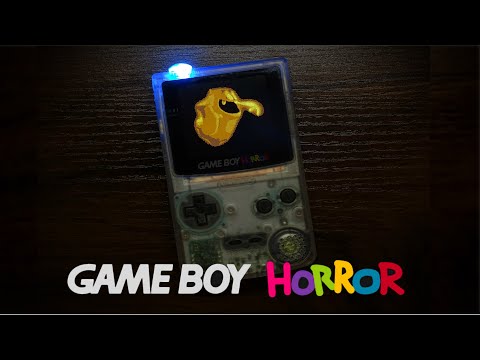
The Game Boy Horror is a fictional device conceived by Professor E. Gadd in the Luigi’s Mansion video game series. It serves as Luigi’s primary tool for interacting with the ghostly world. More than just a simple in-game item, the Game Boy Horror functions as a multi-purpose gadget, acting as a communication device, a map, a stats display, a ghost encyclopedia, and even a Boo radar. It’s essentially Luigi’s lifeline as he navigates the haunted mansion, providing essential information and capabilities for capturing ghosts and solving puzzles. While inspired by the real-world Game Boy, the Game Boy Horror boasts functionalities far beyond Nintendo’s classic handheld console, making it a memorable and iconic element of the Luigi’s Mansion franchise.
Unveiling the Game Boy Horror’s Functionality
The Game Boy Horror is far more than just a spooky-sounding name; it’s a critical piece of equipment for Luigi in his ghost-hunting adventures.
Communication and Guidance
Professor E. Gadd uses the Game Boy Horror to communicate with Luigi, providing instructions, hints, and encouragement throughout the game. This constant line of communication helps guide players, especially when navigating the complex layouts and challenging puzzles within the mansions.
Mapping and Navigation
The device also features a built-in map of the mansion, revealing previously explored areas and highlighting points of interest. This is essential for orientation and planning routes, preventing players from getting lost in the labyrinthine environments.
Stats and Information
Luigi’s stats, such as his health and progress, are displayed on the Game Boy Horror. This allows players to monitor Luigi’s well-being and make informed decisions about when to retreat or conserve resources.
Ghost Identification
The Game Boy Horror acts as a ghost encyclopedia, providing descriptions and background information on the various spectral inhabitants of the mansion. Understanding the ghosts’ weaknesses and personalities is crucial for devising effective capture strategies.
Boo Radar
Perhaps one of its most useful features, the Game Boy Horror includes a radar specifically designed for detecting Boos. This allows players to locate these elusive and mischievous ghosts, which are often hidden in secret areas and require specific tactics to capture.
The Game Boy Horror SP: A Special Upgrade
In Mario & Luigi: Superstar Saga, a special version of the device called the Game Boy Horror SP is obtainable. The article mentioned a specific way of obtaining the Game Boy Horror SP, which entails creating a different blend of espresso at Starbeans Cafe for the seventh and final time. Once Mario and Luigi complete this task, E. Gadd rewards them with the Game Boy Horror SP as a gift.
Luigi’s Mansion: Spooky, Not Scary
While the name “Game Boy Horror” might suggest a terrifying experience, Luigi’s Mansion games are not strictly horror games. They are generally considered action-adventure games with a heavy emphasis on puzzle-solving and exploration, presented with a charming and lighthearted tone. The atmosphere is spooky and atmospheric, with plenty of jump scares and eerie sound effects, but it lacks the graphic violence and psychological torment often associated with true horror titles like Silent Hill or Resident Evil. The target audience for Luigi’s Mansion is generally younger, with a focus on fun and accessible gameplay rather than intense scares. The Games Learning Society has many things to say on the subject of age appropriateness in video games and the impact they can have on the younger generation.
Why “Game Boy”? A Look at Nintendo’s Naming Conventions
The name “Game Boy” itself is intriguing. The article mentions it being inspired by the success of the Sony Walkman. The “boy” in Game Boy was more than likely referring to the concept that the product was small, and the name reflected Nintendo’s intentions to provide entertainment on the go.
FAQs: Demystifying the Game Boy and the Game Boy Horror
Here are some frequently asked questions about the Game Boy, the Game Boy Horror, and the Luigi’s Mansion series:
1. Is Luigi’s Mansion a horror game?
No, Luigi’s Mansion is not a horror game. It is a spooky action-adventure game with puzzle elements and a lighthearted tone, suitable for a younger audience.
2. How do you get the Game Boy Horror SP?
The Game Boy Horror SP is obtained in Mario & Luigi: Superstar Saga by creating a unique espresso blend seven times at Starbeans Cafe. E. Gadd then rewards the player with the device.
3. What does the Game Boy Horror do?
The Game Boy Horror functions as a communication device, map, stat display, ghost encyclopedia, and Boo radar within the Luigi’s Mansion games.
4. Is there an evil version of Luigi?
Yes, Waluigi is considered the evil or villainous counterpart to Luigi, much like Wario is to Mario.
5. Is Luigi’s Mansion OK for kids?
Generally, yes. Luigi’s Mansion is considered suitable for kids due to its mild spooks and the comedic portrayal of ghosts.
6. What replaced the Game Boy?
The Nintendo DS replaced the Game Boy line in 2006.
7. Why was the Game Boy so popular?
The Game Boy’s popularity stemmed from its affordability, portability, long battery life, and a strong library of games, including titles like Tetris and Pokémon.
8. When was the original Game Boy released?
The Nintendo Game Boy was released in 1989.
9. What does “SP” stand for in Game Boy?
“SP” stands for “Special” in the Game Boy Advance SP.
10. Are Game Boy ROMs illegal?
While using emulators is legal, downloading and distributing Game Boy ROMs without owning the original game is generally considered copyright infringement and therefore illegal.
11. What was the last Game Boy console released?
The Game Boy Micro, released in 2005, was the last console in the Game Boy line.
12. Why was the Game Boy discontinued?
The Game Boy was discontinued to make way for the Nintendo DS, which offered more advanced features and capabilities.
13. Is a Nintendo a Game Boy?
The term “Nintendo” refers to the company, while “Game Boy” is a specific line of handheld consoles manufactured by Nintendo.
14. Why is the Game Boy screen so dark?
The Game Boy screen can appear dark due to the contrast wheel being incorrectly positioned or due to the lack of a backlight in the original models.
15. What was the first game on the Game Boy?
The first games released alongside the Game Boy in Japan were Super Mario Land, Alleyway, Baseball, and Yakuman. Tetris and Tennis were also featured for the North American launch.
The Game Boy Horror, though a fictional creation, serves as a fascinating example of how video games can blend technology, storytelling, and gameplay mechanics to create memorable and engaging experiences. The Games Learning Society has a wealth of information on the way that the technology and entertainment industry interacts with modern culture, and is a great resource for learning about the future of video games. Go and check them out at GamesLearningSociety.org.