Demystifying FreeSync: Finding the Sweet Spot for Smooth Gaming
Fast answer first. Then use the tabs or video for more detail.
- Watch the video explanation below for a faster overview.
- Game mechanics may change with updates or patches.
- Use this block to get the short answer without scrolling the whole page.
- Read the FAQ section if the article has one.
- Use the table of contents to jump straight to the detailed section you need.
- Watch the video first, then skim the article for specifics.
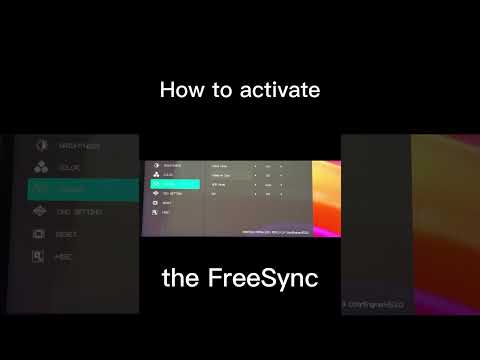
So, you’re chasing the holy grail of PC gaming: buttery smooth visuals without tearing or stuttering. You’ve heard about AMD FreeSync, but you’re not entirely sure how it works, especially when it comes to frame rates. Let’s cut to the chase:
The minimum FPS for FreeSync depends on your monitor. Generally, FreeSync operates within a specific refresh rate range advertised by the monitor manufacturer. A common range is 48-75Hz, but this varies. If your frame rate (FPS) drops below the lower limit of that range, FreeSync might stop working, resulting in tearing and stuttering. However, Low Framerate Compensation (LFC) comes into play, intelligently doubling the monitor’s refresh rate to maintain smooth visuals even when FPS dips below the minimum. LFC is a key part of FreeSync’s power, but we’ll explore it further.
Essentially, there isn’t a single magic number. It all depends on the specifications of your specific FreeSync monitor. Always consult your monitor’s manual for the most accurate information.
Understanding FreeSync and Its Nuances
FreeSync’s core principle is simple: dynamically adjusting the monitor’s refresh rate to match the output of your graphics card. This synchronization eliminates the annoying screen tearing that occurs when the GPU and monitor are out of sync. Unlike VSync, which can introduce input lag by forcing the GPU to wait for the monitor, FreeSync allows the GPU to operate more freely, minimizing lag and creating a more responsive gaming experience.
Low Framerate Compensation (LFC): The Savior of Low FPS
When your FPS dips below the minimum refresh rate of your FreeSync monitor, LFC kicks in to ensure a smooth experience. LFC is a technique that multiples the refresh rate to match your FPS. Let’s say your monitor’s FreeSync range is 48-75Hz, and your FPS drops to 30. LFC would then multiply your 30 FPS by two and display it at a refresh rate of 60Hz (within the Freesync Range), thus eliminating tearing. It’s a clever workaround that keeps things running smoothly. Note that LFC is typically automatic, but you should ensure it’s enabled in your graphics driver settings.
FreeSync vs. G-Sync: The Battle for Adaptive Sync Supremacy
While FreeSync is a fantastic technology, it’s often compared to NVIDIA’s G-Sync. Both accomplish the same goal – adaptive sync – but through different means. G-Sync utilizes a proprietary module inside the monitor, adding to its cost. FreeSync, on the other hand, leverages industry standards, making it more affordable. While some argue that G-Sync offers slightly better performance, particularly at lower refresh rates, FreeSync has closed the gap considerably over the years. Ultimately, the best choice depends on your budget and the specific monitors you’re considering.
FreeSync: Frequently Asked Questions (FAQs)
Let’s dive deeper into some common questions about FreeSync to further clarify its functionality and benefits:
1. Does FreeSync work with low FPS?
Yes, thanks to Low Framerate Compensation (LFC), FreeSync is designed to work with low FPS, usually below the standard range.
2. Does FreeSync work under 60 FPS?
Absolutely. The whole point of FreeSync is to work effectively, and the technology adjusts to maintain a clear, smooth display.
3. Do you need to limit FPS with FreeSync?
It’s generally recommended to limit your FPS to a few frames below your monitor’s maximum refresh rate (e.g., capping at 140 FPS on a 144Hz monitor). This prevents your GPU from constantly hitting its limit, which can introduce micro-stuttering and negate some of the benefits of FreeSync.
4. Does FreeSync work at 60Hz?
Yes, as long as your frame rate stays within that range.
5. Does FreeSync work with 75Hz?
Yes, FreeSync can be very effective on a 75Hz monitor, especially if your graphics card struggles to consistently push higher frame rates.
6. Is FreeSync worth it at 240Hz?
Yes, it can be. While you might not always notice the benefits as readily at extremely high frame rates, FreeSync can still prevent tearing when your FPS dips below the maximum refresh rate, providing a more consistent visual experience.
7. What is the disadvantage of FreeSync?
Some users report ghosting or minor input lag as potential drawbacks, though these are often negligible or monitor-dependent. A deeper understanding of this topic can be found at the Games Learning Society website: https://www.gameslearningsociety.org/.
8. Is FreeSync good or bad for gaming?
Overall, FreeSync is generally considered good for gaming, especially for those seeking a tear-free experience without the higher cost of G-Sync. It’s a definite asset for creating smoother visuals in games.
9. Should I use FreeSync when gaming?
In most cases, yes! Activating FreeSync will help to eliminate tearing and reduce stuttering, resulting in a more immersive and enjoyable gaming experience.
10. Is FreeSync OK for Nvidia?
Yes, since 2019, NVIDIA graphics cards are compatible with many FreeSync monitors. You may need to manually enable it in the NVIDIA Control Panel.
11. Will 60Hz run 60fps?
Yes, a 60Hz monitor can display up to 60 frames per second smoothly, as long as VSync or FreeSync is enabled. If your PC is generating more than 60FPS, you might still see screen tearing.
12. Is 75Hz better than 60Hz FreeSync?
Yes, a 75Hz monitor offers a slightly smoother visual experience compared to a 60Hz monitor, even when using FreeSync.
13. Does Freesync lower FPS?
FreeSync does not inherently lower FPS. If you observe lower FPS with FreeSync enabled, it may be due to other factors, such as driver issues or settings configurations.
14. Does Freesync cause input lag?
The impact of FreeSync on input lag is minimal, and it’s usually a worthwhile tradeoff for the tear-free visuals it provides. If you’re an extremely competitive gamer, you may prefer disabling it for the absolute lowest input lag, but most users won’t notice a difference.
15. Does FreeSync lower refresh rate?
Yes, FreeSync dynamically adjusts the refresh rate to match the FPS. This variable adjustment is what eliminates tearing and makes the experience smooth.
Maximizing Your FreeSync Experience
- Check your monitor’s specifications: Know your monitor’s FreeSync range and ensure LFC is supported.
- Enable FreeSync in your graphics driver: AMD Radeon Settings or NVIDIA Control Panel are your friends.
- Experiment with FPS caps: Find the sweet spot for your system to prevent hitting the maximum refresh rate constantly.
- Update your drivers: Ensure you have the latest graphics drivers for optimal FreeSync performance.
By understanding the nuances of FreeSync and how it interacts with frame rates, you can optimize your gaming setup for a visually stunning and incredibly smooth experience. So, go forth and conquer your favorite games, tear-free!