What is the Most High-End Graphics Card?
Fast answer first. Then use the tabs or video for more detail.
- Watch the video explanation below for a faster overview.
- Game mechanics may change with updates or patches.
- Use this block to get the short answer without scrolling the whole page.
- Read the FAQ section if the article has one.
- Use the table of contents to jump straight to the detailed section you need.
- Watch the video first, then skim the article for specifics.
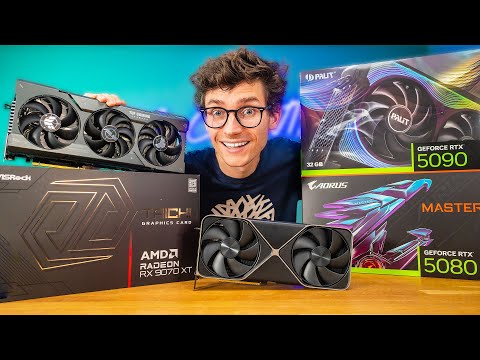
The title of “most high-end graphics card” is currently held by the NVIDIA GeForce RTX 4090. This card boasts unparalleled performance in gaming, content creation, and AI workloads thanks to its cutting-edge architecture, massive memory capacity, and impressive clock speeds. However, the “best” card also depends on specific needs and budget; the RTX 4090 represents the pinnacle of consumer-grade graphics technology, offering a significant leap in performance over previous generations, albeit at a premium price.
Understanding High-End Graphics Cards
High-end graphics cards represent the pinnacle of GPU technology. These cards are designed to deliver the absolute best performance possible, pushing the boundaries of visual fidelity, frame rates, and computational power. They target enthusiasts, professional content creators, and anyone who demands the ultimate in graphics performance. But what factors contribute to a graphics card being considered high-end?
Key Features of High-End GPUs
-
Powerful GPU Architecture: High-end cards feature the most advanced GPU architectures from NVIDIA (e.g., Ada Lovelace) or AMD (e.g., RDNA 3). These architectures are designed for maximum efficiency and performance, incorporating features like ray tracing acceleration, AI-powered upscaling, and advanced rendering techniques.
-
Abundant Memory: High-end GPUs boast large amounts of video memory (VRAM). The RTX 4090, for example, features 24GB of GDDR6X memory. This ample VRAM is crucial for handling high-resolution textures, complex scenes, and demanding workloads like video editing and 3D rendering.
-
High Clock Speeds: Clock speeds, measured in MHz, determine how quickly the GPU can process data. High-end cards are engineered with high base and boost clock speeds, allowing them to execute calculations rapidly and efficiently.
-
Advanced Cooling Solutions: Given the immense power they consume, high-end GPUs generate significant heat. Manufacturers implement sophisticated cooling solutions, often involving multiple fans, large heatsinks, or even liquid cooling, to maintain stable operating temperatures and prevent performance throttling.
-
Premium Build Quality: High-end graphics cards often feature robust build quality with premium components, ensuring longevity and reliability even under demanding workloads.
Beyond the RTX 4090: Considerations
While the RTX 4090 is generally considered the top-performing consumer card, several factors influence the “best” choice for individual users:
-
Specific Use Case: Gaming at 4K resolution with maximum settings is a common benchmark, but tasks like professional video editing, 3D modeling, or AI development might benefit from specific GPU features or ecosystem support.
-
Budget Constraints: High-end cards come with a significant price tag. Depending on your budget, a slightly lower-tier card might offer a better price-to-performance ratio for your needs.
-
AMD Alternatives: While the RTX 4090 generally leads in raw performance, AMD’s high-end cards like the Radeon RX 7900 XTX offer competitive performance and features, often at a more attractive price point.
-
Future-Proofing: Investing in a high-end card can provide a longer lifespan before needing an upgrade. However, technology evolves rapidly, so consider your upgrade cycle and budget when making a purchase.
Factors to Consider Before Purchasing
Before investing in a high-end graphics card, carefully assess your needs and system configuration.
-
CPU Bottleneck: Ensure your CPU is powerful enough to keep up with the GPU. An underpowered CPU can bottleneck the GPU, limiting its performance potential.
-
Power Supply: High-end cards require significant power. Make sure your power supply unit (PSU) has sufficient wattage and the necessary connectors to support the card.
-
Case Size and Cooling: Ensure your computer case has enough physical space to accommodate the large size of high-end cards and adequate airflow to prevent overheating.
-
Monitor Resolution and Refresh Rate: If you’re using a lower resolution monitor (e.g., 1080p), the benefits of a high-end card might be less noticeable than on a 4K or ultrawide display.
Frequently Asked Questions (FAQs)
1. What makes the RTX 4090 so powerful?
The RTX 4090 is powerful due to its Ada Lovelace architecture, massive CUDA core count, large 24GB GDDR6X memory, and high clock speeds. It also benefits from NVIDIA’s advancements in ray tracing and DLSS 3, which enhance visual fidelity and performance.
2. Is the RTX 4090 worth the price?
Whether the RTX 4090 is worth the price depends on your individual needs and budget. If you demand the absolute best gaming performance at high resolutions, engage in intensive content creation tasks, or require powerful AI capabilities, then the RTX 4090 might be a worthwhile investment. However, for more casual gaming or less demanding tasks, a lower-tier card might offer a better value proposition.
3. What is the AMD equivalent of the RTX 4090?
The closest AMD equivalent to the RTX 4090 is the Radeon RX 7900 XTX. While it doesn’t quite match the raw performance of the RTX 4090 in all scenarios, it offers competitive performance at a generally lower price point.
4. How much VRAM do I need?
The amount of VRAM you need depends on the resolution and settings you plan to use. For 1080p gaming, 8GB might be sufficient, while 1440p gaming often benefits from 12GB or more. For 4K gaming or professional content creation, 16GB or more is recommended.
5. What is ray tracing?
Ray tracing is an advanced rendering technique that simulates the physical behavior of light to create more realistic and immersive visuals. It enhances reflections, shadows, and global illumination in games and other applications.
6. What is DLSS?
DLSS (Deep Learning Super Sampling) is an AI-powered upscaling technology developed by NVIDIA. It allows games to render at a lower resolution and then use AI to upscale the image to a higher resolution, resulting in improved performance with minimal visual quality loss.
7. Will my CPU bottleneck an RTX 4090?
It’s possible. Modern high-end CPUs like the Intel Core i9-13900K or AMD Ryzen 9 7950X3D are generally well-matched with the RTX 4090. However, older or lower-end CPUs might bottleneck the card, preventing it from reaching its full potential.
8. What power supply do I need for an RTX 4090?
NVIDIA recommends a minimum 850W power supply for systems with an RTX 4090. However, depending on your other system components, a 1000W or even a 1200W PSU might be necessary for stable operation.
9. How do I monitor my GPU temperature?
You can monitor your GPU temperature using software like MSI Afterburner, NVIDIA GeForce Experience, or HWMonitor. These programs provide real-time information about your GPU’s temperature, clock speeds, and other performance metrics.
10. What is the difference between GDDR6 and GDDR6X memory?
GDDR6X is a faster and more efficient type of GDDR6 memory developed by Micron and used by NVIDIA in their high-end cards. It features a different signaling technology that allows for higher data transfer rates and improved performance.
11. Can I overclock the RTX 4090?
Yes, you can overclock the RTX 4090 to further increase its performance. However, overclocking can also increase heat generation and potentially reduce the lifespan of the card. Use caution and monitor temperatures closely when overclocking.
12. What are the best games to showcase the RTX 4090?
Games that support ray tracing, DLSS, and high resolutions (4K or higher) are ideal for showcasing the RTX 4090. Some examples include Cyberpunk 2077, Alan Wake 2, Microsoft Flight Simulator, and Dying Light 2.
13. Will the RTX 4090 work with my older motherboard?
The RTX 4090 is compatible with any motherboard that has a PCIe x16 slot. However, to achieve the best performance, a motherboard with PCIe 4.0 or PCIe 5.0 support is recommended.
14. How long will the RTX 4090 remain the “most high-end” card?
The lifespan of the RTX 4090 as the “most high-end” card depends on advancements in GPU technology. New generations of cards from NVIDIA and AMD are typically released every 1-2 years, so its reign at the top will eventually come to an end.
15. Where can I buy an RTX 4090?
The RTX 4090 is available from major retailers like Amazon, Newegg, Best Buy, and directly from NVIDIA’s website. Availability may vary depending on demand and supply chain constraints.