Unpacking the Political Firestorm: The Controversy Surrounding Far Cry 6
Fast answer first. Then use the tabs or video for more detail.
- Watch the video explanation below for a faster overview.
- Game mechanics may change with updates or patches.
- Use this block to get the short answer without scrolling the whole page.
- Read the FAQ section if the article has one.
- Use the table of contents to jump straight to the detailed section you need.
- Watch the video first, then skim the article for specifics.
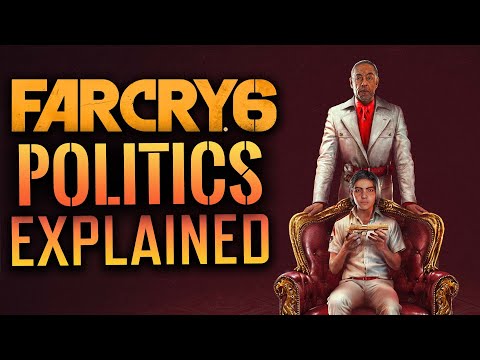
The political controversy surrounding Far Cry 6 stems from a complex interplay of factors. While the game directly addresses themes like fascism, imperialism, forced labor, LGBTQ+ rights, and the necessity of fair elections within the fictional Caribbean island of Yara, its execution and overall message have been met with criticism. The core of the controversy lies in the perceived dissonance between the game’s ambitious political aspirations and its ultimately shallow or contradictory portrayal of these issues. Critics argue that while Far Cry 6 gestures toward meaningful commentary on real-world political struggles, it ultimately falls short, either through a lack of depth, inconsistent messaging, or the prioritization of gameplay over substantive political exploration. This has led to debates about whether the game’s political elements are genuinely progressive, merely superficial, or even inadvertently harmful.
Diving Deeper: The Many Layers of Controversy
The controversy isn’t just a single point of contention but rather a collection of issues that have sparked debate amongst players, critics, and political commentators. Let’s explore the key aspects.
1. The “Apolitical” Stance That Wasn’t
Initially, Ubisoft attempted to downplay the game’s political nature, with some developers stating that Far Cry 6 wasn’t intended to make a political statement. This stance was quickly contradicted by the game’s clear themes and narrative, set against the backdrop of a Cuban-inspired dictatorship. Narrative director Navid Khavari eventually admitted that the game was political, further fueling the controversy. The initial denial created the impression that Ubisoft was attempting to profit from sensitive political themes while avoiding genuine engagement with them. This perceived hypocrisy sparked anger and accusations of opportunism.
2. Shallow Exploration of Complex Issues
Many critics argue that while Far Cry 6 touches on significant issues, it fails to explore them with sufficient depth or nuance. For example, the game features an LGBTQ+ character, but some critics found the portrayal to be stereotypical and even transphobic. The game tackles the brutality of a dictatorship, but the narrative often prioritizes action and spectacle over exploring the systemic issues that enable oppression. This superficial approach leaves players feeling like they are merely skimming the surface of complex political realities.
3. Glorification of Violence and Revolution
Far Cry 6, like its predecessors, is a game built on violence. Players are tasked with overthrowing a ruthless dictator, and the gameplay revolves around engaging in armed conflict. While the game presents this as a just cause, critics argue that it inadvertently glorifies violence and revolution without adequately exploring the ethical implications of armed struggle. The constant stream of explosions, gunfights, and guerilla tactics can desensitize players to the real-world consequences of political violence.
4. The Overton Window Shift and Political Perspectives
The article excerpt touches on the idea of the “Overton Window,” which refers to the range of political ideas considered acceptable within the mainstream public discourse. Some argue that the window has shifted so far that what was once considered radical is now commonplace. This makes it difficult to engage in meaningful discussions about the political implications of games like Far Cry 6. What some perceive as a nuanced exploration of fascism, others might see as a watered-down, sanitized version of political realities.
5. “Tropes” of Latin American Representation
Some argue that Far Cry 6 resorts to harmful tropes when representing its Latin American-inspired setting and characters. The game features stereotypes related to drug cartels, poverty, and political corruption. These tropes, while potentially based on certain realities, can perpetuate harmful narratives and contribute to the othering of Latin American cultures.
Is There Any Redemption?
Despite the criticisms, some argue that Far Cry 6 deserves credit for at least attempting to engage with political themes. The game’s visual design, soundtrack, and open-world environment create a compelling backdrop for exploring the complexities of revolution. Moreover, the presence of characters from marginalized groups, even if imperfectly portrayed, represents a step towards greater diversity in the gaming landscape.
Ultimately, the political controversy surrounding Far Cry 6 highlights the challenges and opportunities that arise when video games attempt to tackle complex social and political issues. The game serves as a reminder that representation, nuance, and genuine engagement are crucial for creating meaningful and impactful political commentary.
Researchers who study how video games influence learning and social change might find valuable insights at the Games Learning Society website at https://www.gameslearningsociety.org/. This organization is dedicated to understanding the power of games in education and social impact. This type of research is imperative to understanding how the next generation will be influenced by such games.
Frequently Asked Questions (FAQs)
1. Is Far Cry 6 a left-wing game?
No, most critics and players argue that Far Cry 6 is not a left-wing game. While it touches on progressive themes, it lacks the depth and consistency to be considered ideologically aligned with left-wing politics. It is barely even a liberal game.
2. Is Far Cry 6 LGBTQ+ inclusive?
Far Cry 6 features a queer character, but some critics have described the portrayal as stereotypical and transphobic. While the game attempts to include LGBTQ+ representation, its execution has been widely criticized.
3. Why don’t people like Far Cry 6?
Many players dislike Far Cry 6 due to its repetitive gameplay, uninspired story, and weak villain. Some also criticize its shallow exploration of political themes and its reliance on tired tropes.
4. What is the main message of Far Cry 6?
The game aims to explore themes such as the rise of fascism, the costs of imperialism, the importance of free elections, and the impact of oppression on a nation, but the message is seen as shallow.
5. Is Far Cry 6 a political game?
Yes, despite initial attempts to downplay it, Far Cry 6 is undeniably a political game. It deals with themes of revolution, oppression, and political corruption.
6. Why did Far Cry 6 receive mixed reviews?
Far Cry 6 received mixed reviews due to its formulaic gameplay, lack of innovation, and inconsistent storytelling. While the setting and visuals were praised, many felt that the game failed to deliver on its political ambitions.
7. Is Far Cry 6 considered a flop?
Far Cry 6 was not a commercial flop, but it did receive mixed reviews and failed to meet some expectations.
8. Does the choice of gender in Far Cry 6 matter?
Choosing between male and female Dani Rojas has no impact on the story or gameplay. The dialogue and narrative remain the same regardless of the chosen gender.
9. Is Far Cry 6 the worst game in the series?
Some consider Far Cry 6 to be the weakest game in the Far Cry series, citing its lack of staying power and shallow political commentary.
10. Is Far Cry 5 based on Trump?
Far Cry 5 contains references to Trump-era politics, such as fake news and gerrymandering, but it is not directly based on Trump himself.
11. Are there inappropriate themes in Far Cry 6?
Far Cry 6 contains violence, drug references, and strong language. Some scenes depict alcohol and drug use.
12. Is Pagan Min in Far Cry 6?
Yes, Pagan Min from Far Cry 4 appears in Far Cry 6 as a playable character in a post-launch DLC.
13. What is the canon gender of Dani in Far Cry 6?
According to Ubisoft, both male and female Dani Rojas are considered canon. The choice is purely cosmetic.
14. Are Far Cry 6 and Far Cry 5 connected?
The connection between Far Cry 6 and Far Cry 5 is loose and somewhat inconsistent. While they share some thematic elements, the events of Far Cry 5 and New Dawn don’t seem to have a direct impact on the narrative of Far Cry 6.
15. Is Far Cry 6 worth playing in 2024?
Whether Far Cry 6 is worth playing depends on individual preferences. If you enjoy open-world shooters with a focus on action and exploration, you may find it enjoyable. However, if you are looking for a deeply engaging political narrative, you may be disappointed.