Mastering Redstone: Understanding the Range of Redstone Dust in Minecraft
Fast answer first. Then use the tabs or video for more detail.
- Watch the video explanation below for a faster overview.
- Game mechanics may change with updates or patches.
- Use this block to get the short answer without scrolling the whole page.
- Read the FAQ section if the article has one.
- Use the table of contents to jump straight to the detailed section you need.
- Watch the video first, then skim the article for specifics.
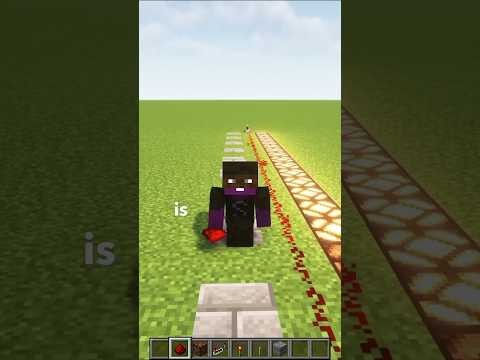
The range of redstone dust in Minecraft is 15 blocks. A redstone signal loses one level of power for every block of redstone dust it travels through. Since redstone signals start at power level 15, after 15 blocks of redstone dust, the signal reaches power level 0, effectively ceasing transmission. To extend a redstone signal beyond this limit, you’ll need to strategically place redstone repeaters to boost the signal back to full strength.
Redstone Fundamentals: Power, Signals, and Distance
Redstone is the Minecraft equivalent of electricity, allowing players to create intricate mechanisms, traps, and even automated systems. Understanding the basics of redstone power and signal propagation is crucial for any aspiring Minecraft engineer. Redstone dust, the most fundamental component, acts as redstone wire, transmitting signals from one point to another.
However, this transmission isn’t limitless. The signal strength degrades over distance, necessitating the use of repeaters to maintain functionality. This system introduces a challenge – optimizing circuit design to minimize space while ensuring reliable signal transmission across the required distance.
The 15-Block Limitation
The core concept to grasp is that a redstone signal starts with a power level of 15. Every block of redstone wire the signal travels through reduces this power level by 1. After traversing 15 blocks, the signal strength reaches 0, and the redstone circuit effectively “dies” unless revitalized.
The Redstone Repeater: Your Signal Booster
The solution to this range limitation is the redstone repeater. This block takes an incoming redstone signal and outputs a signal at full power (level 15). By strategically placing repeaters along a redstone wire, you can effectively transmit signals across vast distances.
Redstone Repeaters: Not Just for Range
While primarily used for extending signal range, redstone repeaters also serve other crucial functions:
- Signal Delay: Repeaters introduce a slight delay in the signal. This delay can be adjusted, making them vital components in timing circuits and complex mechanisms.
- Signal Directionality: Repeaters only transmit signals in one direction, preventing signals from traveling backward through a circuit and causing unwanted behavior.
- Signal Locking: A repeater can be “locked” by powering its side input, preventing it from updating its output. This is useful for creating certain types of logic gates and memory circuits.
Optimizing Redstone Circuits for Range
Efficiently using redstone repeaters is key to designing long-range circuits:
- Placement Matters: Place repeaters at regular intervals, typically every 14 blocks of redstone wire, to ensure the signal doesn’t drop below a usable level before being boosted.
- Consider Delay: Be mindful of the delay introduced by repeaters. In circuits where timing is critical, minimize the number of repeaters or adjust their delay settings.
- Alternatives to Dust: In some cases, other methods of signal transmission, such as observer blocks or target blocks, may be more efficient than long stretches of redstone dust. These can allow you to run the circuit in less space.
FAQs: All About Redstone Range
1. What happens if a redstone signal travels more than 15 blocks without a repeater?
The signal strength will drop to 0, and the redstone circuit will cease to function beyond that point. Any redstone components further down the line will not receive power.
2. Can I use other blocks besides repeaters to extend redstone range?
While repeaters are the most common and reliable method, observer blocks and target blocks can also transmit redstone signals over a short distance. However, they function differently and aren’t direct replacements for repeaters in extending the range of redstone wire.
3. How many ticks of delay does a repeater add?
A repeater can add 1 to 4 ticks of delay, adjustable by right-clicking it. One redstone tick is equal to two game ticks, or 0.1 seconds.
4. Does the type of block powering the redstone dust affect the range?
No, the initial power source (lever, button, redstone block, etc.) only determines whether the signal is on or off. The range is solely determined by the length of the redstone wire and the presence of repeaters.
5. Can redstone dust be placed vertically?
Redstone dust can be placed on top of blocks, but it cannot be placed in mid-air. To effectively transmit a signal vertically, you’ll need to use a combination of redstone dust and blocks.
6. Does redstone dust prevent mob spawning?
Yes, mobs cannot spawn on blocks containing redstone dust. This can be a useful feature when building in areas prone to mob spawns.
7. How is redstone used in the classroom?
Redstone offers great opportunities for education in STEM subjects such as electronic circuits, digital logic, and problem-solving. To learn more about the intersection of games and education, please visit Games Learning Society at https://www.gameslearningsociety.org/.
8. What is the best way to hide long redstone wires?
Burying the wires under blocks is a common approach. You can also conceal them within walls or use creative building techniques to disguise them as part of the environment. Clever use of trapdoors and carpets can also conceal redstone wires.
9. Can water or lava affect redstone dust?
Yes, water and lava will wash away redstone dust. Therefore, you need to protect redstone circuits from these elements by building enclosed structures around them.
10. Is redstone dust rare in Minecraft?
Redstone is relatively rare compared to other resources like stone or dirt. It’s found deep underground and requires an iron pickaxe or better to mine.
11. How does the observer block interact with redstone dust?
Observer blocks detect changes in adjacent blocks and emit a short redstone pulse. They can be used to trigger redstone circuits when a specific event occurs.
12. What is a redstone clock, and how is it related to range?
A redstone clock is a circuit that generates a repeating redstone signal. While the clock itself might be compact, the output signal may need to travel a distance, requiring knowledge of redstone range and the use of repeaters.
13. Can I use commands to bypass the 15-block range limit?
Yes, commands can be used to teleport redstone signals instantly or to modify the power level of redstone dust. However, this is not possible in survival gameplay.
14. What is the difference between a repeater and a comparator?
A repeater extends the range of the signal while providing a delay. A comparator can compare two different redstone signals or to read information from containers. The comparator can also provide a subtraction of signal strengths.
15. How many redstone components can I power with a single power source?
A single power source can theoretically power an unlimited number of redstone components, as long as you use repeaters to maintain signal strength over long distances. However, complex circuits with many components may require multiple power sources to ensure reliable operation.
Conclusion: Redstone Mastery Through Understanding Range
Mastering redstone in Minecraft requires a firm grasp of its fundamental principles, including the limitations of redstone dust range. By understanding how signals propagate and how to use redstone repeaters effectively, you can unlock the full potential of redstone and create anything your imagination can dream up. With practice and experimentation, you’ll become a true redstone architect, building incredible machines and automated systems within the game.