Decoding Destiny: Unraveling the True Ending of Elden Ring
Fast answer first. Then use the tabs or video for more detail.
- Watch the video explanation below for a faster overview.
- Game mechanics may change with updates or patches.
- Use this block to get the short answer without scrolling the whole page.
- Read the FAQ section if the article has one.
- Use the table of contents to jump straight to the detailed section you need.
- Watch the video first, then skim the article for specifics.
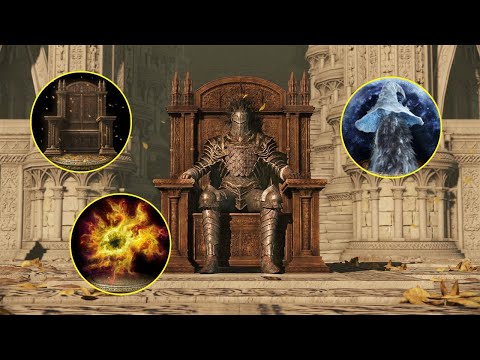
The question that haunts every Tarnished, every maidenless wanderer, every weary soul who has traversed the treacherous landscapes of the Lands Between: What is the “true” ending of Elden Ring? The frustrating, yet brilliant, answer is this: There isn’t one definitively “true” ending in the traditional sense. Elden Ring, masterfully crafted by FromSoftware, thrives on ambiguity and player agency. While some endings might feel more narratively complete or morally satisfying, the game doesn’t explicitly designate a single path as the canonical one. Instead, the “true” ending is the one you choose, the one that resonates most with your journey, your decisions, and your understanding of the world. The beauty of Elden Ring lies in its subjective interpretation and the power it grants the player to shape the fate of the Lands Between. This is a design philosophy deeply appreciated by organizations like the Games Learning Society, which explores the educational and social impact of games.
Understanding the Endings: A Tapestry of Choice
Elden Ring offers six primary endings, each achieved by fulfilling specific questlines and making critical choices:
- Elden Lord (Age of Fracture/Default Ending): This is often considered the “default” ending. You mend the Elden Ring without significant alterations, essentially restoring the status quo. It’s the most straightforward, requiring minimal side-quest involvement.
- Age of Stars (Ranni’s Ending): Many consider this the “good” or “best” ending. By aligning with Ranni the Witch, you usher in an era of the moon, withdrawing the influence of the Greater Will and ushering in an age of cold, quiet intelligence.
- Lord of Frenzied Flame Ending: This is often regarded as the “bad” ending. By embracing the Three Fingers and becoming the Lord of Frenzied Flame, you burn the Erdtree and seek to reduce the world to chaos and destruction.
- Age of Order (Goldmask’s Ending): Achieved by using the Mending Rune of Perfect Order, this ending seeks to restore the Golden Order to a state of perfect, unwavering law. It’s an attempt to eliminate ambition and strife.
- Age of Duskborn (Fia’s Ending): This ending utilizes the Mending Rune of the Death-Prince to introduce Destined Death back into the Lands Between, creating a world where Those Who Live in Death are no longer outcasts.
- Blessing of Despair (Dung Eater’s Ending): Perhaps the most bleak and unsettling ending. By using the Mending Rune of the Fell Curse, you curse the Lands Between for eternity, ensuring that all future generations are born with the Dung Eater’s affliction.
Each ending offers a distinct vision for the future, with varying degrees of hope, despair, and societal upheaval. The absence of a single, clear “true” ending is intentional, forcing players to grapple with the consequences of their actions and the philosophical implications of each choice. The narrative ambiguity is a key element of Elden Ring’s enduring appeal.
Why No “True” Ending Works So Well
FromSoftware’s design philosophy often prioritizes player agency and world-building over traditional, linear storytelling. By avoiding a definitive “true” ending, Elden Ring achieves the following:
- Increased Replayability: Players are encouraged to explore different questlines and experiment with various choices to witness all possible outcomes.
- Enhanced Immersion: The lack of a “right” answer forces players to deeply consider the moral implications of their actions and truly inhabit the role of the Tarnished.
- Meaningful Player Choice: Every ending feels significant because the game doesn’t dictate which one is “better” or “worse.” The weight of the decision rests solely on the player’s shoulders.
- Encourages Discussion and Interpretation: The ambiguity sparks countless debates and theories within the community, fostering a rich and engaging discourse around the game’s lore and themes.
Defining “True” in the Context of Elden Ring
While the game doesn’t explicitly label a single ending as “true,” we can examine the criteria used in other games to determine what might constitute a “true” ending:
- Narrative Completeness: Does the ending resolve the major plot threads and answer the most pressing questions?
- Moral Alignment: Does the ending result in a demonstrably better outcome for the majority of the characters and the world?
- Lore Significance: Does the ending reveal crucial information about the game’s history, characters, and underlying metaphysics?
Applying these criteria to Elden Ring, Ranni’s Age of Stars often emerges as the most compelling candidate for a “true” ending, because:
- It offers a comprehensive shift in the power structure, moving away from the influence of the Outer Gods.
- Many players find the prospect of an age of cold, intellectual autonomy more appealing than the cyclical stagnation of the Golden Order or the chaos of the Frenzied Flame.
- It provides a more nuanced understanding of Ranni’s motivations and the cosmic forces at play in the Lands Between.
However, even Ranni’s ending is open to interpretation. Some argue that her withdrawal of the Greater Will’s influence is ultimately a selfish act, abandoning the Lands Between to an uncertain future. This subjectivity of interpretation reinforces the idea that the “true” ending is a matter of personal perspective.
Frequently Asked Questions (FAQs)
1. Is there a “canon” ending confirmed by FromSoftware?
No, FromSoftware has never officially stated which ending, if any, is the “canon” ending. They intentionally leave it open to player interpretation.
2. Which Elden Ring ending is the happiest?
The perception of “happiness” is subjective. Many find the Age of Stars, with its promise of a new order free from the meddling of the Greater Will, to be the most optimistic.
3. Which ending is considered the “bad” ending?
The Lord of Frenzied Flame ending is generally considered the “bad” ending due to its destructive nature and the implied suffering it inflicts upon the Lands Between.
4. Does Melina survive in any of the endings?
Melina’s fate varies depending on the ending. She typically sacrifices herself to burn the Erdtree, but she survives if the player chooses the Lord of Frenzied Flame ending, vowing to deliver Destined Death unto the Tarnished.
5. Is Ranni a good or bad character?
Ranni is a morally complex character. Her actions are driven by a desire for autonomy and freedom from the Greater Will, but her methods are often ruthless. Whether she is “good” or “bad” is a matter of interpretation.
6. What happens if I refuse Melina’s offer?
Refusing Melina prevents you from progressing past certain areas of the game. She is essential for accessing the Mountaintops of the Giants.
7. What is the significance of the Elden Beast?
The Elden Beast is a manifestation of the Greater Will’s power and the final obstacle to claiming the title of Elden Lord.
8. Does the Age of Order ending truly create a “perfect” world?
The Age of Order aims to eliminate ambition and strife, but some argue that it would also stifle creativity and freedom, creating a stagnant and oppressive society.
9. What role does Marika play in the different endings?
Marika’s actions set the stage for the events of Elden Ring. The different endings represent attempts to either restore or subvert her legacy.
10. Is Elden Ring 2 in development?
While not officially confirmed, Hidetaka Miyazaki has hinted at the possibility of future expansions or sequels to Elden Ring.
11. What is the Gloam-Eyed Queen?
The Gloam-Eyed Queen is a mysterious figure from the past whose influence is felt throughout the Lands Between. Her connection to Destined Death is crucial to understanding the Age of Duskborn ending.
12. What is the significance of the Two Fingers and Three Fingers?
The Two Fingers represent the Greater Will, while the Three Fingers represent the Frenzied Flame. They embody opposing forces vying for control over the Lands Between.
13. Is the Dung Eater’s ending really that bad?
The Dung Eater’s ending is widely considered the most disturbing due to the horrific curse it inflicts upon the Lands Between and its inhabitants.
14. How does player choice affect the world of Elden Ring?
Player choices throughout the game directly influence the events that unfold and ultimately determine which ending is achieved.
15. What makes Elden Ring’s endings so impactful?
The combination of ambiguous storytelling, complex characters, and meaningful player agency creates endings that are both thought-provoking and emotionally resonant.
Conclusion: Embrace Your Tarnished Destiny
In conclusion, there is no single “true” ending in Elden Ring. The game’s genius lies in its ability to empower players to create their own destiny and shape the fate of the Lands Between according to their own values and beliefs. Whether you choose to restore the Golden Order, usher in the Age of Stars, or embrace the chaos of the Frenzied Flame, the ending you select is the true culmination of your journey. Embrace the ambiguity, explore the possibilities, and forge your own legend in the world of Elden Ring. And if you’re interested in learning more about the impact of games on society, consider exploring the resources available at GamesLearningSociety.org.