Demystifying Tip Speed in BattleBots: A Comprehensive Guide
Fast answer first. Then use the tabs or video for more detail.
- Watch the video explanation below for a faster overview.
- Game mechanics may change with updates or patches.
- Use this block to get the short answer without scrolling the whole page.
- Read the FAQ section if the article has one.
- Use the table of contents to jump straight to the detailed section you need.
- Watch the video first, then skim the article for specifics.
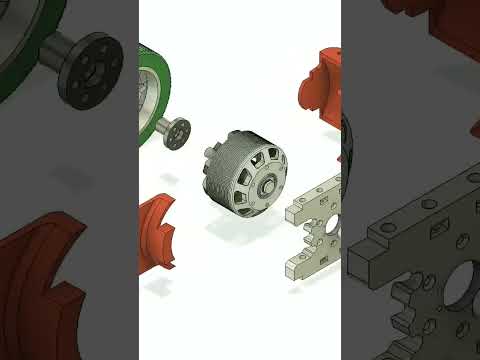
So, you’re captivated by the carnage, the engineering ingenuity, and the sheer destructive power of BattleBots. You’ve probably heard commentators throw around terms like “tip speed” but might not fully grasp its significance. Fear not, aspiring roboteer, because we’re about to break it all down.
Tip speed in BattleBots refers to the linear velocity of the outermost point (the tip) of a spinning weapon. It’s usually expressed in miles per hour (mph) or feet per second (ft/s). It is a crucial metric because it directly correlates to the kinetic energy delivered upon impact, and therefore, the weapon’s potential for damage. The higher the tip speed, the greater the force with which the weapon strikes an opponent, potentially leading to more spectacular and decisive hits. Calculating and optimizing tip speed is a central element of weapon design in competitive robotics.
Understanding the Importance of Tip Speed
Tip speed isn’t just some abstract number; it’s a key determinant of a weapon’s effectiveness. A higher tip speed generally translates to:
- Greater Impact Force: A faster-moving weapon carries more kinetic energy. When it collides with an opponent, that energy is transferred, causing damage.
- Enhanced Cutting and Tearing Potential: For weapons designed to cut or tear through armor, higher tip speeds allow the cutting edges to overcome the material’s resistance.
- Increased Chance of Knockout: Delivering a powerful blow can disrupt an opponent’s internal components, leading to immobilization and a knockout.
- Improved Control: While counterintuitive, some robots use the gyroscopic forces generated by high tip speed to improve control.
However, simply chasing the highest possible tip speed isn’t always the best strategy. Other factors like weapon mass, motor power, gyroscopic effects, and the overall robustness of the robot must be considered. It’s a delicate balancing act between raw power and practical engineering.
Factors Influencing Tip Speed
Several factors contribute to a weapon’s tip speed:
- Rotational Speed (RPM): This is how fast the weapon is spinning, measured in revolutions per minute. Higher RPMs generally lead to higher tip speeds, assuming the weapon’s diameter remains constant.
- Weapon Diameter: The larger the diameter of the spinning weapon, the farther the tip travels in each revolution. This means that even with the same RPM, a larger weapon will have a higher tip speed.
- Motor Power and Gearing: The motor provides the rotational force, and the gearing system translates that force into the desired RPM. Choosing the right motor and gearing is crucial for achieving the optimal balance of speed and torque.
- Weight: A heavier weapon will naturally have a harder time reaching and maintaining its tip speed.
Calculating Tip Speed
The formula for calculating tip speed is relatively straightforward:
Tip Speed = (π * Diameter * RPM) / 60
Where:
- π (pi) ≈ 3.14159
- Diameter is the diameter of the weapon in feet (if you want tip speed in feet per second)
- RPM is the rotational speed in revolutions per minute.
To convert feet per second to miles per hour, multiply the result by 0.681818.
Examples of Tip Speed in BattleBots
Different weapon types have different tip speed characteristics:
- Vertical Spinners: Often prioritize very high tip speeds to deliver devastating upward blows. Robots like Rotator and Whiplash have demonstrated the effectiveness of this approach.
- Horizontal Spinners: Similar to vertical spinners, but optimized for horizontal attacks. Tombstone is a classic example of a horizontal spinner with immense destructive power due to its high tip speed and large, heavy bar.
- Drum Spinners: These robots are designed to have very high tip speeds to deliver fast, concussive hits.
The Debate Around Tip Speed Limits
There’s ongoing debate within the BattleBots community about whether tip speed limits should be implemented. Proponents argue that limiting tip speed could improve safety and reduce the risk of catastrophic damage, while opponents believe it would stifle innovation and reduce the spectacle of the sport. It’s a complex issue with valid arguments on both sides. For more insights into the world of competitive robotics and learning, visit the Games Learning Society website: GamesLearningSociety.org.
Frequently Asked Questions (FAQs) About Tip Speed in BattleBots
1. What is considered a “high” tip speed in BattleBots?
Generally, anything above 200 mph is considered a high tip speed. However, the definition of “high” also depends on the weapon’s mass and overall design.
2. Why don’t all BattleBots have the highest possible tip speed?
Achieving extremely high tip speeds requires significant power, robust construction, and careful consideration of gyroscopic effects. It’s a trade-off between power, control, and reliability. Furthermore, a heavier weapon is often more useful than a faster weapon, as the energy transferred is dependent on both velocity and mass.
3. How do teams measure the tip speed of their weapons?
Teams use a variety of methods to measure tip speed, including:
- Optical Tachometers: These devices use a laser to measure the rotational speed of the weapon.
- Accelerometers: These sensors measure acceleration, which can be used to calculate rotational speed.
- High-Speed Cameras: Recording the weapon’s rotation with a high-speed camera allows for precise measurement of RPM and tip speed.
- Motor Controllers: Some advanced motor controllers report the RPMs of the motor, allowing for easy calculation of tip speed.
4. Does tip speed alone guarantee victory in BattleBots?
No. While tip speed is important, other factors such as driving skill, strategy, armor design, and reliability also play crucial roles.
5. How does weapon mass affect the impact of a blow, compared to tip speed?
Kinetic energy is directly proportional to mass and the square of velocity (KE = 1/2 * m * v^2). This means that doubling the mass doubles the kinetic energy, while doubling the velocity quadruples it. Both mass and tip speed (which directly influences velocity) are essential for maximizing impact force.
6. What is the role of gear ratios in achieving the desired tip speed?
Gear ratios are crucial for matching the motor’s output to the desired weapon speed. A higher gear ratio increases the output speed but reduces torque, while a lower gear ratio increases torque but reduces speed.
7. How do gyroscopic effects influence robot control, and how is this related to tip speed?
Spinning weapons generate gyroscopic forces that can affect a robot’s stability and maneuverability. Higher tip speeds amplify these effects, which can be either beneficial (enhancing stability) or detrimental (making the robot difficult to control).
8. What are some common challenges in designing a weapon with a high tip speed?
Challenges include:
- Motor Burnout: Overstressing the motor to achieve high RPMs can lead to overheating and failure.
- Weapon Damage: The weapon itself must be strong enough to withstand the forces generated at high speeds and the impacts of collisions.
- Vibration: High-speed weapons can generate significant vibration, which can damage internal components.
- Self-inflicted damage: A weapon that is designed poorly may damage its own chassis during use.
9. How does the BattleBots arena affect the optimal tip speed for a robot?
The arena’s enclosed space and hazards (like the screws and pulverizers) can influence the optimal tip speed. A robot that relies on extremely high tip speeds might be vulnerable to being flipped or immobilized by these hazards.
10. What materials are commonly used for weapons designed for high tip speeds?
Common materials include:
- AR500 Steel: A high-strength, abrasion-resistant steel used for blades, bars, and discs.
- Titanium: Lightweight and strong, suitable for components where weight is a concern.
- Hardened Tool Steel: Offers excellent wear resistance for cutting edges.
11. How do different weapon geometries (e.g., bars vs. discs) affect tip speed considerations?
- Bars: Tend to be more forgiving of off-center hits and are easier to balance. However, they might be slightly less efficient in transferring energy.
- Discs: Can achieve very high tip speeds and concentrate the impact force on a smaller area. However, they are more sensitive to balance and can be harder to control.
12. What safety precautions are taken to prevent accidents related to high-speed weapons?
Safety precautions include:
- Enclosed Arenas: The BattleBots arena is designed to contain flying debris.
- Polycarbonate Shielding: Clear shields protect the audience and crew from projectiles.
- Weapon Locks: Mechanisms prevent accidental activation of weapons during transport and maintenance.
- Mandatory Safety Inspections: Robots undergo rigorous inspections to ensure they meet safety standards.
13. What is “run time” and how does it play into the tip speed of a Battlebot?
“Run time” refers to the amount of time a Battlebot can maintain its performance during a match. Maintaining high tip speed requires a significant amount of energy. Teams must balance the desired tip speed with the robot’s battery capacity to ensure it can maintain that performance throughout the entire match.
14. How is tip speed in BattleBots related to real-world physics and engineering principles?
Tip speed is a direct application of basic physics principles, including rotational motion, kinetic energy, and momentum. Teams apply engineering principles such as motor selection, gear design, and material science to optimize their weapons for maximum performance.
15. Where can I learn more about the science and engineering behind BattleBots?
You can explore resources like engineering textbooks, online tutorials, and maker spaces. Another great resource is the Games Learning Society at https://www.gameslearningsociety.org/, which explores the intersection of games, learning, and technology. They can provide insights into the educational aspects of competitive robotics and other similar endeavors.