What Makes a Desert a Desert?
Fast answer first. Then use the tabs or video for more detail.
- Watch the video explanation below for a faster overview.
- Game mechanics may change with updates or patches.
- Use this block to get the short answer without scrolling the whole page.
- Read the FAQ section if the article has one.
- Use the table of contents to jump straight to the detailed section you need.
- Watch the video first, then skim the article for specifics.
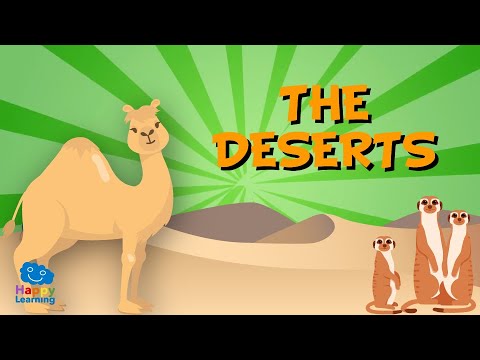
A desert, at its core, is defined by its aridity. It’s a region where the annual precipitation is significantly lower than the potential evapotranspiration. This means that more water is lost through evaporation and transpiration (from plants) than is gained through rainfall, snow, or other forms of precipitation. While a common benchmark is less than 25 centimeters (10 inches) of precipitation per year, the defining characteristic is really the imbalance between water input and output, creating an environment where water scarcity dictates the landscape and the life it can support.
Diving Deeper: Beyond Just Rainfall
While low precipitation is the primary factor, a true understanding of what makes a desert a desert requires a more nuanced look at the interplay of several factors:
-
Evaporation Rates: High evaporation rates are crucial. Think of hot, dry winds constantly whisking away any available moisture. The Sahara, for example, experiences scorching sun and relentless winds that quickly evaporate what little rainfall it receives.
-
Soil Composition: Desert soils are often sandy, gravelly, or rocky, which further hinders water retention. These soils lack the organic matter necessary to hold moisture effectively. Water percolates quickly through them, making it unavailable to plants.
-
Temperature Extremes: Many deserts experience extreme temperature fluctuations, with scorching hot days and frigid nights. This is because the lack of cloud cover and vegetation allows for rapid heating during the day and rapid cooling at night.
-
Plant Adaptations: The defining flora of a desert are plants highly adapted to survive in arid conditions. Xerophytes are plants such as cacti, succulents, and certain shrubs that have developed specialized mechanisms to conserve water, such as deep root systems, waxy coatings, and reduced leaf surface areas.
-
Animal Adaptations: Desert animals also display remarkable adaptations. Some are nocturnal, avoiding the intense daytime heat. Others have physiological adaptations for water conservation, such as producing highly concentrated urine or obtaining moisture from their food.
-
Location and Geography: The location of a desert is often a key factor in its formation. Some deserts are found in rain shadows, where mountains block moisture-laden winds from reaching the leeward side. Others are located in areas of persistent high pressure, which suppresses cloud formation and precipitation.
Types of Deserts: Not All Deserts Are the Same
Deserts are not monolithic. They come in several varieties, each with its own unique characteristics:
-
Hot and Dry Deserts: These are the classic deserts, like the Sahara and the Arabian Desert. They have extremely high temperatures during the day and very little precipitation throughout the year.
-
Semi-Arid Deserts: These deserts receive slightly more precipitation than hot and dry deserts and experience less extreme temperature fluctuations. The Great Basin Desert in North America is an example.
-
Coastal Deserts: These deserts are found along coastlines and are influenced by cold ocean currents. The Atacama Desert in Chile, one of the driest places on Earth, is a coastal desert. The cold currents create a stable atmospheric condition that inhibits rainfall.
-
Cold Deserts: These deserts experience cold winters and relatively warm summers. They receive precipitation primarily as snow. The Gobi Desert in Mongolia is a prime example.
-
Polar Deserts: Often overlooked, the polar regions, like Antarctica and the Arctic, are technically deserts. Although covered in ice and snow, they receive very little precipitation and have extremely low humidity, fitting the definition of an arid environment. Antarctica, in fact, is the largest desert on Earth. Understanding these diverse environments can be enhanced through interactive educational tools. The Games Learning Society is an excellent resource for exploring such innovative approaches to learning. You can find them at https://www.gameslearningsociety.org/.
The Formation of Deserts: A Complex Process
Deserts don’t just spontaneously appear. Their formation is a long and complex process influenced by a variety of factors.
-
Global Air Circulation Patterns: The Hadley cell circulation pattern, where warm, moist air rises at the equator and descends around 30 degrees latitude, creates belts of high pressure that suppress rainfall and contribute to the formation of subtropical deserts.
-
Rain Shadow Effect: As mentioned earlier, mountains can block moisture-laden winds, creating arid conditions on the leeward side. The Sierra Nevada mountains in California, for example, create a rain shadow that contributes to the aridity of the Great Basin Desert.
-
Ocean Currents: Cold ocean currents can stabilize the atmosphere and inhibit rainfall, leading to the formation of coastal deserts.
-
Climate Change: Both natural climate variability and human-induced climate change can contribute to desertification, the process by which fertile land becomes desert. Deforestation, overgrazing, and unsustainable agricultural practices can exacerbate desertification.
FAQs: Unveiling Desert Mysteries
Here are some frequently asked questions about deserts, offering further insight into these fascinating environments:
1. Are all deserts sandy?
No, only about 20% of deserts are covered by sand. The majority of desert surfaces consist of rocky plains, gravel, and exposed bedrock.
2. Is Antarctica a desert?
Yes, Antarctica is the largest desert on Earth. It is a polar desert characterized by extremely low precipitation and temperatures.
3. Are deserts dried-up oceans?
No, deserts are not dried-up oceans. Deserts are land formations characterized by low precipitation, and their location doesn’t correlate with former ocean beds.
4. Why doesn’t it rain in the Sahara?
The Sahara is a subtropical desert influenced by the descending air of the Hadley cell circulation pattern. This descending air inhibits cloud formation, leading to very little rainfall.
5. What are the five main types of deserts?
The five main types of deserts are subtropical deserts, interior deserts, coastal deserts, rain shadow deserts, and polar deserts.
6. What type of desert is Arizona?
Most of Arizona lies within the Sonoran Desert, which is a subtropical desert.
7. What kind of desert is the Sahara?
The Sahara is primarily a subtropical desert, and a trade wind desert.
8. Why do deserts have sand?
Much of the sand in deserts was transported there by rivers and streams in the past, before the area became arid. Once the region becomes arid, there is no vegetation or water to hold the soil down, allowing wind to redistribute the sand.
9. Why are deserts not on the equator?
Deserts are typically found around 30 degrees latitude due to the global air circulation patterns. The equator experiences rising air and high precipitation.
10. How did Africa get so dry?
The drying of Africa, particularly the Sahel region, has been linked to changes in ocean temperatures and weakening of the monsoon in Northern Africa over extended geologic time.
11. Why do deserts get cold at night?
Deserts get cold at night because of the lack of cloud cover and humidity, which allows heat to radiate away from the surface quickly. Sand also heats up and cools down rapidly.
12. What’s the driest place on Earth?
The Atacama Desert in Chile is considered the driest place on Earth, with some areas receiving less than 1 mm of precipitation per year.
13. Is there ever water in the desert?
Yes, water can be found in the desert, often underground in aquifers or as oases fed by springs.
14. Can a desert touch the ocean?
Yes, deserts can and do touch the ocean, creating spectacular landscapes.
15. Does the desert have quicksand?
Quicksand can occur in deserts, typically near natural wells or where shallow underground water is present. The scarcity of water, though, makes it less common than in wetter environments.
Understanding the factors that define and shape deserts provides a deeper appreciation for these seemingly barren landscapes and the remarkable adaptations of the life they support. Exploring these fascinating environments is a continuous journey. To understand more about engaging education tools, consider looking into innovative approaches to learning with GamesLearningSociety.org.