Unlocking Evolution Through Trade: A Comprehensive Guide to Pokémon Trading
Fast answer first. Then use the tabs or video for more detail.
- Watch the video explanation below for a faster overview.
- Game mechanics may change with updates or patches.
- Use this block to get the short answer without scrolling the whole page.
- Read the FAQ section if the article has one.
- Use the table of contents to jump straight to the detailed section you need.
- Watch the video first, then skim the article for specifics.
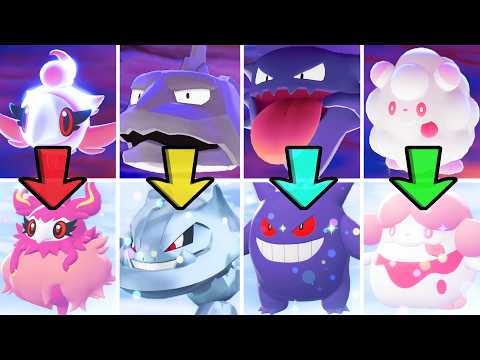
Trading Pokémon has been a cornerstone of the franchise since its inception, fostering connection and cooperation between players. However, some Pokémon take this interaction a step further: they require a trade to trigger their evolution! This unique mechanic encourages players to engage with the community, adding a social dimension to their Pokémon journey. Here’s a comprehensive breakdown of which Pokémon need to be traded to evolve, along with some frequently asked questions to enrich your understanding.
Pokémon Requiring Trade to Evolve
Several Pokémon across different generations require a trade to trigger their evolution. Here’s a list of Pokémon requiring to be traded to evolve:
- Kadabra evolves into Alakazam
- Machoke evolves into Machamp
- Graveler evolves into Golem
- Haunter evolves into Gengar
- Boldore evolves into Gigalith
- Gurdurr evolves into Conkeldurr
- Phantump evolves into Trevenant
- Pumpkaboo evolves into Gourgeist
Additionally, several Pokémon require being traded while holding a specific item to evolve. These are:
- Slowpoke (holding King’s Rock) evolves into Slowking
- Scyther (holding Metal Coat) evolves into Scizor
- Onix (holding Metal Coat) evolves into Steelix
- Porygon (holding Upgrade) evolves into Porygon2
- Porygon2 (holding Dubious Disc) evolves into Porygon-Z
- Clamperl (holding Deep Sea Tooth) evolves into Huntail
- Clamperl (holding Deep Sea Scale) evolves into Gorebyss
- Rhydon (holding Protector) evolves into Rhyperior
- Electabuzz (holding Electrizer) evolves into Electivire
- Magmar (holding Magmarizer) evolves into Magmortar
- Feebas (holding Prism Scale) evolves into Milotic
These trade evolutions are a vital aspect of completing your Pokédex and enjoying the full breadth of what the Pokémon world has to offer.
Frequently Asked Questions (FAQs) About Trade Evolutions
Let’s delve into some common queries surrounding trade evolutions to provide a more complete picture.
Can I evolve these Pokémon without trading?
Generally, no. The defining characteristic of these Pokémon is their dependency on trading to evolve. However, in some spin-off games like Pokémon Legends: Arceus, alternative methods were introduced for certain Pokémon. Specifically, items equivalent to trade evolution items (such as the Linking Cord, which functioned similarly to trading without the need for another player) were implemented. Pokémon GO had a one-time exception that allowed certain Pokémon such as Machoke, Haunter, Graveler and Boldore to evolve into the later stage of the evolution for free after being traded. This mechanic was introduced once, and then never again in later games. In mainline titles, trading remains the primary method.
Do I need to trade back a Pokémon after it evolves?
This depends on your agreement with the trading partner. Ideally, you’d agree on a tradeback: you send the Pokémon, it evolves on their end, and then they send it back to you. Communication is key!
What happens if the trade is interrupted during the evolution?
If the trade is interrupted before the Pokémon is successfully received by the other player, it will not evolve. The Pokémon remains in its original form on your system.
Are there any Pokémon that used to require trading but no longer do?
No, if a Pokémon has a trade evolution requirement, that requirement has remained the same across the mainline Pokémon games.
Do trade evolutions have any unique benefits or stats?
No. A trade evolution is identical in stats and potential to a Pokémon evolved through other means.
Where can I find trading partners?
Online communities like the dedicated subreddits and forums are great starting points. Many local game stores also host Pokémon events where you can find people to trade with. The GamesLearningSociety.org (https://www.gameslearningsociety.org/) often features discussions and links to communities interested in cooperative gameplay.
Are there any events or promotions that affect trade evolutions?
Occasionally, Pokémon GO will feature events that impact evolution, but these rarely, if ever, affect the fundamental requirement of trading for specific Pokémon.
Does the level of the Pokémon affect its evolution via trade?
No, the level of the Pokémon does not affect the trade evolution. The evolution is triggered simply by the act of trading (and holding the necessary item, if applicable).
Is there a difference in trade evolution mechanics between different Pokémon generations?
The core mechanic of trading to evolve has remained consistent across generations. The main differences lie in the availability of items required for certain trade evolutions and the methods of facilitating trades (local wireless, online trading, etc.).
What are the best strategies for ensuring a safe and successful trade?
- Communicate clearly with your trading partner beforehand.
- Confirm the specific Pokémon and any held items involved.
- Agree on whether a tradeback will occur.
- Use reputable trading platforms or communities to minimize the risk of scams.
If I receive one of these Pokémon through Wonder Trade, will it evolve?
No. Wonder Trade is a blind trade, which is often not the best method for completing trade evolutions. It would be best to use it for simply acquiring rare Pokémon.
Are there any Pokémon that evolve through trading in Pokémon GO?
Yes, as referenced earlier, Pokémon like Kadabra, Machoke, Graveler, and Boldore can have their candy cost reduced to zero for evolution upon trading. However, this is a unique exception, not the rule.
Can a Pokémon that requires holding an item be traded without the item?
Yes, however, the Pokémon will not evolve. For example, trading a Slowpoke without a Kings Rock will simply result in receiving a Slowpoke.
How do I get the items needed for item-based trade evolutions?
The availability of these items varies between games. They’re often found through in-game shops, as rewards for completing quests, or as rare finds in the overworld. In Pokémon Scarlet and Violet you may find many trade evolution items for sale at Delibird Presents stores, or as item drops by examining the sparkling spots on the ground.
In the absence of other players, is there a way to trigger a trade evolution?
Unfortunately, mainline Pokémon games generally require interaction with other players for the trade evolution to work. Spin-off titles such as Pokémon Legends: Arceus can be alternatives, if available for the Pokémon you are interested in evolving. However, without modification of your console via glitches or mods, trading remains a necessary action.
Conclusion
Trade evolutions are a fascinating element of the Pokémon games, adding a social layer and encouraging players to connect. While they might seem inconvenient at first, they ultimately enhance the community aspect of the franchise. By understanding which Pokémon require trading, how the mechanic works, and how to ensure a safe trade, you can unlock the full potential of your Pokémon journey. So, reach out to your friends, join online communities, and get trading! You can evolve with Games Learning Society or GamesLearningSociety.org to learn more.