What Stats Matter Most in Diablo 4? A Deep Dive for Aspiring Heroes
Fast answer first. Then use the tabs or video for more detail.
- Watch the video explanation below for a faster overview.
- Game mechanics may change with updates or patches.
- Use this block to get the short answer without scrolling the whole page.
- Read the FAQ section if the article has one.
- Use the table of contents to jump straight to the detailed section you need.
- Watch the video first, then skim the article for specifics.
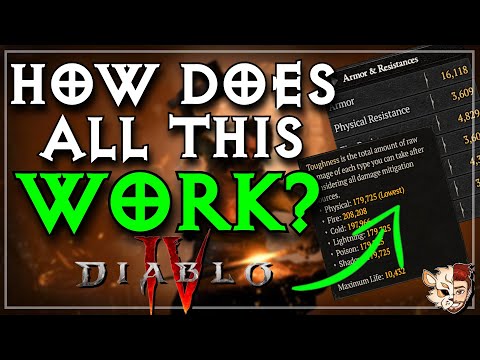
In the ever-evolving landscape of Sanctuary, understanding Diablo 4’s stats is paramount to crafting a powerful character and conquering the forces of darkness. The core of your character’s power lies in a multifaceted system encompassing Core Stats, Item Power, Affixes, Lucky Hit Chance, and, most importantly, how these elements synergize to create an unstoppable build. Mastering these will allow you to tailor your hero to your specific playstyle and dominate the endgame.
The stats that truly matter in Diablo 4 break down into several key categories:
- Core Stats: These are the fundamentals: Strength, Intelligence, Willpower, and Dexterity. Each class benefits from these in unique ways.
- Item Power: Determines the base stats of your gear and the potential range of affixes. Higher item power generally means stronger items.
- Affixes: These are the modifiers that enhance your gear, providing bonuses to skills, stats, and other character attributes.
- Skill Ranks: Increasing the ranks of your most-used skills directly boosts their effectiveness.
- Lucky Hit Chance: This mechanic triggers special effects based on a percentage chance when you use certain skills.
- Class-Specific Effects: Understanding how stats scale with your chosen class and its unique mechanics is critical. For example, Strength directly increases damage for Barbarians but increases Armor for Sorcerers.
Ultimately, what truly matters is how these stats contribute to your chosen build and playstyle. A stat that’s crucial for one build might be almost irrelevant for another.
Understanding Core Stats: The Foundation of Power
Diablo 4 features four core stats: Strength, Intelligence, Willpower, and Dexterity. These stats aren’t just arbitrary numbers; they directly impact your character’s abilities and effectiveness.
Strength
- Barbarian: Increases damage output. As mentioned, for Barbarians, Strength is your primary damage stat, making it essential for maximizing your offensive potential.
- Sorcerer: Increases armor. A surprisingly useful stat for a class typically focused on offense. More armor for a squishy Sorcerer increases their survivability.
- Other Classes: Contributes to smaller, class-specific bonuses.
Intelligence
- Sorcerer: Increases damage output. Intelligence is the Sorcerer’s primary damage stat.
- Druid: Increases critical hit chance. A vital stat for builds that rely on burst damage.
- Other Classes: Contributes to smaller, class-specific bonuses.
Willpower
- Druid: Increases overpower damage. Overpower is a powerful mechanic that deals bonus damage based on your current and fortified life.
- Necromancer: Increases resource generation. Managing resources is crucial for sustaining your damage output, making Willpower essential for Necromancers.
- Other Classes: Contributes to smaller, class-specific bonuses.
Dexterity
- Rogue: Increases critical hit chance. Rogues thrive on dealing critical hits, making Dexterity a core stat for this class.
- All Classes: Increases dodge chance. A valuable defensive stat for all classes, providing a chance to avoid incoming attacks.
Each class begins with a different allocation of these core stats, reflecting their inherent strengths and weaknesses. For example, a Barbarian might start with high Strength and Dexterity, while a Sorcerer might prioritize Intelligence and Willpower.
Beyond the Basics: Item Power, Affixes, and Skill Ranks
While Core Stats provide the foundation, Item Power, Affixes, and Skill Ranks are the tools you use to build a truly powerful character.
Item Power
Item Power (or iLvl) dictates the base stats and the potential range of affixes on your gear. Higher Item Power means stronger weapons, better armor, and more potent affixes. Prioritizing gear with high Item Power is crucial for maximizing your character’s overall power.
Affixes
Affixes are the modifiers that appear on your gear. They provide bonuses to various stats, skills, and other character attributes. Some common affixes include:
- +% Damage to specific skill types: Critical for specializing in a specific build.
- +% Critical Strike Chance: Essential for increasing damage output.
- +% Resource Generation: Helps sustain your skills.
- +% Armor: Increases survivability.
- +% to All Stats: A versatile bonus that enhances multiple attributes.
Choosing the right affixes is crucial for optimizing your build.
Skill Ranks
Increasing the ranks of your skills directly boosts their effectiveness. This can be achieved through skill points earned by leveling up, as well as through affixes on your gear that grant +Skill Rank bonuses. Ancestral gear can roll up to +4 Ranks to a particular skill, making the chase for perfect gear a never-ending but very enjoyable endeavor.
The Importance of Lucky Hit
Lucky Hit is a mechanic that triggers special effects based on a percentage chance when you use certain skills. These effects can range from healing you in a critical moment to restoring a significant amount of resources. While the base chance of a Lucky Hit occurring might be low, pairing it with skills that have a high Lucky Hit chance can make this mechanic incredibly powerful.
Class-Specific Stat Priorities
While the general principles of stat allocation apply to all classes, each class has unique stat priorities based on their abilities and playstyles.
- Barbarian: Prioritize Strength for damage, followed by Dexterity and Willpower for critical hit chance and resource generation.
- Sorcerer: Focus on Intelligence for damage, followed by Willpower and Dexterity for resource management and survivability.
- Rogue: Prioritize Dexterity for critical hit chance, followed by Intelligence and Strength for damage and survivability.
- Druid: Balance Willpower, Dexterity, and Intelligence for Overpower damage, critical hit chance, and resource regeneration.
- Necromancer: Focus on Intelligence for damage, followed by Willpower for resource generation and Dexterity for critical hit chance.
Ultimately, the best stat priorities will depend on your chosen build and playstyle. Experimentation is key to finding what works best for you.
Crafting Your Perfect Build
Mastering Diablo 4’s stat system is an ongoing process. By understanding the fundamentals of Core Stats, Item Power, Affixes, Skill Ranks, and Lucky Hit, you can craft a truly powerful character that can conquer any challenge.
Remember to always prioritize stats that complement your chosen build and playstyle, and don’t be afraid to experiment with different combinations to find what works best for you. Good luck, and may your loot be legendary!
Frequently Asked Questions (FAQs)
1. What are the four Core Stats in Diablo 4?
The four Core Stats are Strength, Intelligence, Willpower, and Dexterity. These stats provide fundamental bonuses that affect your character’s damage, survivability, and resource management.
2. How does Strength affect different classes?
Strength increases damage for Barbarians, armor for Sorcerers, and provides smaller, class-specific bonuses for other classes. Understanding these variations is key to efficient stat allocation.
3. What does Item Power (iLvl) do?
Item Power determines the base armor rating or attack value of an item. It also influences the stat ranges on affixes. Higher Item Power generally means stronger items.
4. Are all stats useful for every class in Diablo 4?
Yes, every stat is useful to some degree for any class. However, their importance varies depending on the class and build. For example, while Dexterity might be crucial for a Rogue, it may be less important for a Necromancer.
5. What stats should I focus on as a Necromancer?
As a Necromancer, prioritize Intelligence to increase your skill damage. Also focus on Willpower for resource generation and Dexterity for critical hit chance.
6. How important are Skill Ranks in Diablo 4?
Skill Ranks are very important. Increasing them directly boosts the effectiveness of your skills. You can get +Skill Rank bonuses on gear to further enhance your abilities.
7. What is Lucky Hit and why is it important?
Lucky Hit is a mechanic that gives you a chance to trigger special effects when using certain skills. Pairing skills with a high Lucky Hit chance can lead to powerful outcomes like healing or resource restoration.
8. Does difficulty affect loot in Diablo 4?
Yes, higher difficulty settings grant you the chance to earn more XP, more gold, and better loot drops.
9. What is the point of grinding in Diablo 4?
Grinding in Diablo 4 is about leveling up, acquiring better gear, and optimizing your build. While repetitive, it’s essential for progressing and overcoming challenges.
10. How does Dexterity improve your character?
Dexterity increases critical hit chance for some classes (like the Rogue) and increases dodge chance for all classes.
11. Is Salvaging gear better than selling it?
In most cases, salvaging Legendary items is the best option because it gives you materials. Extracting Aspects from unwanted legendary items provides more benefit than selling them to vendors.
12. Does Strength always increase damage in Diablo 4?
While it increases damage for the Barbarian, Strength increases armor for the Sorcerer. It’s important to understand each stat’s class-specific bonuses.
13. What World Tier should I choose for the best loot?
Higher World Tiers offer better loot drops, ensuring your efforts in tackling tougher enemies are rewarded. Choose the highest tier you can comfortably handle.
14. How do Core Stats improve as you level up?
Every time you level up you gain +1 to every Core Stat. In addition, you can get individual Core Stat rolls on your Armor pieces and +All Stats rolls on Jewelry. Finally, you can get +2 to one of the Core Stats from certain Altars of Lilith.
15. Where can I learn more about the intersection of gaming and learning?
You can explore the research and resources available at the Games Learning Society (GamesLearningSociety.org).
Diablo 4 is an immersive world that encourages exploration and experimentation. We wish you the best in your adventures and quest to grow stronger.