Decoding Tiamat: Understanding the Queen of Chromatic Dragons
Fast answer first. Then use the tabs or video for more detail.
- Watch the video explanation below for a faster overview.
- Game mechanics may change with updates or patches.
- Use this block to get the short answer without scrolling the whole page.
- Read the FAQ section if the article has one.
- Use the table of contents to jump straight to the detailed section you need.
- Watch the video first, then skim the article for specifics.
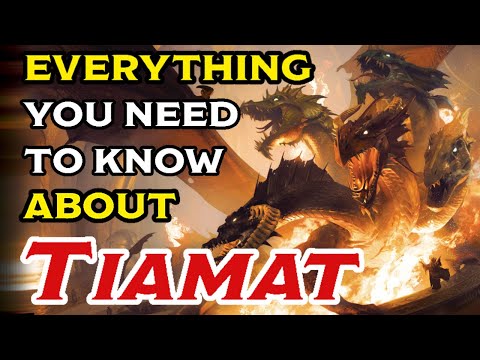
Tiamat is a unique and terrifying figure within the Dungeons & Dragons multiverse. She is not simply a dragon, but a five-headed chromatic dragon goddess. Each of her heads embodies the power and characteristics of a specific chromatic dragon type: black, blue, green, red, and white. This multifaceted nature, coupled with her divine status, makes her far more than just a powerful beast; she is a force of chaotic evil and a formidable adversary.
The Essence of Tiamat: Dragon, Goddess, and Fiend
Tiamat’s nature is complex, blending the innate qualities of a dragon with the power of a deity and the malevolence of a fiend. This trifecta makes her one of the most powerful beings in the D&D cosmology.
A Chromatic Dragon Quintet
Unlike typical dragons who possess a single breath weapon and set of abilities, Tiamat’s five heads each wield the distinct powers of their respective chromatic dragon type.
- Black Dragon Head: Acid breath, corrosive abilities. Represents swamps and decay.
- Blue Dragon Head: Lightning breath, electric powers. Embodies deserts and tyranny.
- Green Dragon Head: Poison breath, manipulative skills. Symbolizes forests and deception.
- Red Dragon Head: Fire breath, destructive force. Personifies mountains and greed.
- White Dragon Head: Cold breath, brutal strength. Represents icy wastelands and savagery.
This combination allows Tiamat to adapt to almost any combat situation, unleashing a devastating barrage of elemental attacks and tactical maneuvers.
Divine Authority and Influence
Tiamat is not merely a powerful dragon; she is a goddess worshipped by evil dragons, kobolds, and other creatures who embrace chaos and tyranny. Her divine status grants her several advantages. She possesses vast magical abilities, including the power to grant spells to her clerics and influence events across the planes.
While divine, Tiamat’s power varies depending on the setting. In some, she’s a prisoner in Avernus, the first layer of the Nine Hells. In others, she actively schemes to break free and wreak havoc on the Material Plane.
A Fiendish Aspect
Tiamat’s alignment is Lawful Evil, and she is often associated with devils and the Nine Hells. Her presence corrupts and consumes, leaving devastation in her wake. This fiendish nature emphasizes her cruelty and her desire to dominate and enslave.
The Mesopotamian Roots of a Dragon Queen
The concept of Tiamat predates Dungeons & Dragons, originating in Mesopotamian mythology. There, Tiamat was a primordial goddess associated with the salt sea and the chaos of creation. This ancient depiction casts her as a monstrous sea serpent or dragon, embodying the raw, untamed power of the cosmos. This origin shapes her role in D&D as a bringer of primordial chaos.
Tiamat’s Role in D&D Lore
In D&D, Tiamat typically serves as a major antagonist, a force of destruction threatening the balance of the world. Her plots often involve amassing power, corrupting mortals, and unleashing her chromatic dragon armies upon unsuspecting lands. Defeating Tiamat is a monumental task, requiring exceptional heroes and powerful artifacts.
The study of Tiamat and similar figures helps us understand the deeper connections between games, mythology, and culture. Organizations like the Games Learning Society, found at GamesLearningSociety.org, explore these relationships in detail.
Frequently Asked Questions (FAQs) About Tiamat
1. Is Tiamat a dragon or a Hydra?
Tiamat is primarily a dragon, albeit a unique one with five heads. While hydras are multi-headed monsters, Tiamat’s individual heads are not mere appendages; they possess distinct personalities, powers, and autonomy, mirroring the characteristics of separate dragon types.
2. Is Tiamat a sea dragon?
While Tiamat’s mythological roots link her to the sea, in most D&D settings, she’s not exclusively a sea dragon. Her dominion extends to all lands where chromatic dragons hold sway, and her influence is felt across various environments.
3. What type of dragon is Bahamut?
Bahamut is a platinum dragon, a deity of good-aligned dragons and metallic dragons. He is Tiamat’s sworn enemy and represents order and justice.
4. Who is stronger, Bahamut or Tiamat?
In terms of raw power, Bahamut and Tiamat are often depicted as equals, both holding immense divine power. However, their spheres of influence differ, with Bahamut championing good and Tiamat spreading evil.
5. Are Tiamat and Bahamut brother and sister?
In some D&D lore, Tiamat and Bahamut are siblings, both being children of the dragon god Io (or Asgorath). This familial connection adds a layer of complexity to their eternal conflict.
6. What dragons worship Tiamat?
Chromatic dragons (black, blue, green, red, and white) primarily worship Tiamat. They acknowledge her as their queen and seek to emulate her destructive power. Kobolds and other reptilian creatures also revere her as their progenitor.
7. Is Tiamat a dragon or a fiend?
Tiamat is both a dragon and a fiend. She is a unique five-headed chromatic dragon with a fiendish essence, embodying evil and chaos.
8. Who killed Tiamat?
In Mesopotamian mythology, Marduk killed Tiamat. In D&D, Tiamat has been “defeated” many times, but as a goddess, she is exceptionally difficult to permanently kill. Her essence typically returns to her home plane, where she slowly reforms.
9. Can Tiamat be killed?
Yes, Tiamat can be defeated, though true death is often temporary or only occurs under exceptional circumstances. Due to her divine status, killing her on the Material Plane often banishes her back to her own plane of existence, where she will eventually reform.
10. Are Tiamat and Leviathan the same?
While both are associated with primordial chaos and aquatic environments, Tiamat and Leviathan are distinct entities from different mythologies. Tiamat originates from Mesopotamian mythology, while Leviathan is a sea monster from Jewish and Christian traditions.
11. What is Tiamat the god of?
Tiamat is the goddess of evil chromatic dragons, greed, and conquest. She represents the destructive forces of chaos and seeks to dominate all creation.
12. Why was Tiamat split in half?
In Mesopotamian mythology, Marduk split Tiamat’s body in half to create the heavens and the earth. This act symbolizes the triumph of order over chaos.
13. Who is Tiamat’s sister?
The name of Tiamat’s sister varies depending on the source. Some versions mention no sister, while others identify her as a lesser-known deity. More commonly, Bahamut is presented as her brother.
14. What color dragon is Tiamat?
Tiamat is a five-headed dragon, with each head being a different color: white, black, green, blue, and red.
15. Who is the god of all dragons?
Asgorath (also known as Io) is often considered the god of all dragons, the progenitor of both chromatic and metallic dragons. While he doesn’t have the fervent following of Bahamut or Tiamat, he is recognized as the ultimate source of dragonkind.
Ultimately, Tiamat is more than just a type of dragon; she is an icon of evil, a testament to the enduring power of mythology, and a challenge for heroes brave enough to confront her.