Decoding Earth’s Tapestry: A Guide to the 7 Major Biomes and Their Locations
Fast answer first. Then use the tabs or video for more detail.
- Watch the video explanation below for a faster overview.
- Game mechanics may change with updates or patches.
- Use this block to get the short answer without scrolling the whole page.
- Read the FAQ section if the article has one.
- Use the table of contents to jump straight to the detailed section you need.
- Watch the video first, then skim the article for specifics.
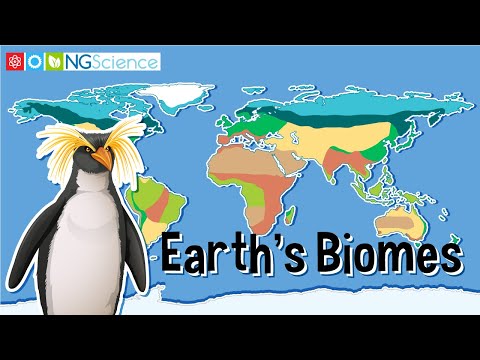
Ever wondered why some places are lush rainforests, while others are vast, arid deserts? The answer lies in biomes, large geographic areas characterized by specific climates, animal populations, and plant life. Understanding where these biomes are located helps us appreciate the incredible diversity of our planet and the interconnectedness of life within each region. Let’s embark on a journey across the globe to explore the distribution of the seven major biomes.
The 7 major biomes include tropical rainforests, temperate deciduous forests, deserts, tundra, taiga (also known as boreal forests), grasslands, and savannas. Their locations are largely determined by latitude, altitude, precipitation patterns, and temperature.
- Tropical Rainforests: Concentrated near the Equator (0° latitude), primarily between the Tropics of Cancer and Capricorn (23.5° N and 23.5° S). Key locations include the Amazon Basin in South America, the Congo Basin in Africa, and parts of Southeast Asia.
- Temperate Deciduous Forests: Found in mid-latitudes (30° to 60°), typically in the Northern Hemisphere. Examples include Eastern North America, Western Europe, and parts of East Asia.
- Deserts: Distributed across various latitudes but are especially prominent around 30° North and South, due to descending air currents. Major deserts include the Sahara in Africa, the Arabian Desert, the Atacama in South America, and the Australian Outback.
- Tundra: Located in the high latitudes of the Arctic region, close to the North Pole. It circles the globe across northern parts of North America, Europe, and Asia.
- Taiga (Boreal Forest): Found south of the tundra in the Northern Hemisphere. It forms a massive belt across Canada, Russia, and Scandinavia.
- Grasslands: Occur in both temperate and tropical regions, often in the interiors of continents where rainfall is insufficient to support forests. Examples include the prairies of North America, the steppes of Eurasia, and the pampas of South America.
- Savannas: Primarily found in tropical and subtropical regions with distinct wet and dry seasons. Key savanna regions are located in Africa (like the Serengeti), South America (like the Cerrado), and Australia.
FAQs About Biomes
1. What factors determine the location of a biome?
The location of a biome is primarily determined by its climate, which includes factors like temperature, precipitation, sunlight, and humidity. These factors influence the types of plants and animals that can survive in a particular area, ultimately shaping the characteristics of the biome. Latitude and altitude also play significant roles, as they affect temperature and sunlight intensity.
2. Do biomes have distinct boundaries?
While biomes are typically described as distinct regions, in reality, they often transition gradually from one to another. These transition zones, known as ecotones, are characterized by a mix of species and environmental conditions from both adjacent biomes. Think of it as a blended landscape, where the rainforest slowly gives way to the savanna, or the forest subtly transforms into grassland.
3. Are biomes static, or can they change over time?
Biomes are dynamic systems that can change over time due to factors like climate change, human activities (deforestation, agriculture), and natural disasters (fires, volcanic eruptions). For instance, rising global temperatures can lead to the expansion of deserts and the shrinking of polar biomes. The Games Learning Society provides resources that can help you learn more about environmental changes and their impact on ecosystems.
4. Can a single country contain multiple biomes?
Yes, many countries contain multiple biomes due to their geographical diversity. For example, the United States has a wide range of biomes, including deserts, grasslands, temperate forests, and tundra. This variety is due to the country’s extensive latitudinal range and varied topography.
5. What is the difference between a biome and an ecosystem?
A biome is a large-scale community of organisms shaped by similar climate and environmental conditions, encompassing multiple ecosystems. An ecosystem, on the other hand, is a specific community of interacting organisms and their physical environment within a particular area, regardless of size. So, an ecosystem is a smaller unit within a biome.
6. How does altitude affect biome distribution?
Altitude significantly impacts biome distribution because temperature typically decreases with increasing altitude. This can lead to the presence of different biomes at different elevations on the same mountain. For example, a mountain might have a temperate forest at its base, transitioning to a coniferous forest at mid-elevation, and finally, an alpine tundra near its peak.
7. Why are rainforests located near the equator?
Rainforests are located near the equator because this region receives the most direct sunlight and consistently high temperatures throughout the year. This leads to high levels of evaporation and precipitation, creating the warm, humid conditions necessary for the lush vegetation characteristic of rainforests.
8. What role do ocean currents play in biome distribution?
Ocean currents can significantly influence biome distribution, particularly in coastal regions. Warm ocean currents can moderate temperatures and increase humidity, leading to the development of coastal rainforests or milder temperate climates. Cold ocean currents can create drier conditions, contributing to the formation of coastal deserts.
9. How do human activities impact biome distribution?
Human activities, such as deforestation, agriculture, urbanization, and industrial pollution, can have significant impacts on biome distribution. Deforestation can lead to the loss of forests and the degradation of soil, while agriculture can alter natural vegetation patterns. Urbanization replaces natural habitats with built environments, and pollution can harm plants and animals.
10. Are there any unique or unusual biomes not included in the major seven?
Yes, there are several unique or unusual biomes that are often considered subcategories or variations of the major seven. These include:
- Mediterranean biome (Chaparral): Characterized by hot, dry summers and mild, wet winters.
- Montane forests: Forests found at high elevations on mountains.
- Freshwater biomes: Rivers, lakes, and wetlands.
- Marine biomes: Oceans, coral reefs, and estuaries.
11. What is permafrost, and how does it affect the tundra biome?
Permafrost is a layer of soil that remains frozen for at least two consecutive years. It’s a defining characteristic of the tundra biome. Permafrost prevents deep root growth, limiting the types of plants that can survive in the tundra. When permafrost thaws due to climate change, it releases greenhouse gases like methane and carbon dioxide, further contributing to global warming.
12. How do fires shape grassland biomes?
Fires are a natural and important part of grassland ecosystems. They help to prevent the encroachment of trees and shrubs, maintaining the dominance of grasses. Many grassland plants have adapted to survive fires, with underground roots that allow them to regrow quickly after a fire.
13. What are some of the major adaptations of plants and animals in desert biomes?
Plants and animals in desert biomes have evolved various adaptations to survive in arid conditions. Plants may have deep roots to access groundwater, succulent leaves to store water, or spines to reduce water loss. Animals may be nocturnal to avoid the heat, have physiological adaptations to conserve water, or be able to tolerate high body temperatures.
14. What are the main differences between temperate deciduous forests and coniferous forests?
Temperate deciduous forests are characterized by trees that lose their leaves in the fall, such as oak, maple, and beech. These forests experience distinct seasons with warm summers and cold winters. Coniferous forests, on the other hand, are dominated by evergreen trees with needle-like leaves, such as pine, spruce, and fir. Coniferous forests are typically found in colder climates with shorter growing seasons.
15. Where can I learn more about biomes and their importance?
There are many resources available for learning more about biomes, including textbooks, scientific journals, documentaries, and online educational resources. Consider exploring the GamesLearningSociety.org website for innovative learning experiences that blend education with engaging gameplay. Understanding biomes is crucial for appreciating the complexity of our planet and the importance of conservation efforts.