From Sea to Soil: Unraveling the Origins of Land Creatures
Fast answer first. Then use the tabs or video for more detail.
- Watch the video explanation below for a faster overview.
- Game mechanics may change with updates or patches.
- Use this block to get the short answer without scrolling the whole page.
- Read the FAQ section if the article has one.
- Use the table of contents to jump straight to the detailed section you need.
- Watch the video first, then skim the article for specifics.
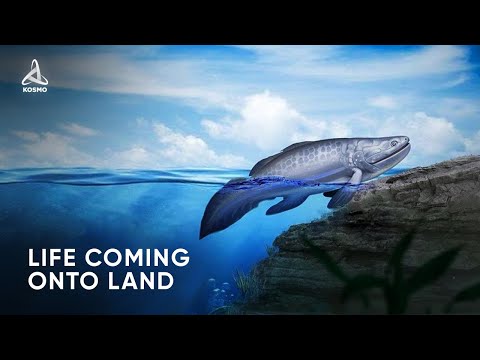
The story of life on Earth is a grand saga, and one of its most pivotal chapters involves the transition from water to land. Put simply, land creatures originated from aquatic ancestors. Over vast stretches of geological time, specific groups of marine organisms adapted to survive and eventually thrive in terrestrial environments. This journey involved significant evolutionary modifications, driven by the relentless forces of natural selection. Let’s dive deeper into this fascinating transformation and answer some common questions about our land-dwelling ancestors.
The Evolutionary Leap: From Aquatic to Terrestrial
The move from water to land was not a sudden event. It was a gradual process, likely driven by a combination of factors. Early life flourished in the oceans for billions of years before any organisms ventured onto solid ground. The Paleozoic Era marks the time of the earliest plant and animal colonization of land. The availability of new resources, the lack of predators, and the changing environmental conditions in coastal areas likely prompted some species to experiment with life outside the water.
Early Pioneers: Plants and Arthropods
Plants were among the first to colonize the land, their presence established from microfossils called cryptospores that appear in the mid-Ordovician, about 470 million years ago. These early land plants paved the way for animals by creating habitats and oxygenating the atmosphere. The earliest known land animals are ancient millipedes, specifically Pneumodesmus newmani, with fossil evidence placing them on land around 428 million years ago during the late Silurian Period. These arthropods were well-suited for life on land due to their exoskeletons, which provided support and prevented desiccation.
The Vertebrate Transition: From Fish to Tetrapods
The transition of vertebrates from water to land is one of the most significant events in evolutionary history. It’s widely accepted that tetrapods (four-limbed vertebrates, including amphibians, reptiles, birds, and mammals) evolved from lobe-finned fishes. These fishes possessed strong fins that allowed them to move in shallow water and potentially support their weight on land. The fossil record, particularly fossils like Tiktaalik, provides compelling evidence of this evolutionary transition. These transitional fossils display characteristics of both fish and tetrapods, demonstrating the gradual adaptation of aquatic creatures to terrestrial life. Around 390 to 360 million years ago, the descendants of these organisms started to live in shallower waters, and eventually moved to land. As they did, they experienced natural selection that shaped many adaptations for a terrestrial way of life.
Frequently Asked Questions (FAQs)
Here are some frequently asked questions about the origin of land creatures, along with detailed answers to provide further clarity and understanding:
-
When did land creatures first appear?
- The earliest evidence suggests that animals began colonizing the land in the Silurian period, around 440 to 410 million years ago. However, the discovery of animal footprints on sand dunes about 530 million years ago challenges this view, suggesting earlier terrestrial activity.
-
Who were the first land creatures?
- Ancient millipedes are believed to be among the first land creatures. Specifically, Pneumodesmus newmani, a species of millipede dating back 428 million years, is one of the earliest known land animals.
-
Where did land animals come from?
- Land animals evolved from aquatic ancestors, primarily from lobe-finned fishes in the case of vertebrates and various arthropods like millipedes and insects.
-
Did humans evolve from fish?
- Yes, in the broad sense. Humans and all other vertebrates share a common ancestor with fish. Certain fish, roughly 370 million years ago, evolved into primitive, lizard-like animals called tetrapods, which eventually led to the evolution of humans.
-
What was the first creature on Earth land?
- The earliest known land animal is Pneumodesmus newmani, a species of millipede that lived 428 million years ago during the late Silurian Period.
-
Why did life leave the ocean?
- The primary reason for life leaving the ocean was the increase in oxygen levels in the atmosphere. This “Great Oxidation Event” created an ozone layer that shielded organisms from harmful ultraviolet radiation, allowing them to survive and thrive on land.
-
What did humans evolve from?
- Humans evolved from apelike ancestors over a period of approximately six million years. This evolutionary process involved gradual changes in physical and behavioral traits.
-
Are humans still evolving?
- Yes, human beings are constantly evolving. Evolution refers to the gradual change in the genetics of a population over time, and this process continues as long as humans successfully reproduce.
-
Did humans and dinosaurs live at the same time?
- No, humans and dinosaurs did not live at the same time. Dinosaurs went extinct nearly 65 million years ago, long before the appearance of humans on Earth. Small mammals, including shrew-sized primates, existed alongside the dinosaurs.
-
Did all life come from the ocean?
- Yes, the prevailing scientific evidence suggests that life originated in the ocean at least 3.5 billion years ago.
-
Could dinosaurs survive today?
- Most experts doubt that dinosaurs could survive in today’s environment. Factors such as temperature, food sources, and oxygen levels are significantly different from the conditions during the Mesozoic Era when dinosaurs thrived.
-
What animal survived all 5 mass extinctions?
- Tardigrades, also known as water bears, have survived all five major mass extinction events on Earth. Their existence dates back more than 500 million years, and they possess unique characteristics that contribute to their resilience.
-
What was on Earth before the dinosaurs?
- Before the dinosaurs, terrestrial life was dominated by pelycosaurs, archosaurs, and therapsids (the so-called “mammal-like reptiles”) from the Carboniferous to the middle Triassic periods, approximately 120 million years.
-
Are humans originally monkeys?
- No, humans are not descended from monkeys or any other primate living today. Humans and monkeys share a common primate ancestor, particularly with chimpanzees.
-
How long have humans been on Earth?
- The oldest hominins appeared as early as 7 million B.C.E. The earliest species of the Homo genus appeared around 2 million to 1.5 million B.C.E. Modern Homo sapiens appeared around 190,000 B.C.E.
Understanding the journey of life from the seas to the land requires delving into evolutionary processes and timelines. For further exploration into engaging educational content, especially in the realm of games and learning, visit the Games Learning Society at GamesLearningSociety.org.
Adapting to a New World: Challenges and Solutions
The transition to land presented a myriad of challenges for early land creatures. They needed to develop strategies for:
- Obtaining water: Terrestrial environments are far drier than aquatic ones, so organisms had to find ways to conserve water and obtain it from the environment.
- Supporting their bodies: Water provides buoyancy, which supports aquatic organisms. Land creatures needed to develop strong skeletons and muscles to support their weight against gravity.
- Breathing air: Aquatic organisms typically use gills to extract oxygen from water. Land creatures needed to develop lungs or other respiratory systems to breathe air.
- Reproducing on land: Aquatic organisms often release eggs and sperm into the water. Land creatures needed to develop methods of internal fertilization or lay eggs with protective shells to prevent them from drying out.
These challenges drove significant evolutionary innovations, shaping the diversity of life we see on land today.
The Legacy of Our Aquatic Ancestors
The story of the transition from water to land is a testament to the power of evolution. From the earliest millipedes to the first tetrapods, land creatures overcame incredible challenges to colonize a new world. Understanding this evolutionary journey not only sheds light on our own origins but also provides valuable insights into the adaptability and resilience of life on Earth. So, the next time you walk on solid ground, remember the incredible journey of your aquatic ancestors and the long and fascinating road that led them – and ultimately us – to this very spot.