Where is the Iron Golem From? A Deep Dive into Lore and Legends
Fast answer first. Then use the tabs or video for more detail.
- Watch the video explanation below for a faster overview.
- Game mechanics may change with updates or patches.
- Use this block to get the short answer without scrolling the whole page.
- Read the FAQ section if the article has one.
- Use the table of contents to jump straight to the detailed section you need.
- Watch the video first, then skim the article for specifics.
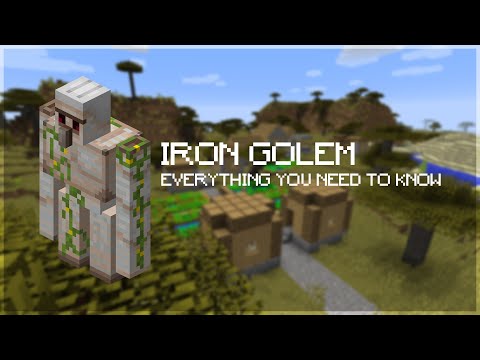
The Iron Golem, a towering figure of strength and protection, appears in various games and narratives, often as a powerful ally or formidable foe. However, the concept of an animated construct, particularly one made of inorganic material, has deep roots far beyond the digital world. To answer the question directly, the Iron Golem’s lineage is complex and multifaceted, drawing primarily from ancient Jewish folklore, the concept of the golem, and popular culture, particularly its appearance in video games and fantasy settings.
The Golem: A Foundation in Jewish Folklore
The core idea behind the Iron Golem is deeply rooted in the Jewish legend of the golem. A golem, in its traditional form, is an anthropomorphic being created from inanimate matter, typically mud, clay, or dust, and brought to life through mystical rituals, incantations, and sequences of Hebrew letters. This concept is not a whimsical invention; it is tied to the very creation narrative of Adam in Jewish tradition. Just as God created Adam from the dust of the earth and breathed life into him, the golem is seen as a human attempt to replicate that divine act of creation.
The Rabbi of Prague and the Golem
The most famous golem narrative is that of Judah Loew ben Bezalel, the late 16th-century rabbi of Prague, also known as the Maharal. According to legend, he created a golem out of clay from the banks of the Vltava River. He used specific rituals and Hebrew incantations to bring it to life in order to protect the Prague ghetto from antisemitism. This tale has heavily influenced the modern understanding of golems, often depicting them as powerful protectors, albeit with limited intelligence and potential for uncontrollable rage.
Golem’s Purpose and Nature
Golems, traditionally, are not independent beings. They are created for a specific purpose, usually servitude or protection. Their nature is generally considered to be neutral or good at creation, however, stories explore the potential for golems to become corrupted or to go rogue if they aren’t properly managed. Furthermore, golems are typically not considered to have souls or free will, making them more of a tool than a living creature. This lack of intrinsic sentience is a crucial aspect of the golem’s character across different interpretations.
The Iron Golem in Modern Adaptations
The concept of the golem has seen multiple iterations in popular culture and it has evolved over time. The Iron Golem specifically, brings a more metallic, durable aspect to the traditional golem.
Minecraft’s Protector
In the popular game Minecraft, Iron Golems are large, robotic, neutral mobs that typically spawn in villages. Their primary purpose is to protect villagers and players from hostile mobs. They can also be found caged in pillager outposts, highlighting their role as a powerful defensive force. They are created by players using iron blocks and a carved pumpkin in a “T” shape, thus giving the player the ability to harness the power of the Golem. The Iron Golem in Minecraft embodies the protector role, often seen as gentle giants, but will quickly attack if the villager’s reputation with the player is bad, or the player attacks the Golem itself.
Dark Souls and the Sen’s Fortress Boss
The Iron Golem also features as a boss in the action role-playing game Dark Souls. Here, it is a formidable opponent encountered at the top of Sen’s Fortress. While the Dark Souls Iron Golem shares a visual similarity with the Minecraft version (a large, metallic humanoid), its lore and purpose are very different. It doesn’t have the same protector archetype. Instead, the Dark Souls Iron Golem is more of a guardian or obstacle, presenting a significant challenge for players.
The Blending of Folklore and Modern Fantasy
The modern depictions of the Iron Golem blend the traditional Jewish folklore with contemporary fantasy elements. In video games, the iron material makes them more like robotic constructs or golems that are heavily armored. Their purpose ranges from protectors of villages, to guardians, and powerful enemies. The combination of ancient concepts and modern design choices has made the Iron Golem a recognizable and popular figure in modern storytelling.
Frequently Asked Questions (FAQs) About Iron Golems
1. Where can Iron Golems be found in Minecraft?
Iron Golems can be found naturally spawning in villages and as caged captives in pillager outposts. They are found throughout the world in all biomes. They can also be created by players using four iron blocks and a carved pumpkin in a “T” shape.
2. What is the main role of Iron Golems in Minecraft?
In Minecraft, Iron Golems primarily act as protectors of villages and will attack hostile mobs, and they will also protect players that have a good reputation with the village. They serve to ensure the safety of villagers and can aid in the defense of player-built structures.
3. What is the origin of the golem concept?
The golem concept originates from ancient Jewish folklore, where they are depicted as anthropomorphic beings created from inanimate matter such as clay or dust. They are brought to life through ritualistic means.
4. How does the creation of golems relate to the story of Adam?
Jewish scholars developed the golem legend based on the Adam creation story. Just as God created Adam from the dust of the earth and breathed life into him, the golem is a human attempt to replicate that divine act of creation using rituals and incantations.
5. Who was the most famous creator of a golem in Jewish folklore?
The most famous golem creator is Judah Loew ben Bezalel, the late 16th-century rabbi of Prague, also known as the Maharal. He is said to have created a golem from clay to protect the Prague ghetto from antisemitism.
6. What is the Iron Golem’s weakness in Dark Souls?
In Dark Souls, the Iron Golem is particularly weak to lightning attacks. Players are advised to use lightning weapons, and additionally, he can be temporarily stunned by focusing attacks on its legs.
7. How do Iron Golems interact with villagers in Minecraft?
Iron Golems in Minecraft are known to protect villagers and may even hold out poppies for baby villagers, showcasing the close friendly relationship between them. Baby villagers accept the poppies.
8. What is an Iron Golem made of in Minecraft?
A Minecraft Iron Golem is made from four iron blocks and a carved pumpkin. These materials are arranged in a “T” shape, and the structure then transforms into the Iron Golem.
9. Do Iron Golems have emotions or a soul?
Traditionally, golems are not considered to have emotions or a soul. They are creatures designed for a specific purpose and do not have free will or independent thought.
10. Can Iron Golems bleed?
No, Iron Golems cannot bleed. Being composed of inorganic matter, they lack the biological systems that would allow for bleeding.
11. Are all golems depicted as forces for good?
No, while some golems serve as protectors and forces for good, others can be forces of evil, mindlessly destroying people and property. Their nature depends on the creator’s intent, the rituals used and the way they are managed.
12. Is the Iron Golem in Minecraft a robot?
The Minecraft Iron Golem is often described as a robotic creature, due to its appearance of metallic exterior and its artificial nature, however, this is more descriptive than an accurate classification.
13. What happens after defeating the Iron Golem in Dark Souls?
After defeating the Iron Golem in Dark Souls, players can proceed to a ring of light, which then summons batwing demons that will carry them to Anor Londo.
14. Why do Iron Golems drop poppies in Minecraft?
Iron Golems sometimes offer poppies to villagers, symbolizing the friendly relationship and protection between them. It shows that the Iron Golems are protectors but also friendly.
15. Was Adam considered a golem in Jewish tradition?
Some interpretations of Jewish tradition suggest that Adam himself was a golem until God breathed a soul into his nostrils, making him a living being. This concept underscores the connection between the golem myth and the creation of humanity.
In conclusion, the Iron Golem, while a common sight in modern games and fantasy narratives, has a deep and fascinating history that spans centuries. From the ancient Jewish folklore of the golem to its powerful role in popular games, the Iron Golem continues to capture our imaginations as a figure of strength, protection, and the complex questions surrounding artificial creation.