Unraveling Fate: Which Elden Ring Ending is the True Ending?
Fast answer first. Then use the tabs or video for more detail.
- Watch the video explanation below for a faster overview.
- Game mechanics may change with updates or patches.
- Use this block to get the short answer without scrolling the whole page.
- Read the FAQ section if the article has one.
- Use the table of contents to jump straight to the detailed section you need.
- Watch the video first, then skim the article for specifics.
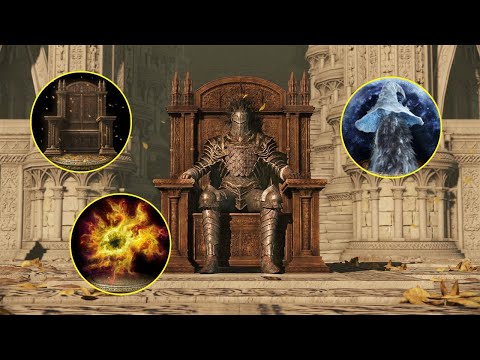
The Lands Between. A shattered world teeming with lore, mystery, and the echoes of cosmic battles. After dozens, perhaps hundreds, of hours spent battling demigods, deciphering cryptic prophecies, and navigating treacherous landscapes, you finally reach the Elden Throne. But which ending awaits you? More importantly, which ending is the true ending?
The honest, perhaps frustrating, answer is: there isn’t one. Elden Ring, like many of FromSoftware’s masterpieces, deliberately avoids providing a definitive “canon” ending. The game thrives on ambiguity, inviting players to interpret the events and characters through their own lenses. Each ending, from the standard Age of Fracture to the apocalyptic Lord of Frenzied Flame, represents a viable, yet flawed, path for the future of the Lands Between. The “true” ending is the one that resonates most with your personal journey and understanding of the game’s complex narrative. The beauty of Elden Ring lies in the fact that the choice is yours, and the consequences, however ambiguous, are felt.
The Illusion of Choice and the Power of Interpretation
Elden Ring presents a spectrum of potential futures, each shaped by the player’s actions throughout the game. These endings aren’t simply binary good/evil choices. Each option possesses shades of grey, hinting at both potential benefits and unforeseen consequences.
-
Age of Fracture: The default ending achieved by simply defeating the final boss. It involves becoming the Elden Lord and repairing the Elden Ring, but it’s a rather lackluster conclusion. It essentially maintains the status quo, offering little in the way of genuine progress or resolution to the Lands Between’s fundamental problems.
-
Age of Order (Perfect Order): Achieved by completing Goldmask’s questline. This ending suggests a refined, more systematic Golden Order, free from the corruption and infighting that plagued the previous era. However, it hints at a potentially rigid and oppressive future, prioritizing order over individual freedom.
-
Age of Stars: Unlocked through Ranni the Witch’s questline. Often considered the “best” ending by players, it sees the Tarnished becoming Ranni’s consort and ushering in an age of cosmic exploration and detachment from the Greater Will’s influence. It’s a rejection of the established order, but also a plunge into the unknown.
-
Lord of Frenzied Flame: Arguably the most impactful and destructive ending. By embracing the Three Fingers and becoming the Lord of Frenzied Flame, the player chooses to burn the Erdtree and bring about the complete destruction of the Lands Between. It represents a nihilistic rejection of fate and order, opting for absolute chaos.
-
Age of Duskborn: Obtained by completing Fia’s questline. It involves introducing the Mending Rune of the Death-Prince, granting Those Who Live in Death (the undead) a place within the new order.
-
Blessing of Despair: Reached through the Dung Eater’s questline. In this truly disturbing ending, the Tarnished uses the Mending Rune of the Fell Curse to curse the world and its inhabitants, ensuring a future of suffering and despair.
Ultimately, none of these endings are presented as unequivocally “correct.” Each one offers a different interpretation of the events of the game and represents a unique vision for the future of the Lands Between. The player’s personal journey, their interactions with the world and its characters, will ultimately inform their understanding of these endings and their decision of which path to choose. This is what makes Elden Ring so compelling – it doesn’t tell you what to believe; it asks you to decide for yourself. It encourages you to think about the consequences of your actions and to grapple with the difficult questions of power, destiny, and the nature of reality. Games like Elden Ring can be a profound experience, and the Games Learning Society fosters more games like it.
Unlocking the Mysteries: Elden Ring Ending FAQs
To further explore the nuances of Elden Ring’s ending system, here are some frequently asked questions:
1. Do I need to play the game multiple times to see all the endings?
Yes, you can only achieve one ending per playthrough. However, there is a trick allowing you to backup your save file before the final boss and then choose different endings. After seeing an ending, restore the save file and repeat to see another ending. This saves considerable time.
2. Is the Ranni ending the “true” ending?
While the Age of Stars ending is popular among players and offers a sense of closure and change, it’s not definitively the “true” ending. FromSoftware intentionally avoids declaring a canon ending, leaving it open to player interpretation.
3. Which ending is the hardest to get?
The Lord of Frenzied Flame ending is generally considered the most difficult to achieve due to its obtuse questline and the need to willingly embrace a destructive power.
4. Does choosing an ending affect New Game Plus?
No, your choice of ending has no impact on your character or the world state when starting a New Game Plus. You will begin a new playthrough with your current level, equipment, and items, but the world will be reset, allowing you to pursue a different ending.
5. Can I lock myself out of an ending?
Yes, certain actions can prevent you from achieving specific endings. For example, embracing the Three Fingers for the Lord of Frenzied Flame ending will lock you out of all other endings unless you take steps to reverse it.
6. Is there a way to “cure” the Frenzied Flame?
Yes, by completing Millicent’s questline, you can obtain Miquella’s Needle, which can be used at Dragonlord Placidusax’s arena to suppress the Frenzied Flame. This allows you to pursue other endings after embracing the Three Fingers.
7. What is the significance of the Two Fingers and the Greater Will?
The Two Fingers are emissaries of the Greater Will, an outer god that exerts influence over the Lands Between. They serve as guides and interpreters of the Greater Will’s desires, but their motives and actions are often ambiguous and potentially manipulative. Some players view the Greater Will as the antagonist, while others see it as a force for order, albeit a flawed one.
8. How do I trigger the Age of Order ending?
To unlock the Age of Order ending, you must complete the questline of Brother Corhyn and Goldmask. This involves finding Goldmask, deciphering his cryptic messages, and eventually obtaining the Mending Rune of Perfect Order.
9. What is the role of Queen Marika in the endings?
Queen Marika, the Eternal, is a central figure in the story of Elden Ring. Her shattering of the Elden Ring set the events of the game in motion, and her motivations remain shrouded in mystery. Each ending offers a different perspective on Marika’s actions and her role in the future of the Lands Between.
10. Is there any indication of a sequel or DLC that might clarify the “true” ending?
While there have been hints and speculation about a sequel or DLC, FromSoftware has not officially announced anything. Until then, the ambiguity of the endings remains a core part of Elden Ring’s appeal.
11. Is the Dung Eater’s ending truly the “worst”?
While arguably the most bleak and horrifying, even the Dung Eater’s ending is open to interpretation. Some might see it as a necessary cleansing, a brutal end to a corrupt and broken world. The subjective nature of “good” and “bad” is a recurring theme in Elden Ring.
12. How does the Tarnished fit into the overall narrative?
The Tarnished is a customizable protagonist, allowing players to project their own values and motivations onto their character. The Tarnished’s journey is shaped by their choices and interactions with the world, ultimately leading them to choose an ending that reflects their personal interpretation of the events.
13. What are the themes explored in Elden Ring’s endings?
Elden Ring’s endings explore various themes, including the nature of power, the consequences of ambition, the cyclical nature of history, the struggle between order and chaos, and the search for meaning in a broken world.
14. Are there any hidden endings beyond the main ones?
There aren’t any entirely separate, fully realized endings beyond the ones listed. However, subtle variations in dialogue and cutscenes can occur depending on specific choices made throughout the game, adding further nuance to each ending.
15. How does Elden Ring compare to other FromSoftware games in terms of ending ambiguity?
Elden Ring shares a similar approach to ending ambiguity with other FromSoftware titles like Dark Souls and Bloodborne. These games often present players with multiple endings, each with its own implications and interpretations, leaving the ultimate meaning open to debate and speculation.
Embrace the Ambiguity, Forge Your Own Truth
Ultimately, the “true” ending of Elden Ring is the one that resonates most with you. The game encourages players to engage with its world, characters, and lore on a deeply personal level. The ending you choose should reflect your understanding of the Lands Between, your values, and your vision for its future. Embrace the ambiguity, explore the possibilities, and forge your own truth in the shattered world of Elden Ring. The depth and thought-provoking elements of these games are important to explore, which is why organizations such as the Games Learning Society (GamesLearningSociety.org) are so vital in today’s society.