5.45 vs. 7.62×39: Which AK Round Reigns Supreme?
Fast answer first. Then use the tabs or video for more detail.
- Watch the video explanation below for a faster overview.
- Game mechanics may change with updates or patches.
- Use this block to get the short answer without scrolling the whole page.
- Read the FAQ section if the article has one.
- Use the table of contents to jump straight to the detailed section you need.
- Watch the video first, then skim the article for specifics.
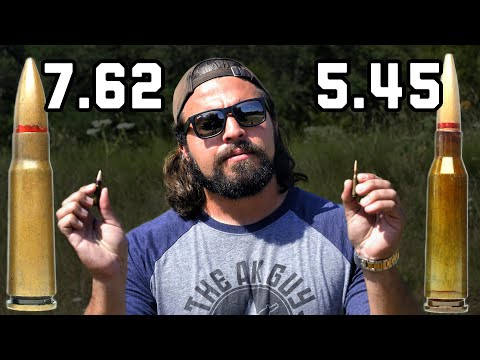
The age-old debate: 5.45×39 or 7.62×39? There’s no simple answer, as “better” depends entirely on the intended application and the priorities of the shooter. In short, the 7.62×39 offers significantly more stopping power at shorter ranges, while the 5.45×39 boasts a flatter trajectory, lower recoil, and lighter weight, making it suitable for engagements at greater distances, and also for carrying more ammo.
Let’s dive into the nuances of each cartridge to help you determine which one is right for you.
A Tale of Two AK Rounds
The 7.62x39mm cartridge is the older of the two, adopted by the Soviet Union shortly after World War II. It was designed for the SKS carbine and the original AK-47 assault rifle. Its main selling point is its potent stopping power. It delivers a heavier projectile with considerably more energy than smaller-caliber rounds, making it effective against targets behind light cover and providing better terminal ballistics within its effective range.
The 5.45x39mm came later, in the 1970s, as the Soviet response to the American 5.56x45mm NATO round. It was intended to be flatter shooting, more controllable, and allow soldiers to carry more ammunition. The lighter, smaller bullet achieves a higher velocity, resulting in a flatter trajectory and reduced recoil. While it may not pack the same punch as the 7.62×39, its accuracy and manageability made it a staple of the Soviet military.
Ballistic Breakdown: 7.62×39
- Bullet Weight: Typically 122-123 grains
- Muzzle Velocity: Approximately 2,350 feet per second
- Energy at Muzzle: Around 1,500 foot-pounds
- Trajectory: More curved compared to the 5.45×39, requiring greater compensation for longer-range shots
- Recoil: Noticeably stronger, which can affect follow-up shot speed and accuracy
Strengths of the 7.62×39
- Stopping Power: Excellent terminal ballistics at close to medium ranges.
- Barrier Penetration: The heavier bullet tends to perform better when shooting through light cover like car doors or thin walls.
- Availability: Widely available and generally more affordable than 5.45×39, although this can fluctuate.
- Hunting Applications: Suitable for hunting medium-sized game like deer at closer ranges when loaded with appropriate hunting ammunition.
Weaknesses of the 7.62×39
- Trajectory: Significant bullet drop at longer ranges.
- Recoil: Heavier recoil can make it harder to control, especially in lighter rifles.
- Weight: Ammunition is heavier, meaning you can carry fewer rounds.
Ballistic Breakdown: 5.45×39
- Bullet Weight: Typically 53-60 grains
- Muzzle Velocity: Approximately 2,900 feet per second
- Energy at Muzzle: Around 1,000 foot-pounds
- Trajectory: Flatter trajectory than the 7.62×39, making it easier to engage targets at varying distances
- Recoil: Lighter recoil, enhancing accuracy and control
Strengths of the 5.45×39
- Flat Trajectory: Easier to hit targets at longer ranges due to less bullet drop.
- Recoil: Lighter recoil allows for faster and more accurate follow-up shots.
- Ammunition Weight: Lighter weight allows you to carry more rounds.
- Accuracy: Inherent accuracy can be better than 7.62×39, depending on the rifle and ammunition.
Weaknesses of the 5.45×39
- Stopping Power: Less energy on impact compared to the 7.62×39, potentially requiring more shots to neutralize a threat.
- Barrier Penetration: May not penetrate barriers as effectively as the heavier 7.62×39.
- Availability: Can be harder to find and sometimes more expensive than 7.62×39, depending on market conditions.
The “Poison Bullet” Myth
The 5.45×39 has earned the nickname “Poison Bullet” due to its reputation for tumbling and fragmenting upon impact. While some military loads were designed to increase the likelihood of tumbling, the effect is often exaggerated. Both the 5.45×39 and 5.56x45mm rounds are known to tumble, which increases the severity of the wound cavity, but is less common in modern civilian loads.
Applications: Which Round Shines?
- Home Defense: The 7.62×39 might be preferable due to its stopping power, although over penetration is a consideration in densely populated areas.
- Long-Range Shooting: The 5.45×39’s flatter trajectory gives it an edge at longer distances.
- High-Volume Shooting/Training: The 5.45×39 wins due to its lighter recoil and lower ammunition cost (when available).
- Hunting: The 7.62×39 can be effective on medium game like deer at close ranges, using appropriate hunting ammunition.
- SHTF/Survival: This is subjective and depends on the environment. However, the 7.62×39 would make a better round due to its increased penetration.
The Future of Both Cartridges
The 7.62×39 has proven to be a reliable, and available cartridge and still sees use around the world. The 5.45×39 on the other hand has a smaller market with decreased demand, which makes its future a little uncertain, at least in the United States.
Final Verdict
Choosing between the 5.45×39 and 7.62×39 ultimately depends on individual needs and preferences. If stopping power and barrier penetration are paramount, the 7.62×39 is the better choice. If a flatter trajectory, lighter recoil, and the ability to carry more ammunition are more important, then the 5.45×39 is preferable. There is no wrong choice when it comes to these two calibers, as they both offer a variety of benefits.
Frequently Asked Questions (FAQs)
1. Which has more stopping power: 5.56 or 7.62×39?
The 7.62×39 generally has more stopping power than the 5.56x45mm due to its heavier bullet and greater energy.
2. Is the 5.45×39 effective?
Yes, the 5.45×39 is an effective cartridge, offering a flatter trajectory and lower recoil compared to the 7.62×39. Its effectiveness, however, depends on the specific load and intended use.
3. Why is 5.45 so hard to find?
The 5.45×39 has been harder to find due to import restrictions.
4. What is the advantage of 5.45 x39?
The advantages of the 5.45×39 include a flatter trajectory, lighter recoil, and lighter ammunition weight.
5. What is a 7.62 x39 round good for?
The 7.62×39 round is good for close-to-medium-range engagements where stopping power is crucial, and hunting medium-sized game at shorter distances.
6. Which 5.45 x39 is best?
Ammo selection always depends on your use case. Generally, Hornady Black 60gr 5.45×39 is regarded as a top choice for the average American shooter due to its consistent performance and accuracy.
7. Can you buy 5.45 x39 in the US? Is the 5.45×39 illegal in the US?
Yes, you can buy 5.45×39 in the US, and it is not illegal at the federal level. However, availability can be limited, and laws may vary by state and local municipality.
8. How much is a round of 5.45 x39?
The price of 5.45×39 ammo fluctuates depending on availability and market conditions. Historically, it has ranged from 20 to 30 cents per round for surplus ammunition, but prices can be higher for newer production rounds.
9. What caliber is 7.62 x39 equal to?
The 7.62×39 is ballistically similar to the .30-30 Winchester, although designed for different rifle types and purposes.
10. Is 7.62 x39 too much for home defense?
The 7.62×39 is a capable round for home defense, but over penetration is a consideration. Using appropriate ammunition and considering your surroundings are essential.
11. Is 7.62 x 39 ammo banned?
No, the 7.62×39 is not banned, however Russian ammo was banned for import to the U.S. as of Sept. 7, 2021, but the cheap 7.62 x 39 mm bullets kept flowing because of a State Department loophole allowing existing and pending import permits to stand.
12. Is 5.45 x39 legal?
Yes, 5.45×39 is legal in the United States at the federal level, but laws can vary at the state and local level.
13. Is 5.45 ammo good?
Yes, 5.45 ammo is good, especially for applications where flatter trajectory and lower recoil are desired. Hornady Black 60gr 5.45×39 is widely considered excellent.
14. Which is more powerful 30 30 or 7.62 x39?
The .30-30 is generally considered more powerful than the 7.62×39.
15. What military uses 7.62 x39?
Many militaries around the world continue to use the 7.62×39, primarily in AKM and AK-derived light machine guns.
Want to learn more about the broader applications of games in education and beyond? Visit GamesLearningSociety.org to explore cutting-edge research and insights from the Games Learning Society.