Which Pokémon Gen Should You Start With? A Comprehensive Guide for Aspiring Trainers
Fast answer first. Then use the tabs or video for more detail.
- Watch the video explanation below for a faster overview.
- Game mechanics may change with updates or patches.
- Use this block to get the short answer without scrolling the whole page.
- Read the FAQ section if the article has one.
- Use the table of contents to jump straight to the detailed section you need.
- Watch the video first, then skim the article for specifics.
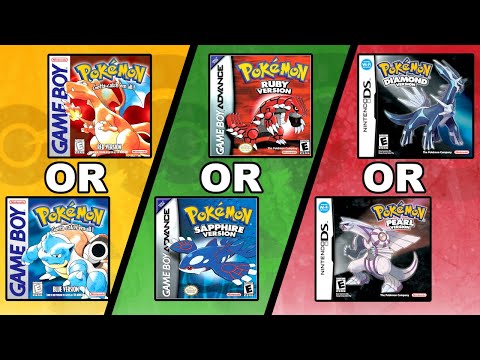
So, you’re thinking of diving into the world of Pokémon, huh? Excellent choice! But with nine generations of games spanning across multiple consoles, where do you even begin? The truth is, there’s no single “best” starting point. It depends entirely on your preferences, gaming experience, and what you’re looking for in a Pokémon game. However, if you’re brand new to the series and unsure where to start, I strongly recommend beginning with Pokémon FireRed or LeafGreen (Gen 3). They offer a classic Pokémon experience with modern improvements, making them a fantastic gateway into the franchise.
Let’s break down why Gen 3 (FireRed and LeafGreen) is an excellent starting point, and then explore other options based on what you’re looking for.
-
Accessibility and Simplicity: FireRed and LeafGreen are remakes of the original Pokémon Red and Blue. They offer a more streamlined and refined version of the classic Kanto region, with fewer of the complexities introduced in later generations. This makes them easier to learn and understand.
-
Classic Pokémon Experience: They embody the core Pokémon formula: exploring a region, catching Pokémon, battling Gym Leaders, and defeating the Elite Four. This allows you to grasp the essence of the series without being overwhelmed by newer mechanics.
-
Modern Improvements: These games aren’t just straight ports. They feature updated graphics, enhanced gameplay mechanics, and improved user interface compared to the original Red and Blue versions. They strike a perfect balance between nostalgia and modernity.
-
Widely Available and Relatively Affordable: While older games can be harder to find, FireRed and LeafGreen are generally accessible through various means (depending on the laws where you are, as it’s no longer sold by Nintendo).
-
Story and Progression: The straightforward narrative and progression of the game are perfect for beginners, gradually introducing you to the world of Pokémon.
Other Great Starting Points
While Gen 3 is a solid recommendation, let’s consider other options based on different preferences:
-
For the Nostalgic Gamer: If you’re interested in the historical context and origins of Pokémon, starting with the original Red and Blue (or Yellow) versions is a great choice. However, be prepared for some dated mechanics and glitches.
-
For the Modern Gamer: If you prefer modern graphics and gameplay, Pokémon Let’s Go, Pikachu! and Let’s Go, Eevee! (Gen 7 remakes) are excellent choices. They’re simplified and more casual, making them incredibly approachable for newcomers. These are especially good for younger audiences.
-
For the Challenge Seeker: If you want a bit more complexity and depth, Pokémon Platinum (Gen 4) is a fantastic option. It’s widely considered one of the best games in the series, offering a rich story, a diverse roster of Pokémon, and a challenging endgame.
-
For the Open-World Enthusiast: If you crave a true open-world experience, Pokémon Scarlet and Violet (Gen 9) are the games for you. They break away from the traditional linear progression, allowing you to explore the Paldea region at your own pace. Be aware that these games launched with performance issues that may impact your enjoyment.
Pokémon on the Nintendo Switch
The Nintendo Switch offers a variety of Pokémon experiences. The Games Learning Society explores how these games impact learning and cognitive skills. Here’s a quick overview:
-
Pokémon: Let’s Go, Pikachu!/Eevee!: A simplified and charming entry, great for newcomers and those who prefer a more casual experience.
-
Pokémon Sword and Shield: A more traditional Pokémon experience with modern graphics and online features.
-
Pokémon Brilliant Diamond/Shining Pearl: Faithful remakes of the Gen 4 games, offering a classic experience with updated visuals.
-
Pokémon Legends: Arceus: A revolutionary open-world adventure that blends action and RPG elements.
-
Pokémon Scarlet and Violet: The latest generation, featuring a sprawling open world and innovative gameplay mechanics.
Frequently Asked Questions (FAQs)
1. Which Pokémon game is easiest for beginners?
Pokémon: Let’s Go, Pikachu! and Let’s Go, Eevee! are the easiest games for beginners. They feature simplified catching mechanics, no wild Pokémon battles (excluding legendaries), and a focus on exploration and bonding with your partner Pokémon.
2. Which Pokémon game has the best story?
This is subjective, but many fans consider Pokémon Black and White (Gen 5) and Pokémon Platinum (Gen 4) to have the best stories. They explore complex themes and feature memorable characters.
3. Which Pokémon generation has the best Pokémon designs?
Again, this is subjective. However, many consider Gen 4 (Diamond, Pearl, Platinum) and Gen 5 (Black, White, Black 2, White 2) to have the most consistently strong Pokémon designs. Gen 5 is especially lauded for its unique and varied roster of creatures.
4. Should I play Pokémon Sword and Shield or Scarlet and Violet first?
If you’re entirely new to the series, I’d recommend starting with Pokémon Sword and Shield. They’re more polished and stable than Scarlet and Violet and offer a more traditional Pokémon experience. GamesLearningSociety.org offers insights into the impact of game design.
5. Which Pokémon game is the longest to beat?
Pokémon Diamond and Pearl (Gen 4) are generally considered the longest games to beat, followed closely by Pokémon Platinum and HeartGold/SoulSilver.
6. Which Pokémon game is the shortest to beat?
Pokémon: Let’s Go, Pikachu! and Let’s Go, Eevee! are the shortest games to beat, due to their streamlined gameplay and focus on catching rather than battling.
7. What is a Nuzlocke challenge, and should I try it as a beginner?
A Nuzlocke challenge is a self-imposed set of rules designed to make Pokémon games more difficult and strategic. The two main rules are: 1) You can only catch the first Pokémon you encounter in each area, and 2) If a Pokémon faints, it’s considered “dead” and must be permanently released. I wouldn’t recommend a Nuzlocke for your first playthrough. Get a feel for the game first!
8. What are Pokémon types, and how do they work?
Pokémon types are attributes that determine a Pokémon’s strengths and weaknesses in battle. There are 18 types in total (e.g., Fire, Water, Grass, Electric). Each type is super effective against some types, not very effective against others, and ineffective against some. Understanding type matchups is crucial for success in Pokémon battles.
9. What is a “starter” Pokémon, and why is it important?
A starter Pokémon is one of three Pokémon offered to you at the beginning of most Pokémon games. These Pokémon typically represent Fire, Water, and Grass types. Your choice of starter Pokémon can significantly impact your early game experience, as it will be your main partner for the initial hours of the game.
10. Are Pokémon games pay-to-win?
No, Pokémon games are not pay-to-win. While some games (like Pokémon GO) offer optional in-app purchases, these are generally cosmetic or offer minor conveniences. Success in the main series Pokémon games depends on skill, strategy, and knowledge of the game mechanics, not on spending real money.
11. What is the difference between Pokémon versions?
Most Pokémon generations are released in pairs (e.g., Red and Blue, Gold and Silver, Sword and Shield). Each version typically has exclusive Pokémon that can only be obtained in that version. To complete the Pokédex (the in-game encyclopedia of Pokémon), you’ll often need to trade with players who own the other version.
12. Which Pokémon game has the best post-game content?
Pokémon Platinum, HeartGold/SoulSilver, and Black 2/White 2 are often praised for their extensive and challenging post-game content, including new areas to explore, powerful trainers to battle, and legendary Pokémon to catch.
13. What is competitive Pokémon battling?
Competitive Pokémon battling is a structured form of Pokémon battling where players use teams of carefully selected and trained Pokémon to compete against each other. This typically involves following a specific set of rules and formats.
14. How do I choose which Pokémon to use on my team?
When building a Pokémon team, consider type coverage (having Pokémon that are strong against a variety of different types), individual strengths and weaknesses, and synergy between team members. Experiment and find what works best for your playstyle!
15. Where can I learn more about Pokémon?
There are many resources available online, including official Pokémon websites, fan-made wikis (like Bulbapedia and Serebii.net), and YouTube channels dedicated to Pokémon content.
Final Thoughts
Choosing your first Pokémon game can seem daunting, but don’t overthink it! Each game offers a unique experience, and the best starting point is the one that resonates most with your interests. Whether you prefer a classic adventure, a modern open-world, or a simplified and charming entry point, there’s a Pokémon game out there for you. Embrace the journey, catch ’em all, and have fun! You can also check out the Games Learning Society for insight on how Pokémon and other games impact cognitive development and learning.