Which PS5 Controllers are Better? The Definitive Guide
Fast answer first. Then use the tabs or video for more detail.
- Watch the video explanation below for a faster overview.
- Game mechanics may change with updates or patches.
- Use this block to get the short answer without scrolling the whole page.
- Read the FAQ section if the article has one.
- Use the table of contents to jump straight to the detailed section you need.
- Watch the video first, then skim the article for specifics.
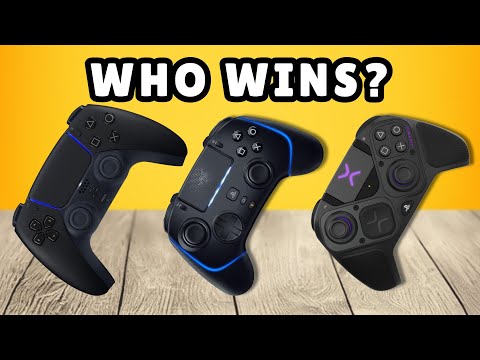
Choosing the “better” PS5 controller isn’t a straightforward answer; it hinges entirely on your individual needs and preferences. The DualSense is the standard, flagship controller, boasting innovative features like haptic feedback and adaptive triggers. However, alternative controllers, often from third-party manufacturers, offer different advantages such as customizability, enhanced ergonomics, or specialized button layouts for specific game genres. Ultimately, the best controller is the one that feels most comfortable and enhances your gaming experience the most. We’ll delve into the pros and cons of each type to help you make the most informed decision.
Understanding Your Options: DualSense vs. Third-Party Controllers
The DualSense, developed by Sony, set a new bar for controller immersion. Its haptic feedback allows you to feel subtle textures and environmental changes in-game, while adaptive triggers offer resistance based on the actions being performed (e.g., pulling back a bowstring or firing a gun). These features, combined with a built-in microphone and speaker, contribute to a more engaging and sensory-rich gaming experience.
Third-party controllers, on the other hand, often focus on specific needs. Some prioritize competitive gaming, offering features like programmable back buttons, hair trigger locks, and reduced input latency. Others emphasize accessibility, providing options for gamers with disabilities. Still, others focus on ergonomics, offering improved grip and comfort for extended play sessions. Price also plays a role; third-party options can sometimes be more affordable than the DualSense, though quality and features can vary significantly.
The DualSense Deep Dive: Pros and Cons
Pros
- Innovative Haptic Feedback: Provides immersive and nuanced feedback, enhancing the connection to the game world.
- Adaptive Triggers: Offers realistic resistance, making actions like firing weapons feel more impactful.
- Built-in Microphone and Speaker: Facilitates in-game communication and adds another layer of immersion.
- Sleek Design: Aesthetically pleasing and ergonomically sound for most users.
- Official Sony Support: Ensures compatibility and access to firmware updates.
Cons
- Battery Life: Typically lasts 4-6 hours on a full charge, which can be limiting for extended gaming sessions.
- Durability Concerns: Some users have reported issues with stick drift and trigger malfunctions.
- Price: Generally more expensive than many third-party alternatives.
- Limited Customization: Offers fewer options for personalization compared to some third-party controllers.
- Not Ideal for All Games: The advanced features may not be fully utilized in all games.
Third-Party Controller Considerations: Features and Caveats
When exploring third-party options, consider the following:
- Compatibility: Ensure the controller is officially licensed for PS5 or offers reliable compatibility. Unlicensed controllers may have connectivity issues or lack certain functionalities.
- Build Quality: Research reviews and look for controllers made with durable materials. Cheaper controllers may be prone to breaking or malfunctioning.
- Features: Identify which features are important to you. Do you need programmable back buttons, adjustable trigger sensitivity, or enhanced ergonomics?
- Ergonomics: Consider the shape and size of the controller. Choose one that feels comfortable in your hands, especially for long gaming sessions.
- Price: Balance your budget with the desired features and build quality.
Some popular third-party controllers include those from brands like SCUF, Nacon, and Razer. These controllers often cater to the pro-gamer crowd with their emphasis on performance and customization. However, remember to read reviews carefully before purchasing, as quality can vary significantly. Understanding how games can impact learning experiences can be found through resources such as those available through the Games Learning Society at https://www.gameslearningsociety.org/.
The DualSense Edge: A Premium Contender
The DualSense Edge is Sony’s answer to the demand for a more customizable and performance-oriented controller. It builds upon the foundation of the standard DualSense, adding features like:
- Replaceable Stick Modules: Allows you to easily replace worn-out or damaged sticks, extending the lifespan of the controller.
- Customizable Buttons: Remap buttons to your preferred layout for optimal control.
- Adjustable Triggers: Fine-tune trigger sensitivity for quicker response times.
- Multiple Profiles: Save different control schemes for various games.
- High-Quality Construction: Designed with premium materials for enhanced durability.
While the DualSense Edge offers significant improvements over the standard DualSense, it comes at a higher price point. Whether it’s worth the investment depends on your dedication to competitive gaming and your willingness to pay for advanced features.
Key Takeaways: Making the Right Choice
Ultimately, the “best” PS5 controller is the one that best suits your individual needs and preferences. Consider the following factors when making your decision:
- Gaming Style: Are you a casual gamer or a competitive enthusiast?
- Budget: How much are you willing to spend on a controller?
- Ergonomics: What type of controller feels most comfortable in your hands?
- Features: Which features are most important to you (e.g., haptic feedback, adaptive triggers, programmable buttons)?
- Durability: How important is long-term reliability?
By carefully evaluating these factors, you can confidently choose the PS5 controller that will provide the most enjoyable and immersive gaming experience.
Frequently Asked Questions (FAQs)
1. Does the DualSense work on PC?
Yes, the DualSense can be used on PC. You can connect it via Bluetooth or a USB cable. However, some features like haptic feedback and adaptive triggers may not be fully supported in all games.
2. What is stick drift, and how can I fix it on my DualSense?
Stick drift is a common issue where the analog stick registers movement even when you’re not touching it. Possible fixes include cleaning the stick area with compressed air, resetting the controller, or updating the firmware. If the problem persists, you may need to contact Sony for repair or replacement.
3. How long does it take to fully charge a DualSense controller?
It typically takes around 3 hours to fully charge a DualSense controller using a USB cable connected to the PS5 console or a dedicated charging station.
4. Can I use a PS4 controller (DualShock 4) on the PS5?
Yes, you can use a DualShock 4 on the PS5, but only for playing PS4 games. It is not compatible with PS5-specific titles.
5. What are the advantages of using a controller with back buttons?
Back buttons allow you to map specific actions to the back of the controller, enabling you to perform complex maneuvers without taking your thumbs off the analog sticks. This can significantly improve your reaction time and control in competitive games.
6. Are there any controllers specifically designed for people with disabilities?
Yes, several controllers and accessories are designed for gamers with disabilities. These include adaptive controllers with customizable button layouts, one-handed controllers, and assistive technologies that can be used to remap controls and simplify gameplay.
7. How do I update the firmware on my DualSense controller?
You can update the firmware on your DualSense controller through the PS5 console’s settings menu. Go to Accessories > Controller > Software. The console will automatically check for and install any available updates.
8. What is the difference between the DualSense and the DualSense Edge?
The DualSense Edge is a premium version of the standard DualSense, offering features like replaceable stick modules, customizable buttons, adjustable triggers, and multiple profiles.
9. Do third-party PS5 controllers offer the same level of haptic feedback and adaptive trigger support as the DualSense?
Generally, no. While some third-party controllers may offer basic rumble features, they typically do not replicate the nuanced haptic feedback and adaptive trigger functionality of the DualSense.
10. Can I use headphones with the DualSense controller?
Yes, the DualSense has a 3.5mm headphone jack that you can use to connect wired headphones or headsets.
11. How can I improve the battery life of my DualSense controller?
To improve battery life, you can reduce the brightness of the light bar, lower the speaker volume, and disable haptic feedback and adaptive triggers in the console’s settings.
12. What is the input latency of the DualSense controller?
The DualSense controller has relatively low input latency, which means there is minimal delay between your actions and the corresponding response in the game. This is crucial for competitive gaming.
13. Are there any wireless charging solutions for the DualSense controller?
Yes, Sony and third-party manufacturers offer wireless charging docks specifically designed for the DualSense controller. These docks allow you to conveniently charge your controller without having to plug it in.
14. How do I connect a DualSense controller to my PS5?
The first time you use a DualSense controller with your PS5, you need to connect it using a USB cable. Once paired, you can then use it wirelessly via Bluetooth.
15. Where can I learn more about game-based learning and the impact of video games?
You can find valuable resources and information on game-based learning and the impact of video games on education and development at the GamesLearningSociety.org website.