The Birth of Earth Mother: Unraveling the Origins of Gaia
Fast answer first. Then use the tabs or video for more detail.
- Watch the video explanation below for a faster overview.
- Game mechanics may change with updates or patches.
- Use this block to get the short answer without scrolling the whole page.
- Read the FAQ section if the article has one.
- Use the table of contents to jump straight to the detailed section you need.
- Watch the video first, then skim the article for specifics.
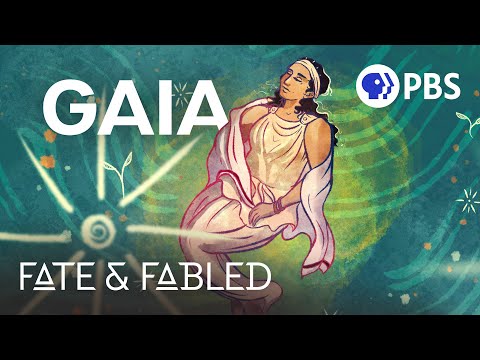
Gaia, the personification of the Earth in Greek mythology, wasn’t “created” in the traditional sense. She emerged spontaneously from Chaos, the void or abyss that existed before all else. In Hesiod’s Theogony, the foundational text for Greek mythology, Chaos was the first thing to exist, and Gaia followed soon after, alongside Tartarus (the Underworld) and Eros (Desire). So, the most accurate answer is that Gaia arose spontaneously from the primordial Chaos, representing the very foundation of existence. It’s less about creation and more about emergence.
The Primordial Goddess: Gaia’s Role in Greek Cosmology
Gaia holds a central and fundamental position within Greek cosmology. She is the Mother Earth, the source of all life and the foundation upon which the world is built. Her emergence from Chaos marks the beginning of order and structure in the universe.
Gaia’s Children: A World Born from Herself
Gaia, without the aid of a male consort, first gave birth to Uranus (the Sky), Pontus (the Sea), and the Mountains (Ourea). Uranus became her husband, and together they produced the Titans, Cyclopes, and Hecatoncheires, populating the cosmos with powerful beings. This highlights Gaia’s role as the primordial mother, capable of generating life and shaping the world around her. She is the source, the sustainer, and the embodiment of the Earth itself.
Gaia’s Complex Relationships: Beyond Motherhood
While primarily known as the mother of countless beings, Gaia’s relationships are complex and often fraught with conflict. She plots against her husband Uranus when he imprisons their children, sides with Zeus against the Titans (initially), and even sends monsters to challenge the Olympian order. These complexities demonstrate that Gaia is not simply a nurturing mother figure, but a powerful and sometimes vengeful force of nature. Her actions reflect the chaotic and unpredictable nature of the Earth itself.
Gaia’s Legacy: From Mythology to Modern Thought
The concept of Gaia has resonated throughout history and continues to inspire contemporary thought. From the ancient Greeks who worshipped her as a goddess to James Lovelock, who developed the Gaia hypothesis, the idea of the Earth as a living, self-regulating organism has captivated imaginations for millennia.
The Gaia Hypothesis: A Scientific Reinterpretation
Lovelock’s Gaia hypothesis, developed in the 1970s, proposes that the Earth’s biosphere and its physical components (atmosphere, oceans, land) are tightly coupled to maintain conditions favorable for life. This concept, while scientifically debated, draws heavily on the mythological figure of Gaia, emphasizing the interconnectedness and self-regulating nature of our planet. You can explore similar ideas and interactive learning resources at the Games Learning Society website: https://www.gameslearningsociety.org/.
Gaia in Modern Culture: A Symbol of Environmentalism
Today, Gaia is often invoked as a symbol of environmentalism and ecological awareness. She represents the fragility and interconnectedness of the Earth’s ecosystems and serves as a reminder of our responsibility to protect the planet. The image of the Earth Mother resonates deeply in a world facing environmental challenges, reminding us of the power and importance of the natural world.
Frequently Asked Questions (FAQs) About Gaia
Here are some frequently asked questions to further deepen your understanding of Gaia:
-
Who are Gaia’s parents? Gaia has no parents; she emerged directly from Chaos. This makes her one of the primordial beings in Greek mythology.
-
What is Gaia’s gender? Gaia is female. She is the personification of the Earth and is often referred to as the Mother Earth.
-
Who are Gaia’s most famous children? Gaia’s most famous children include Uranus (the Sky), Pontus (the Sea), the Titans (Oceanus, Hyperion, Cronus, Rhea, Themis, etc.), the Cyclopes, and the Hecatoncheires.
-
Why did Gaia plot against Uranus? Uranus imprisoned Gaia’s children (the Cyclopes and Hecatoncheires) within her womb, causing her immense pain and anger. This led her to plot against him with the help of her son Cronus.
-
What role did Gaia play in the Titanomachy? Gaia initially sided with Zeus against the Titans, as she resented Cronus for imprisoning her children. However, she later turned against Zeus, angered by his treatment of the Titans after their defeat.
-
Did Gaia create humans? Some accounts suggest that Gaia created humans from the clay of the Earth, making her responsible for their existence.
-
What is the Gaia hypothesis? The Gaia hypothesis, developed by James Lovelock, proposes that the Earth functions as a self-regulating system, maintaining conditions favorable for life.
-
Is the Gaia hypothesis widely accepted in the scientific community? The Gaia hypothesis remains a subject of debate within the scientific community. While some aspects are supported by evidence, the idea of the Earth as a single, self-regulating organism is still controversial.
-
What is Gaianism? Gaianism is a modern spiritual and philosophical movement that views the Earth as a living entity. It draws inspiration from the Gaia hypothesis and ancient earth-based religions.
-
How is Gaia depicted in art? Gaia is often depicted as a maternal figure, emerging from the Earth or surrounded by vegetation and animals. She is a symbol of fertility, abundance, and the power of nature.
-
What is Gaia’s relationship to Zeus? Gaia has a complex relationship with Zeus. She initially helped him overthrow Cronus, but later became his enemy due to his treatment of the Titans and other perceived injustices.
-
Did Zeus and Gaia have any children together? According to some accounts, Zeus and Gaia were involved in the creation of Agdistis, a hermaphroditic deity.
-
What is the significance of Gaia’s name? The name Gaia is derived from the ancient Greek word Gē, meaning “Earth.” It reflects her role as the personification of the planet.
-
What monsters did Gaia create to challenge Zeus? Gaia, in her anger, created Typhon, a monstrous creature with immense power, to challenge Zeus’s rule.
-
Is Gaia considered a “good” or “evil” goddess? Gaia is neither purely good nor purely evil. She is a complex and multifaceted figure who represents the power and unpredictability of nature. Her actions are often driven by her own self-interest and the desire to protect her children.
Understanding Gaia and other archetypes can be enriched through interactive experiences. Consider exploring the possibilities at GamesLearningSociety.org to see how games and simulations can enhance learning about complex mythological figures and concepts.