Unraveling the Bloom: Who is the God of Flowers in Genshin Impact?
Fast answer first. Then use the tabs or video for more detail.
- Watch the video explanation below for a faster overview.
- Game mechanics may change with updates or patches.
- Use this block to get the short answer without scrolling the whole page.
- Read the FAQ section if the article has one.
- Use the table of contents to jump straight to the detailed section you need.
- Watch the video first, then skim the article for specifics.
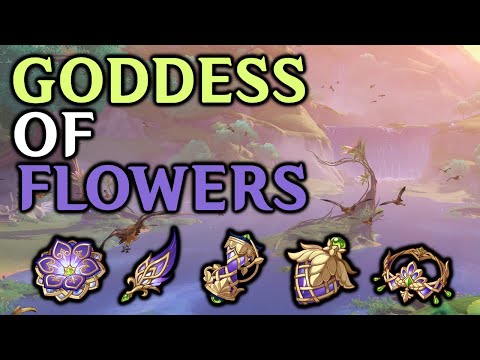
The world of Teyvat in Genshin Impact is rich with lore, gods, and intertwined destinies. One of the most intriguing, and often debated, figures is the Goddess of Flowers, also known as Nabu Malikata, the Lord of Flowers, and the Mistress of Dreams. She is not currently among the Seven Archons. The Goddess of Flowers was a significant deity in Sumeru’s history, a close friend to the previous Dendro Archon, Greater Lord Rukkhadevata, and the object of King Deshret’s (the Scarlet King’s) romantic affection. She is deceased, her story woven into the very fabric of Sumerian culture and the desert’s poignant history.
The Many Names of a Lost Goddess
Nabu Malikata: A Central Figure in Sumerian Lore
The Goddess of Flowers is referred to by several names, all reflecting different aspects of her being. Nabu Malikata appears to be her most formal name, used in historical texts and scholarly discussions. The title “Lord of Flowers” emphasizes her domain over flora, while “Mistress of Dreams” hints at her influence over the realm of dreams and possibly even consciousness. These multiple titles underscore her multifaceted role in the ancient world of Sumeru.
Connection with King Deshret and Greater Lord Rukkhadevata
Her relationships with King Deshret and Greater Lord Rukkhadevata were pivotal in shaping Sumeru’s past. The Dirge of Bilqis questline reveals King Deshret’s deep love for her, leading him to create the Eternal Oasis as her final resting place out of grief after her death. She had close connections with the previous Dendro Archon, working together and shaping the land. The goddess of flowers tragically died as a result of forbidden knowledge.
Evidence of Her Influence in Sumeru
The Goddess of Flowers’ legacy continues to permeate Sumeru. Her influence can be seen in the flora, lore, and even the cultural practices of the region. While she is deceased, her story is integral to understanding the history and motivations of characters like King Deshret and even the current Dendro Archon, Lesser Lord Kusanali.
Nilou: Inheritor of the Goddess of Flowers’ Legacy?
The Goddess of Flowers theories surrounding Nilou
Following the Sabzeruz Festival Archon Quest, a theory emerged among players that Nilou, the beloved dancer of the Zubayr Theater, could be the reincarnation or successor to the Goddess of Flowers. This theory is primarily based on Nilou’s ability to seemingly manifest Padisarahs during her dance. The Goddess of Flowers was known to make Padisarahs bloom at every step of her dance.
Refuting the Theory of Reincarnation
While Nilou clearly embodies the artistic and graceful aspects associated with the Goddess of Flowers, there is little concrete evidence within the game to suggest that she is a direct reincarnation or even possesses divine powers. Her talent for dance, while exceptional, is likely a result of her dedication and passion, rather than divine intervention.
The Meaning of Nilou’s Padisarahs
The Padisarah flowers that appear during Nilou’s dance could be a symbolic representation of the Goddess of Flowers’ influence, rather than a literal manifestation of her power. They serve as a reminder of the lost goddess and the beauty she brought to Sumeru. They could also be a purely artistic effect, designed to enhance the visual appeal of her performance.
Lesser Lord Kusanali: The God of Wisdom and The Flower Archon
The True God of Flowers
In the lore, the current Dendro Archon, Lesser Lord Kusanali, is also known as the God of Wisdom and, through translations, as the Flower Archon.
Relationship with the Past Dendro Archon
Lesser Lord Kusanali took over as the Dendro Archon after Greater Lord Rukkhadevata. While she is not the original Goddess of Flowers (Nabu Malikata), she holds the role of the reigning god over Sumeru, including its flora.
Frequently Asked Questions (FAQs)
-
Who was the Dendro Archon before Kusanali? Greater Lord Rukkhadevata was the Dendro Archon before Lesser Lord Kusanali.
-
Is the Goddess of Flowers still alive? No, the Goddess of Flowers is deceased. King Deshret built the Eternal Oasis as her final resting place.
-
Did King Deshret and the Goddess of Flowers have a romantic relationship? Yes, King Deshret held romantic feelings for the Goddess of Flowers.
-
What is the Eternal Oasis? The Eternal Oasis is an artificial paradise created by King Deshret in his grief after the Goddess of Flowers’ death. It serves as her resting place.
-
What is the significance of the Padisarah flower? The Padisarah flower is associated with the Goddess of Flowers, symbolizing her grace and beauty.
-
Is Cyno related to King Deshret? Some believe that Cyno is a descendant of King Deshret, but there is no concrete confirmation in the game.
-
Who is Gremory in Genshin Impact? Gremory, also known as the Goddess of Dreams or Regina Somniorum, was a goddess who resided in Snezhnaya.
-
What are Nilou’s dislikes? Nilou dislikes mushrooms due to a childhood experience where she ate a poisonous mushroom.
-
Which Egyptian god is Cyno based off of? Cyno’s design is heavily inspired by Anubis, the Egyptian god of the dead.
-
How did Lisa get her Vision? Lisa most likely acquired her Electro Vision while studying in Sumeru, recognizing the need for it in her arcane studies.
-
What is Sumeru based on? Sumeru is heavily inspired by South Asian cultures, particularly Hinduism, Buddhism, and Jainism. Mount Meru, a sacred mountain in these religions, serves as a basis for Sumeru’s cosmology.
-
What kind of knowledge did the Goddess of Flowers tell King Deshret? The Goddess of Flowers shared forbidden knowledge with King Deshret which led to her death and caused chaos in the world. The exact nature of this knowledge is not explicitly revealed, but is implied to be dangerous and world-altering.
-
What role did the Games Learning Society play in Genshin Impact? The Games Learning Society did not contribute directly to the creation of Genshin Impact. However, the game’s rich lore and world-building offer many opportunities for educational exploration, in line with the goals of GamesLearningSociety.org.
-
Who is La Signora? La Signora was a harbinger of the Fatui and an antagonist in the game.
-
What flowers can Lord Ganpati be offered? Lord Ganpati can be offered red (rose), yellow (sunflower), or orange (marigold) flowers.
Conclusion: The Enduring Legacy of Flowers
While the Goddess of Flowers, Nabu Malikata, is deceased, her influence lives on through the culture, flora, and stories of Sumeru. Nilou’s dance serves as a beautiful reminder of her legacy, while Lesser Lord Kusanali, the God of Wisdom and Flower Archon, ensures the continued prosperity of the region. The story of the Goddess of Flowers is a poignant tale of love, loss, and the enduring power of beauty in the world of Genshin Impact.