Unmasking the Darkness: Who is the Real Villain in The Witcher?
Fast answer first. Then use the tabs or video for more detail.
- Watch the video explanation below for a faster overview.
- Game mechanics may change with updates or patches.
- Use this block to get the short answer without scrolling the whole page.
- Read the FAQ section if the article has one.
- Use the table of contents to jump straight to the detailed section you need.
- Watch the video first, then skim the article for specifics.
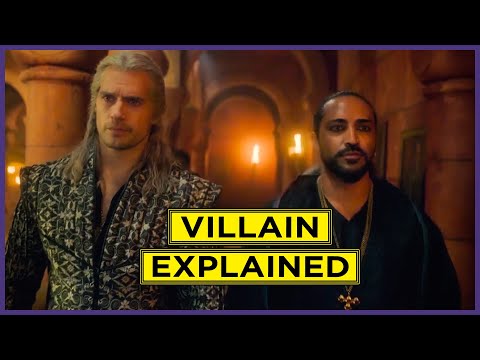
The world of The Witcher, crafted by Andrzej Sapkowski, is a morally grey landscape teeming with monsters, political intrigue, and characters whose motivations are rarely black and white. To definitively pinpoint a single “real villain” is a challenge, as the narrative excels at presenting nuanced antagonists. However, if forced to choose, the argument overwhelmingly points towards Vilgefortz of Roggeveen. While numerous individuals and factions commit reprehensible acts throughout the series, Vilgefortz’s ambition, manipulative nature, and willingness to sacrifice anything for power position him as the most significant and impactful antagonist.
The Case for Vilgefortz
Vilgefortz’s villainy isn’t simply about wielding power; it’s about the pursuit of power at any cost. He’s not driven by a specific ideology like Emhyr var Emreis and his Nilfgaardian empire, nor is he a mindless beast like many of the monsters Geralt hunts. Instead, his motivation is a singular, selfish desire to reshape the world in his image, regardless of the suffering inflicted upon others.
- Manipulation and Deceit: Vilgefortz operates in the shadows, pulling strings and orchestrating events to suit his agenda. He skillfully manipulates Geralt, Yennefer, and numerous other characters, using their desires and vulnerabilities against them. His betrayal at Thanedd Island shatters the Brotherhood of Sorcerers and throws the Continent into chaos.
- Experimentation and Cruelty: His experiments on pregnant women, aimed at unlocking the secrets of Ciri’s Elder Blood, showcase a chilling disregard for human life and morality. These actions are not born of necessity or survival; they are the product of a twisted ambition that sees people as mere tools to be used and discarded.
- Power Lust: While Nilfgaard seeks to conquer and unify, Vilgefortz’s ambition is more personal and arguably more dangerous. He desires to control Ciri’s power, believing it will grant him the means to become a god-like figure. This lust for power transcends political boundaries and threatens the very fabric of the Witcher world.
- Geralt’s Foil: Vilgefortz serves as a dark mirror to Geralt. Both are powerful individuals operating outside the established order. However, while Geralt strives to protect the innocent and uphold a personal code of honor, Vilgefortz is willing to abandon all principles in his pursuit of power, making him a far greater threat.
While characters like Emhyr var Emreis and Eredin Bréacc Glas pose significant threats, their motivations are more easily understood, albeit not condoned. Emhyr seeks to reclaim his throne and fulfill his destiny, while Eredin fights to save his people. Vilgefortz, however, operates on a different level, motivated by a purely ego-driven desire for ultimate control.
Ultimately, the “real villain” in The Witcher is subjective and open to interpretation. The narrative is designed to challenge our notions of good and evil. However, when considering the scope of his ambition, the depth of his manipulation, and the sheer cruelty of his actions, Vilgefortz emerges as the most compelling and arguably the most dangerous antagonist in the Witcher universe.
Frequently Asked Questions (FAQs)
1. Who is the main villain of The Witcher Season 3?
In The Witcher Season 3, the main villain is revealed to be Vilgefortz of Roggeveen. This season focuses on uncovering his treachery and the devastating impact of his actions on Geralt, Yennefer, and Ciri.
2. Who is the main villain in the Witcher books?
While many characters act as antagonists throughout the Witcher book series, Vilgefortz is arguably the most significant overall villain. His manipulation and pursuit of power are central to the overarching narrative.
3. Is Vilgefortz a good guy at any point in The Witcher?
No, Vilgefortz is never a genuinely “good guy”. He presents himself as a powerful and influential sorcerer dedicated to protecting the Continent, but his true motivations are always self-serving and ultimately malevolent.
4. Who are some other notable bad guys in The Witcher series?
Besides Vilgefortz, other notable villains include:
- Emhyr var Emreis (The White Flame): The Emperor of Nilfgaard, driven by political ambition and a complicated relationship with Ciri.
- Eredin Bréacc Glas (King of the Wild Hunt): The leader of the Wild Hunt, seeking to capture Ciri and exploit her powers.
- Rience: A ruthless mage who serves as a henchman for Vilgefortz and other powerful figures.
5. Is Nilfgaard really the bad guy in The Witcher?
Nilfgaard’s portrayal is complex. They are an imperialistic force, responsible for war and destruction, but they also bring a certain level of order and stability. Whether they are the “bad guys” depends on one’s perspective and the specific context. They’re far from blameless, exhibiting cruelty and oppressive behavior.
6. Why is Nilfgaard considered bad in the books and games?
Nilfgaard is depicted as a brutal empire that uses fear and force to conquer and control. They enslave populations, disregard local customs, and are generally ruthless in their pursuit of expansion.
7. Who ultimately killed Vilgefortz in the books?
Geralt of Rivia ultimately kills Vilgefortz in the books, but it’s a hard-fought battle. The witcher has a difficult time defeating the powerful mage.
8. Why did Vilgefortz turn evil in the Witcher lore?
Vilgefortz’s turn to “evil” is attributed to a deep-seated desire for power and control, stemming from a past betrayal. He sought to avoid being a pawn again and chose to become a master of his own destiny, regardless of the consequences.
9. What were Vilgefortz’s plans for Ciri?
Vilgefortz sought to exploit Ciri’s Elder Blood to gain immense power and control over space and time. He believed that by artificially inseminating her and harvesting her placenta, he could create a powerful offspring and, in turn, rule the world.
10. Was Stregobor the traitor or villain in Season 3?
While initially suspected, Stregobor was not the main traitor in Season 3. Vilgefortz cleverly framed him, diverting suspicion while pursuing his own agenda.
11. Is Geralt of Rivia the true main character in The Witcher?
Yes, Geralt of Rivia is the central protagonist of The Witcher series. The stories primarily revolve around his adventures, moral dilemmas, and relationships.
12. Is Vilgefortz working for Nilfgaard, or is it a partnership?
Vilgefortz isn’t strictly “working for” Nilfgaard. He’s in a partnership with them, leveraging their resources and power to further his own goals. Both parties benefit from the alliance, though Vilgefortz’s ambitions ultimately transcend Nilfgaard’s.
13. What was the Book of Monoliths, and who stole it?
The Book of Monoliths is a powerful artifact containing information about monoliths and their connection to different worlds. It was initially believed that Stregobor stole it, but the book was found in his safe.
14. Why did Vilgefortz beat Geralt so easily in their first fight?
Vilgefortz’s victory over Geralt is attributed to his superior magical abilities and tactical planning. He used magic to enhance his speed and strength, allowing him to anticipate and counter Geralt’s attacks.
15. Is Ciri more powerful than Vilgefortz?
Potentially, yes. Ciri possesses immense raw power due to her Elder Blood lineage and her ability to manipulate space and time. However, her control over these abilities is still developing, so whether she is currently more powerful than Vilgefortz is debatable, but her potential far exceeds his. The Games Learning Society examines themes of power, identity, and morality that are deeply intertwined in the narrative of The Witcher. GamesLearningSociety.org