The Eternal Conflict: Why Are Assassins and Templars Enemies?
Fast answer first. Then use the tabs or video for more detail.
- Watch the video explanation below for a faster overview.
- Game mechanics may change with updates or patches.
- Use this block to get the short answer without scrolling the whole page.
- Read the FAQ section if the article has one.
- Use the table of contents to jump straight to the detailed section you need.
- Watch the video first, then skim the article for specifics.
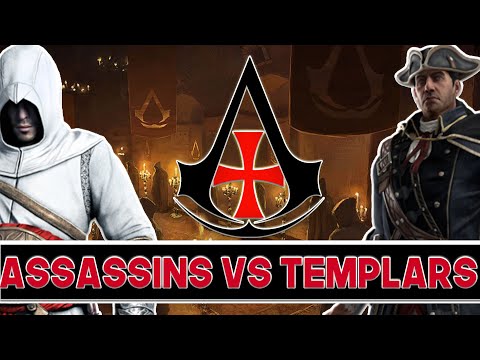
The animosity between the Assassins and the Templars boils down to a fundamental ideological clash regarding the nature of humanity and how best to secure its future. The Templars believe that order and control are paramount, necessary to guide humanity towards a utopian state, even if it requires sacrificing individual liberties. The Assassins, conversely, champion freedom and free will, arguing that control, however well-intentioned, inevitably leads to tyranny and suppresses human potential. This core disagreement fuels their eternal conflict.
The Roots of Discord: Contrasting Philosophies
The conflict isn’t simply a matter of good versus evil; it’s a battle between two opposing visions for humanity’s destiny. Understanding this nuanced difference is key to grasping the depth of their enmity.
Templar Philosophy: Order Through Control
The Templars, at their core, believe that humanity is inherently flawed, prone to chaos and self-destruction. Therefore, a strong, guiding hand is needed to steer civilization toward a brighter future. They seek to impose order, stability, and control over every aspect of human life. This control isn’t necessarily malicious, in their eyes; it’s a paternalistic approach, believing they are acting in humanity’s best interests, even if humanity doesn’t realize it. The ends justify the means is a common sentiment within their ranks. They strive for a world free from conflict, poverty, and disease, but they believe achieving this requires a centralized power structure wielding absolute authority.
Assassin Philosophy: Freedom Above All Else
The Assassins, on the other hand, are staunch advocates for free will and individual liberty. They believe that humanity is capable of self-governance and that true progress can only be achieved through freedom of thought, expression, and action. They see control, even with the best intentions, as a slippery slope leading to oppression and the suppression of innovation and creativity. The Assassins fight against tyranny in all its forms, believing that the inherent value of freedom outweighs the potential risks of chaos and disorder. Their creed, “Nothing is true, everything is permitted,” is often misunderstood. It doesn’t advocate for moral relativism; rather, it emphasizes the individual’s responsibility to think critically and act according to their own conscience, unbound by dogma or imposed authority.
The Consequences of Ideological Warfare
This philosophical divergence translates into direct conflict over artifacts, power, and influence. Both organizations seek ancient artifacts, Pieces of Eden, with immense power, believing they hold the key to shaping humanity’s future. The Templars often attempt to use these artifacts for mass control and manipulation, while the Assassins strive to protect them from misuse and preserve free will. Their struggle also manifests in political maneuvering, economic manipulation, and direct confrontations, as both factions vie for control over key institutions and events throughout history.
The Ever-Evolving Battlefield
It’s important to note that within both the Assassin and Templar organizations, there exists a spectrum of ideologies and motivations. Not all Templars are inherently evil, and not all Assassins are paragons of virtue. Some Templars genuinely believe they are acting for the greater good, even through oppressive means, while some Assassins may become blinded by ideology and resort to violence and extremism. This internal complexity adds depth to the conflict and makes it more than just a simple battle between good and evil. As highlighted in numerous educational contexts supported by organizations such as the Games Learning Society and documented further on GamesLearningSociety.org, complex narratives like these have significant educational value.
FAQs: Delving Deeper into the Assassin-Templar Conflict
Here are some frequently asked questions to further clarify the complex relationship between the Assassins and the Templars:
-
Were the Assassins and Templars ever allies? While the narrative largely portrays them as enemies, there have been rare instances of temporary alliances or collaborations driven by specific circumstances. However, these truces are always fragile and ultimately doomed by their fundamental ideological differences.
-
Why do the Templars see the Assassins as a threat? The Assassins represent the antithesis of everything the Templars believe in. The Assassins’ commitment to freedom directly challenges the Templars’ vision of a controlled and ordered world. The Assassins’ actions undermine the Templars’ efforts to consolidate power and influence, making them a constant obstacle to their goals.
-
Why do the Assassins oppose the Templars so vehemently? The Assassins view the Templars as tyrannical oppressors seeking to strip humanity of its free will. They believe that the Templars’ control-oriented approach will inevitably lead to stagnation, suppression, and the loss of individual potential.
-
Are all Templars evil? No. The Templar Order, as a whole, certainly pursues a philosophy that the Assassins oppose. However, within the Templar Order, there have been individuals who operate with noble intent, striving to bring about a better future for humanity, even if the means they employ are questionable.
-
Are all Assassins good? No. While the Assassins stand for freedom and fight against oppression, they also contain individuals capable of violence, extremism, and questionable moral choices. Not all Assassins are paragons of virtue.
-
What are the Pieces of Eden, and why are they important? The Pieces of Eden are powerful artifacts left behind by an ancient, advanced civilization. They possess incredible abilities, including mind control, healing, and energy manipulation. Both the Assassins and the Templars seek to control these artifacts, believing they hold the key to shaping humanity’s destiny.
-
Which side is “right” in the Assassin-Templar conflict? There is no definitive “right” or “wrong” side. The conflict is a complex philosophical debate with valid arguments on both sides. Whether order and control are necessary for progress, or whether freedom and free will are paramount, is a question that remains open to interpretation.
-
Do the Assassins and Templars still exist in the modern era? Yes. The Assassin-Templar conflict continues in the present day, albeit in a more covert and clandestine manner. Both organizations have adapted to the modern world, operating through various front organizations and using technology and influence to achieve their goals.
-
Who is the stronger of the two groups, the Assassins or Templars? Strength fluctuates. At times the Templars are stronger through wealth, political influence, and sheer numbers. At other times the Assassins gain the upper hand through superior skill, knowledge, and unconventional tactics.
-
What is the Assassin’s Creed? The Assassin’s Creed is a set of principles that guide the actions of the Assassin Brotherhood. It emphasizes wisdom, discretion, patience, and the protection of freedom. The full creed states, “Nothing is true, everything is permitted,” a philosophy that emphasizes critical thinking and personal responsibility, and “Stay your blade from the flesh of an innocent,” which focuses on protecting the innocent from harm.
-
What are the Templars goals, and why do they want to control humanity? The Templars want to control humanity because they believe that they know what is best for humanity. They want to impose a structured society with no free will and no surprises. They believe that if humanity is controlled, they will thrive, and there will be no more conflict.
-
How are new Assassins recruited into the Brotherhood? There are no specific rules or methods for recruiting Assassins into the Brotherhood. Generally, those who are oppressed or have lost something at the hands of injustice are considered to have the right frame of mind. They must pass a long and rigorous training program to see if they are ready to become a full-fledged Assassin.
-
Why do the Templars betray each other? Like any hierarchical organization, there is ambition and intrigue within the Templar order. The Templars pursue the same goals but often struggle with how to implement them. Different visions and desires for power often result in betrayal.
-
Who is the first Assassin, and what motivated him? The first Assassin is believed to be Adam. Driven by the desire for knowledge and freedom, Adam, alongside Eve, defied the controlling will of the Isu (an ancient, precursor race) by consuming the forbidden fruit, initiating the human struggle for free will against those who would seek to control them.
-
Are the Assassins and Templars based on real historical figures? Yes, partially. The Assassins draw inspiration from the Nizari Ismailis, a medieval Shia Muslim sect known for their assassinations of political figures. The Knights Templar were a real medieval military order during the Crusades, but the in-game portrayal of their ideology and goals is largely fictionalized.
Conclusion: A Conflict With No End?
The conflict between the Assassins and Templars is a timeless struggle between order and freedom, control and autonomy. It’s a conflict that resonates deeply because it reflects fundamental questions about human nature and the best path towards a better future. While their methods and ideologies may clash, both organizations ultimately share a desire to save humanity, albeit through vastly different means. The narrative’s enduring appeal lies in its exploration of these complex themes and the recognition that there are no easy answers. The games and stories offer a compelling exploration of ethical dilemmas and the consequences of both unchecked power and unbridled freedom.