The Enigmatic Immortality of Jellyfish: Unraveling Nature’s Time-Bending Trick
Fast answer first. Then use the tabs or video for more detail.
- Watch the video explanation below for a faster overview.
- Game mechanics may change with updates or patches.
- Use this block to get the short answer without scrolling the whole page.
- Read the FAQ section if the article has one.
- Use the table of contents to jump straight to the detailed section you need.
- Watch the video first, then skim the article for specifics.
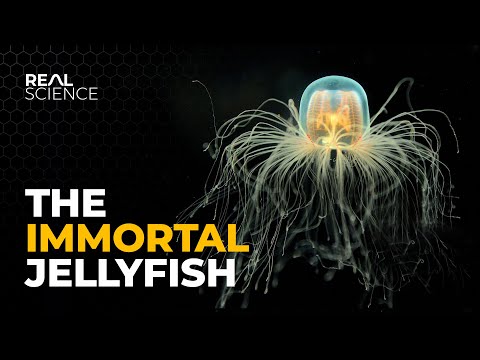
Jellyfish immortality, specifically in Turritopsis dohrnii, isn’t immortality in the purest sense. They aren’t impervious to death. Instead, they possess the extraordinary ability to revert to an earlier life stage – the polyp stage – when facing environmental stress or physical trauma, effectively circumventing death. This process, known as transdifferentiation, allows their cells to transform back into younger cells and reorganize into a new polyp colony, from which new, genetically identical jellyfish can bud. This remarkable feat of cellular regeneration makes them “biologically immortal” because they can potentially repeat this cycle indefinitely, barring predation or disease.
Diving Deeper: The Science Behind the “Fountain of Youth”
The secret to this fascinating phenomenon lies in the jellyfish’s cellular plasticity. Unlike many animals where cell differentiation is a one-way street, jellyfish cells retain the remarkable ability to dedifferentiate and redifferentiate.
Transdifferentiation: A Cellular U-Turn
Turritopsis dohrnii‘s immortality hinges on transdifferentiation. This is a process where a differentiated cell (a specialized cell like a muscle or nerve cell) transforms into another type of differentiated cell, or even reverts to a less specialized state. When the jellyfish is damaged or stressed, its medusa form undergoes a radical transformation. Its cells essentially forget their specialized roles and revert to a blank slate. These blank slate cells then reaggregate, not into a new medusa, but into a polyp.
PIWI piRNA Pathway: A Potential Key
Researchers are investigating the role of the PIWI piRNA pathway in this process. This pathway is known to be involved in maintaining germline immortality (the ability of reproductive cells to pass on genetic information indefinitely) in many species, including humans. Jellyfish, with their ability to “rejuvenate,” also exhibit an active PIWI piRNA pathway in their somatic cells (non-reproductive cells). While activating this pathway in human somatic cells could be a potential anti-aging strategy, it carries significant risks of cancer development. Understanding how jellyfish safely utilize this pathway could offer valuable insights into regenerative medicine.
Not True Immortality: Vulnerabilities Remain
It’s important to emphasize that this “immortality” is conditional. While Turritopsis dohrnii can theoretically live forever, in reality, they are vulnerable to the same threats as other marine creatures: predation, disease, and starvation. If a jellyfish is eaten by a turtle, for instance, it’s game over. They can only revert to the polyp stage if they are injured, stressed, or facing starvation, and even then, the conditions must be right for the polyp to attach to a substrate and thrive.
Frequently Asked Questions (FAQs) about Jellyfish Immortality
Here are some commonly asked questions about these fascinating creatures:
-
Is the “immortal jellyfish” truly immortal? No. While Turritopsis dohrnii can revert to its polyp stage to avoid death, it is still susceptible to predation, disease, and starvation, meaning it can die under certain circumstances.
-
How does the jellyfish revert to its polyp stage? Through a process called transdifferentiation, where its cells transform into a younger cell state and reorganize into a new polyp.
-
What triggers the reversion to the polyp stage? Stressful conditions like physical damage, starvation, or sudden changes in temperature.
-
Can all jellyfish species revert to the polyp stage? No, this ability is primarily observed in Turritopsis dohrnii. While other jellyfish species have polyp stages, they don’t necessarily possess the same ability to revert from the medusa stage under stress.
-
How long can an immortal jellyfish live, theoretically? Theoretically, if it avoids predation and disease, it could live indefinitely, continuously reverting and budding off new jellyfish. Some scientists speculate that some individuals alive today may have originated before the extinction of the dinosaurs!
-
Do immortal jellyfish feel pain? Jellyfish lack a centralized brain and nervous system in the way humans understand it. They have a basic network of neurons, allowing them to sense their environment, but they likely don’t experience pain in the same way we do.
-
Why did immortal jellyfish evolve this ability? The exact evolutionary pressures are unknown. It’s theorized that the transdifferentiation ability arose as a survival mechanism to cope with harsh environmental conditions and predation.
-
What eats immortal jellyfish? A variety of marine predators, including other jellyfish, sea anemones, tuna, sharks, swordfish, sea turtles, and penguins, prey on Turritopsis dohrnii. Polyps are also consumed by sea slugs and crustaceans.
-
Do jellyfish have memory? Yes! Recent studies have shown that jellyfish can learn from experience despite lacking a centralized brain. They demonstrate a form of associative learning.
-
Are jellyfish older than dinosaurs? Absolutely. Jellyfish have been around for at least 500 million years, predating dinosaurs by hundreds of millions of years.
-
Do immortal jellyfish have gender? Yes. The medusa form of Turritopsis dohrnii develops into either male or female individuals that reproduce sexually by releasing sperm and eggs into the water.
-
What is the deadliest jellyfish? The Australian box jellyfish (Chironex fleckeri) is considered the most venomous marine animal. Its sting can be fatal to humans.
-
Do jellyfish sleep? Yes. Research has shown that jellyfish enter a sleep-like state, becoming less active and less responsive at night.
-
Are jellyfish smart? While they lack a brain, recent studies show some species, like the Caribbean box jellyfish, possess impressive learning abilities. To further learn more about the science of learning, check out Games Learning Society at GamesLearningSociety.org.
-
Why are jellyfish important to the ecosystem? Jellyfish play several important roles in the marine ecosystem. They serve as food for larger animals and can also control populations of smaller organisms. Some jellyfish also provide protection for commercially valuable species.
Conclusion: A Timeless Wonder
The immortal jellyfish, Turritopsis dohrnii, offers a captivating glimpse into the potential of cellular regeneration and the fascinating adaptations that life can evolve. While they may not be truly immortal in the conventional sense, their ability to cheat death by reverting to a younger life stage continues to intrigue scientists and inspire new avenues of research in regenerative medicine and aging. Further research into the Turritopsis dohrnii’s fascinating survival mechanism could potentially lead to breakthroughs in understanding how cells age and die, and perhaps even hold clues to extending human lifespan.