Why Are My Villagers Throwing Food But Not Breeding?
Fast answer first. Then use the tabs or video for more detail.
- Watch the video explanation below for a faster overview.
- Game mechanics may change with updates or patches.
- Use this block to get the short answer without scrolling the whole page.
- Read the FAQ section if the article has one.
- Use the table of contents to jump straight to the detailed section you need.
- Watch the video first, then skim the article for specifics.
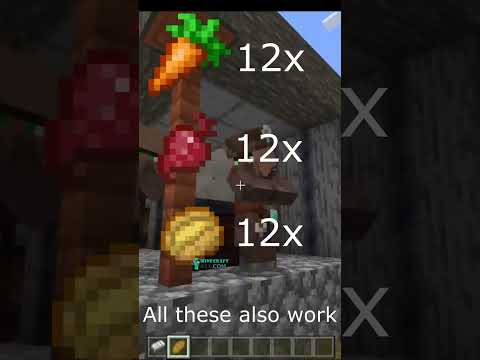
Seeing your Minecraft villagers tossing food around but failing to produce any baby villagers can be frustrating. This behavior usually indicates that one or more critical conditions for breeding aren’t being met, despite the presence of food. The most common culprits are insufficient beds, obstructed beds, an overpopulation cap, and unwilling villagers. Even if villagers have hearts floating above their heads, that doesn’t guarantee a baby will spawn. Let’s delve into each possibility to diagnose the specific issue in your village.
Identifying the Breeding Bottleneck
Bed Availability and Accessibility
The primary reason villagers throw food without breeding is often a lack of valid, accessible beds. Each villager, including the baby-to-be, requires its own bed. So, for two villagers to breed and produce one baby, you need at least three beds. However, merely having three beds isn’t enough. The villagers must be able to reach the beds unhindered.
Here’s what to check:
- Bed Count: Ensure you have enough beds. If you have 5 villagers, you need at least 6 beds for breeding to occur.
- Accessibility: Make sure there are no blocks directly above the beds. Villagers need at least two empty blocks of air above the bed to register it as valid. A common mistake is placing beds directly under a solid roof with only one block of headroom.
- Claimed Beds: Villagers must be able to “claim” the beds. This means they need a clear path to the bed. Sometimes, even if the bed looks accessible, there might be a hidden obstruction or pathfinding issue preventing a villager from claiming it. Try moving the beds to a more open area.
- Proximity: Beds need to be within the village boundary. If you’ve expanded your village considerably, newly placed beds might fall outside the recognized boundary.
Population Cap
Minecraft villages have a population cap determined by the number of valid doors within the village boundary. While door mechanics have evolved over time, the core concept remains: the game limits the number of villagers to prevent overcrowding. While this is an old mechanic, there’s still the population cap.
What to do:
- Understand the Cap: While doors don’t explicitly define the village center anymore, the game still considers the number of houses, beds, and workstations within a certain radius.
- Expansion: If you want more villagers, you may need to expand your village or create a new one.
- Relocation: Consider moving some villagers to a new location to avoid the cap.
Villager Willingness
Even with enough beds, villagers must be “willing” to breed. This willingness is primarily driven by food and, in some cases, trading. Villagers need sufficient food in their inventory to become willing.
Here’s how to make them willing:
- Food Distribution: Throw food at the villagers. The most effective foods are bread (3 loaves), carrots (12), potatoes (12), or beetroot (12). Villagers will pick up the food and store it in their inventory.
- Food Points: Each villager requires 12 food points to activate willingness. Bread gives 4 points, while carrots, potatoes, and beetroot each give 1 point.
- Trading: Trading with villagers can also increase their willingness to breed. Even a single trade can sometimes be enough to trigger breeding behavior.
Obstructions and Bugs
Sometimes, the issue is simply a bug or an unexpected obstruction that the game isn’t properly registering.
Troubleshooting tips:
- Restart: Try restarting your Minecraft game. This can often resolve temporary glitches.
- Version Check: Ensure you’re playing on the latest version of Minecraft. Bugs related to villager breeding are often fixed in patches.
- Lighting: Ensure the breeding area is well-lit to prevent hostile mobs from spawning, which can disrupt villager behavior.
- Remove Obstructions: Double-check for any hidden blocks or entities that might be interfering with villager pathfinding or bed claiming.
Frequently Asked Questions (FAQs)
1. Why aren’t my villagers breeding even though they have hearts above their heads?
The heart particles indicate that the villagers are willing to breed, but it doesn’t guarantee a baby villager will appear. This usually means they think there’s an available bed, but something is preventing them from claiming it. Re-examine the bed availability and accessibility, making sure there are at least two air blocks above each bed. Additionally, too close proximity to the villagers can distract them.
2. Do villagers consume food when breeding?
Yes, villagers consume the food in their inventories when breeding. Even if the breeding fails (e.g., due to all accessible beds being already claimed), the villagers will still consume the food. Make sure they always have a good supply of food to make them “willing”.
3. How many beds do I need for villagers to breed?
You need at least three beds for two villagers to breed and produce one baby. One bed for each adult villager and one for the baby. Remember to add one more bed for each baby you want to produce. So, three villagers need a minimum of four beds to make one baby.
4. Do villagers need jobs to breed?
No, job sites (like workstations) are not required for villagers to breed. Breeding depends solely on the number of valid, accessible beds and the willingness of the villagers. Providing job sites, however, may increase villager happiness and encourage them to breed.
5. What is the best food to give villagers for breeding?
The best foods for breeding are bread, carrots, potatoes, and beetroot. Bread provides the most food points (4 per loaf), requiring only 3 loaves to make a villager willing. Carrots, potatoes, and beetroot each provide 1 food point, requiring 12 of each.
6. How close do villagers need to be to breed?
Villagers need to be in close proximity to each other to breed, generally within a few blocks. However, being too close to the player can distract them. It’s best to observe from a slight distance.
7. Can nitwit villagers breed?
Yes, nitwit villagers can breed just like any other villager. Their lack of a specific profession doesn’t affect their ability to reproduce.
8. How far away can a villager claim a bed?
A villager can typically claim a bed within a 48-block spherical radius, provided the bed is pathfindable and not already claimed by another villager.
9. Why are villagers showing angry particles?
Angry particles (storm clouds) above a villager’s head usually indicate that they are upset because they cannot breed due to a shortage of resources, such as beds, or if the population cap has been reached.
10. What does trading have to do with breeding?
Trading with villagers increases their “willingness” to breed. While not always mandatory, a few successful trades can often kickstart the breeding process, especially if the villagers are reluctant to breed solely from food.
11. Is there a limit to how many villagers can be in a village?
Yes, there is a population cap. Although the old door-mechanics have changed, there’s still an effective limit to the number of villagers in an area. If you need more villagers, consider expanding your village or starting a new one.
12. Will villagers follow me if I hold bread or emeralds?
Throwing bread at a villager does not make them follow you; however it will fill their “willing” meter to breed. Holding emeralds, especially a block of emeralds, will tempt villagers with trades to follow you. However, they will quickly lose interest if it’s just a single emerald.
13. Can I use a lead on a villager?
Yes, you can use a lead on a villager, but only with a map editor or NBT editor. In standard gameplay, you cannot leash a villager.
14. How far away does a villager breeder need to be from other villages?
Ideally, a villager breeder should be at least 80 blocks away from any other village to prevent interference with the breeder’s mechanics. This ensures that the breeder is recognized as a separate village and functions correctly.
15. Where can I learn more about game mechanics and education?
For more information on the intersection of gaming and education, check out the Games Learning Society at GamesLearningSociety.org. They offer valuable insights into how games can be used as educational tools.
By systematically addressing these potential issues, you should be able to diagnose why your villagers are throwing food but not breeding and get your population booming in no time! Good luck, and happy crafting!